






Shapers


For years, we’ve celebrated artists. Today, we want to celebrate the people who discover music, put it in context, and help it find audiences around the world.
Meet the Shapers: a new generation of digital creators who see things in Colombia’s music ecosystem that others don’t—and share them through platforms, formats, and digital-first storytelling. They’re the ones finding artists before they break, highlighting genres that deserve more attention, and helping songs reach listeners who might never have found them otherwise.
The music industry thrives as an ecosystem, and these creators play a vital role in it. This is Spotify’s way of recognizing their work, and shining a light on the people who use digital platforms to expand the reach and appreciation of Colombian music.
Shapers isn’t a ranking or a definitive list. It’s an evolving selection that will be updated regularly to recognize creators from different communities, working across formats and perspectives, who are bringing attention to the stories and music that deserve it.










 (opens in a new tab)
Mange

Bogotá is on the verge of becoming—if it hasn’t already—the music capital of Latin America.
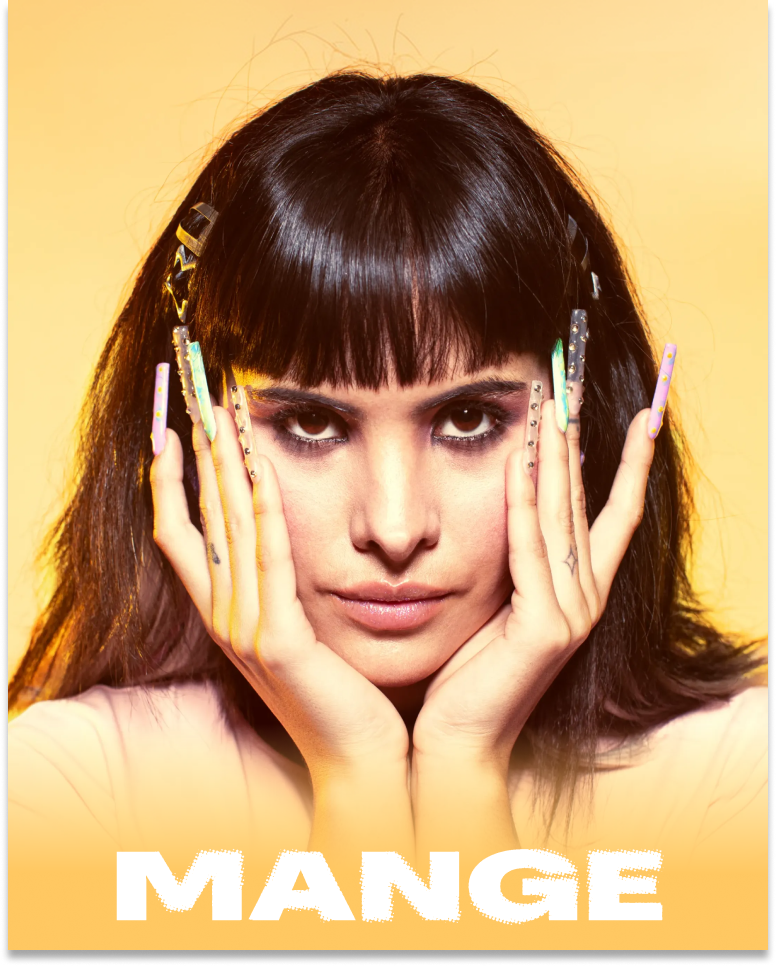
For Mange, music is as much about imagery as it is about sound. As an illustrator and content creator, her listening journey often begins with her eyes: an album cover can be a record’s introduction to the world, revealing as much about an artist’s universe as their lyrics, songwriting, or production. Her illustrations have accompanied a generation of alternative artists and sounds, becoming part of the visual identity of a growing scene.
But her perspective extends far beyond album covers. Mange believes Bogotá is on the verge of becoming one of Latin America’s music capitals—if it isn’t one already. She sees a city full of packed venues, festivals, growing audiences, and artists pushing Colombian music in unexpected directions. One of them is Jambeau, an artist she follows closely for the way he challenges mainstream reggaeton by blending it with electronic music, drum and bass, and queer storytelling.
That is also why Mange insists on looking closer to home. She believes that Colombia has yet to fully grasp the scale of the talent right in front of it. Whether through an album cover, a piece of content, or a recommendation, her work creates imagery, conversation, and community around these sounds. If there is one conviction behind everything she does, it is that a music scene needs more than artists: it needs people willing to see it, champion it, and invite others to be part of it.




For Mange, music is as much about imagery as it is about sound. As an illustrator and content creator, her listening journey often begins with her eyes: an album cover can be a record’s introduction to the world, revealing as much about an artist’s universe as their lyrics, songwriting, or production. Her illustrations have accompanied a generation of alternative artists and sounds, becoming part of the visual identity of a growing scene.
But her perspective extends far beyond album covers. Mange believes Bogotá is on the verge of becoming one of Latin America’s music capitals—if it isn’t one already. She sees a city full of packed venues, festivals, growing audiences, and artists pushing Colombian music in unexpected directions. One of them is Jambeau, an artist she follows closely for the way he challenges mainstream reggaeton by blending it with electronic music, drum and bass, and queer storytelling.
That is also why Mange insists on looking closer to home. She believes that Colombia has yet to fully grasp the scale of the talent right in front of it. Whether through an album cover, a piece of content, or a recommendation, her work creates imagery, conversation, and community around these sounds. If there is one conviction behind everything she does, it is that a music scene needs more than artists: it needs people willing to see it, champion it, and invite others to be part of it.
Gallery


Julián MP3

I’m not interested in telling you what to listen to. I’m interested in giving you a reason to listen to it again.
For Julián MP3, a song is more than what we hear. His work as a content creator comes from a desire to understand what lies behind the music: he researches songs and artists, uncovers stories, and looks for details that can help us understand music in a different way. To him, all music has something interesting to say; the crucial thing is knowing where to look.
That search can take him from Juanes’ La Camisa Negra all the way to mariachis in Yugoslavia, because a great story can emerge where you least expect it. It has also led him to spotlight Colombian artists such as Kei Linch, for her ability to blend hip-hop with other sounds; Paula Pera y el Fin de los Tiempos, with her intimate and contemplative “nostalgia pop”; and El Kalvo, whose creative universe turns everyday elements of Bogotá into part of his musical concept. Julián turns analysis into a gateway to discovery. In the fast-paced world of digital content, he has carved out a space for his voice by turning stories into points of connection between artists and audiences, opening new doors to music that might otherwise go unnoticed.
With all that said, he’s still a fan: even with a closer view of the music industry, Julián loves to be surprised when he discovers a story behind music he thought he already knew.


For Julián MP3, a song is more than what we hear. His work as a content creator comes from a desire to understand what lies behind the music: he researches songs and artists, uncovers stories, and looks for details that can help us understand music in a different way. To him, all music has something interesting to say; the crucial thing is knowing where to look.
That search can take him from Juanes’ La Camisa Negra all the way to mariachis in Yugoslavia, because a great story can emerge where you least expect it. It has also led him to spotlight Colombian artists such as Kei Linch, for her ability to blend hip-hop with other sounds; Paula Pera y el Fin de los Tiempos, with her intimate and contemplative “nostalgia pop”; and El Kalvo, whose creative universe turns everyday elements of Bogotá into part of his musical concept. Julián turns analysis into a gateway to discovery. In the fast-paced world of digital content, he has carved out a space for his voice by turning stories into points of connection between artists and audiences, opening new doors to music that might otherwise go unnoticed.
With all that said, he’s still a fan: even with a closer view of the music industry, Julián loves to be surprised when he discovers a story behind music he thought he already knew.
Gallery


Sara Sofia

I don’t want one genre to define everything I can say about music.
For Sara Sofía, understanding Colombian music means listening for the connections between genres, eras, and places. That is why she often returns to a moment she considers pivotal: the mid-90s releases of Aterciopelados’ El Dorado and La Pipa De la Paz. That’s when rock en español, a movement with roots in Argentina, began to intersect with Colombia’s traditional genres. The fact that lead singer Andrea Echeverri was at the forefront of that exploration makes the story even more meaningful to her. Sara’s curiosity is rooted in these crossroads, when different musical traditions come together and reflect a particular place and time.
Sara listens like a journalist and selects like a DJ, always searching for the connections behind each song. As La Nena Magdalena, her music selector alter ego, she sees salsa as a gateway, not a boundary. She digs into its stories, builds sets that bridge generations, and introduces new audiences to sounds that often come with preconceived notions. She can move from Grupo Niche to electronic music, or from Colombia’s Pacific coast to rock, in search of cultural connections that allow us to hear music from new different perspectives.
Or, as she puts it: “I’m much more than salsa.” She wants to challenge the notion that the genre is “something for old people,” while also resisting any niche that might limit her curiosity. She gives context to what we hear, and practices music selection into a form of discovery. Every story begins with what surprises. From there, she brings songs, artists, and eras into conversation so others can hear them differently, too.


For Sara Sofía, understanding Colombian music means listening for the connections between genres, eras, and places. That is why she often returns to a moment she considers pivotal: the mid-90s releases of Aterciopelados’ El Dorado and La Pipa De la Paz. That’s when rock en español, a movement with roots in Argentina, began to intersect with Colombia’s traditional genres. The fact that lead singer Andrea Echeverri was at the forefront of that exploration makes the story even more meaningful to her. Sara’s curiosity is rooted in these crossroads, when different musical traditions come together and reflect a particular place and time.
Sara listens like a journalist and selects like a DJ, always searching for the connections behind each song. As La Nena Magdalena, her music selector alter ego, she sees salsa as a gateway, not a boundary. She digs into its stories, builds sets that bridge generations, and introduces new audiences to sounds that often come with preconceived notions. She can move from Grupo Niche to electronic music, or from Colombia’s Pacific coast to rock, in search of cultural connections that allow us to hear music from new different perspectives.
Or, as she puts it: “I’m much more than salsa.” She wants to challenge the notion that the genre is “something for old people,” while also resisting any niche that might limit her curiosity. She gives context to what we hear, and practices music selection into a form of discovery. Every story begins with what surprises. From there, she brings songs, artists, and eras into conversation so others can hear them differently, too.
Gallery


Dimeloking

A well-made song is meant to be enjoyed from beginning to end, not just for the 10 or 15 seconds that make it go viral.
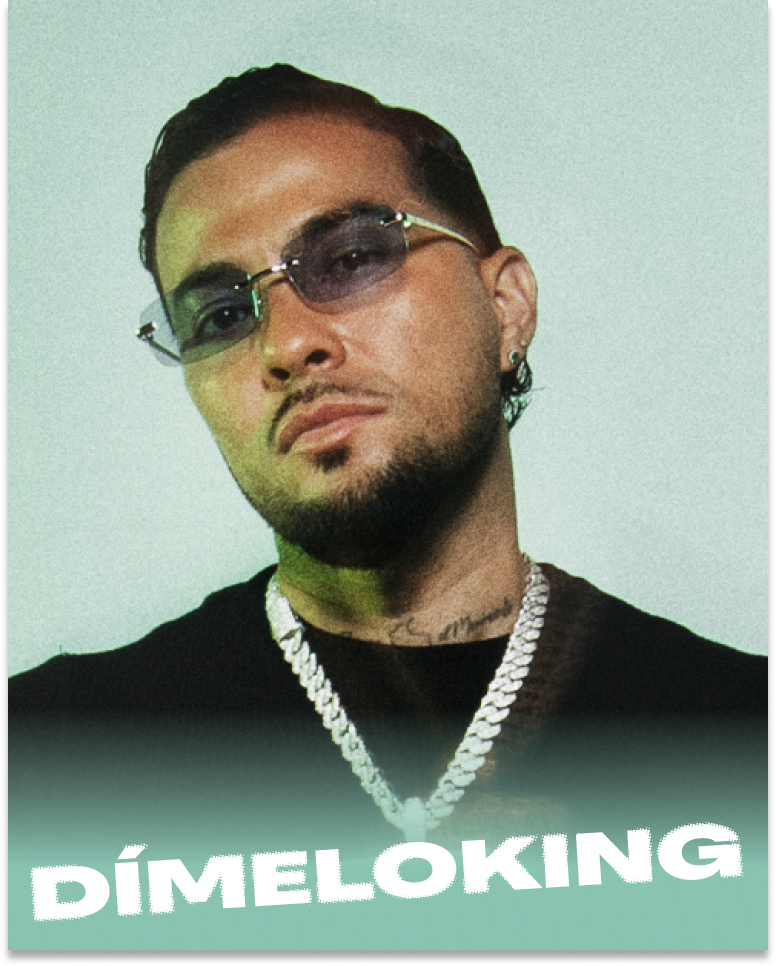
Elkin, better known on social media as Dímelo King, believes in celebrating talent before it has found its audience. Above all, he describes himself as a dreamer, which may be why he is drawn to artists who are just getting started: acts with talent and drive waiting for the right audience. For King, creating that space means believing in their potential and bringing their stories to fans ready to discover them.
He’s turned that belief into a platform, giving visibility to artists with talent, but not necessarily a team, a budget, or access to a media tour. Traveling across different cities, King connected emerging artists with fans and recorded some of the earliest interviews with names like Blessd, Ryan Castro, Hamilton, Zaider, and Kapo. He has also extended that commitment to emerging talent into music production, working with behind-the-scenes creators like Luister La Voz.
That instinct to discover, rather than simply follow the crowd, is also reflected in the way he listens. In an era driven by virality, King champions songs that do not feel made solely for a 10- or 15-second clip. He looks for music that is “well made,” that can be enjoyed from beginning to end and stay with listeners long after the trend has passed. This combination of an eye for emerging talent and the judgment to recognize which stories deserve to be amplified has made Dímelo King into an early documentarian of several artists who now hold a central place in Colombian music.


Elkin, better known on social media as Dímelo King, believes in celebrating talent before it has found its audience. Above all, he describes himself as a dreamer, which may be why he is drawn to artists who are just getting started: acts with talent and drive waiting for the right audience. For King, creating that space means believing in their potential and bringing their stories to fans ready to discover them.
He’s turned that belief into a platform, giving visibility to artists with talent, but not necessarily a team, a budget, or access to a media tour. Traveling across different cities, King connected emerging artists with fans and recorded some of the earliest interviews with names like Blessd, Ryan Castro, Hamilton, Zaider, and Kapo. He has also extended that commitment to emerging talent into music production, working with behind-the-scenes creators like Luister La Voz.
That instinct to discover, rather than simply follow the crowd, is also reflected in the way he listens. In an era driven by virality, King champions songs that do not feel made solely for a 10- or 15-second clip. He looks for music that is “well made,” that can be enjoyed from beginning to end and stay with listeners long after the trend has passed. This combination of an eye for emerging talent and the judgment to recognize which stories deserve to be amplified has made Dímelo King into an early documentarian of several artists who now hold a central place in Colombian music.
Gallery


Roberto Cardona

A good interview begins when it stops feeling like an interview.
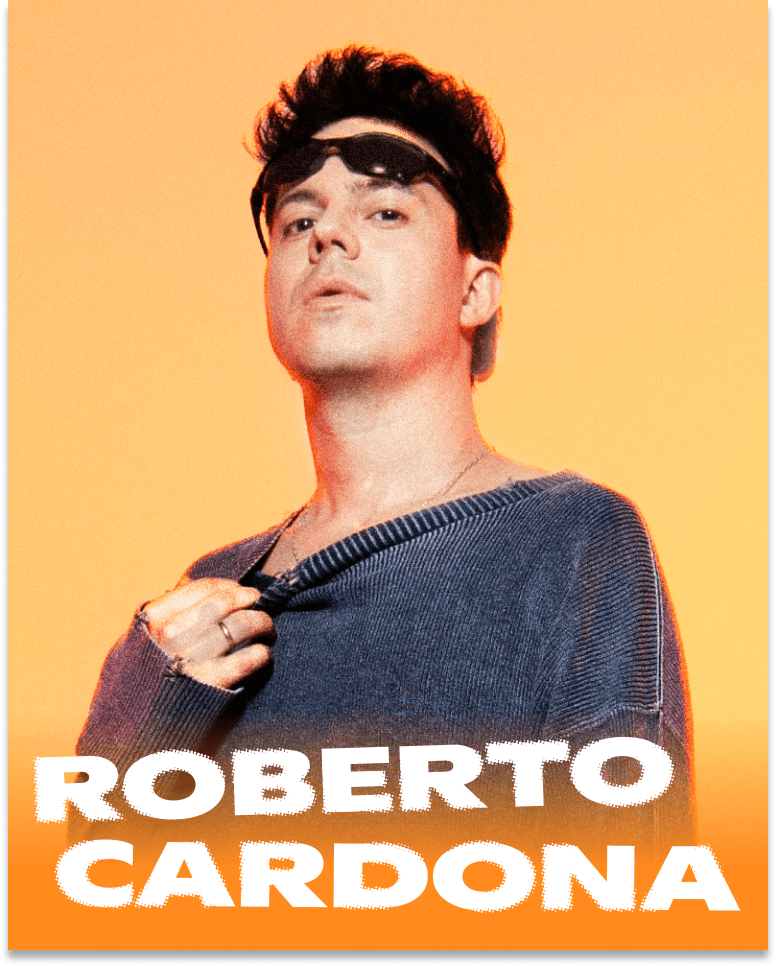
Roberto Cardona is drawn to the moment when an interview stops feeling like an interview. When he talks to an artist, he focuses on things that can’t be found in profiles, photographs, or answers an artist has given a thousand times before. His conversational approach has also been shaped by listening closely to the people sitting across from him. He cites one particular interview, with singer Feid, with helping him find the more relaxed, authentic style that would come to define his approach to music journalism.
That approach helps him dig into topics not usually covered in interviews: the fears, doubts, and experiences that reveal the person behind the artist. And his relationship with music doesn’t end when the interview wraps. As a radio station director and host, he listens carefully to what is happening behind the songs, and as a tastemaker, he looks for the ones worth bringing to others. Roberto Cardona discovers music and shines a light on both established names and emerging acts. For him, that role of curation is essential in an industry where more artists and songs coexist than ever before.
That perspective keeps him looking ahead. Roberto Cardona sees renewed energy in reggaeton as it returns to its roots, while keeping a close eye on Colombian trap, Afrobeats, and dancehall emerging from cities such as Cali, Buenaventura, Medellín, and Bogotá. His radar includes names such as Kris R., Topboy TGR, Hamilton, Lion Fiah, and ARIA VEGA alongside the producers who are also shaping the country’s sound.
There are still conversations he hopes to have. (After a close call, Drake remains a personal dream interview.) With Crudo Means Raw, he wants to explore the mark the artist has left on urban music and the rap that shaped a generation. And for Roberto Cardona, no account of contemporary Latin American music can be complete without Shakira. It is this combination of conversation and a deep understanding of the scene that makes his recommendations more than a list of songs.


Roberto Cardona is drawn to the moment when an interview stops feeling like an interview. When he talks to an artist, he focuses on things that can’t be found in profiles, photographs, or answers an artist has given a thousand times before. His conversational approach has also been shaped by listening closely to the people sitting across from him. He cites one particular interview, with singer Feid, with helping him find the more relaxed, authentic style that would come to define his approach to music journalism.
That approach helps him dig into topics not usually covered in interviews: the fears, doubts, and experiences that reveal the person behind the artist. And his relationship with music doesn’t end when the interview wraps. As a radio station director and host, he listens carefully to what is happening behind the songs, and as a tastemaker, he looks for the ones worth bringing to others. Roberto Cardona discovers music and shines a light on both established names and emerging acts. For him, that role of curation is essential in an industry where more artists and songs coexist than ever before.
That perspective keeps him looking ahead. Roberto Cardona sees renewed energy in reggaeton as it returns to its roots, while keeping a close eye on Colombian trap, Afrobeats, and dancehall emerging from cities such as Cali, Buenaventura, Medellín, and Bogotá. His radar includes names such as Kris R., Topboy TGR, Hamilton, Lion Fiah, and ARIA VEGA alongside the producers who are also shaping the country’s sound.
There are still conversations he hopes to have. (After a close call, Drake remains a personal dream interview.) With Crudo Means Raw, he wants to explore the mark the artist has left on urban music and the rap that shaped a generation. And for Roberto Cardona, no account of contemporary Latin American music can be complete without Shakira. It is this combination of conversation and a deep understanding of the scene that makes his recommendations more than a list of songs.
Gallery


