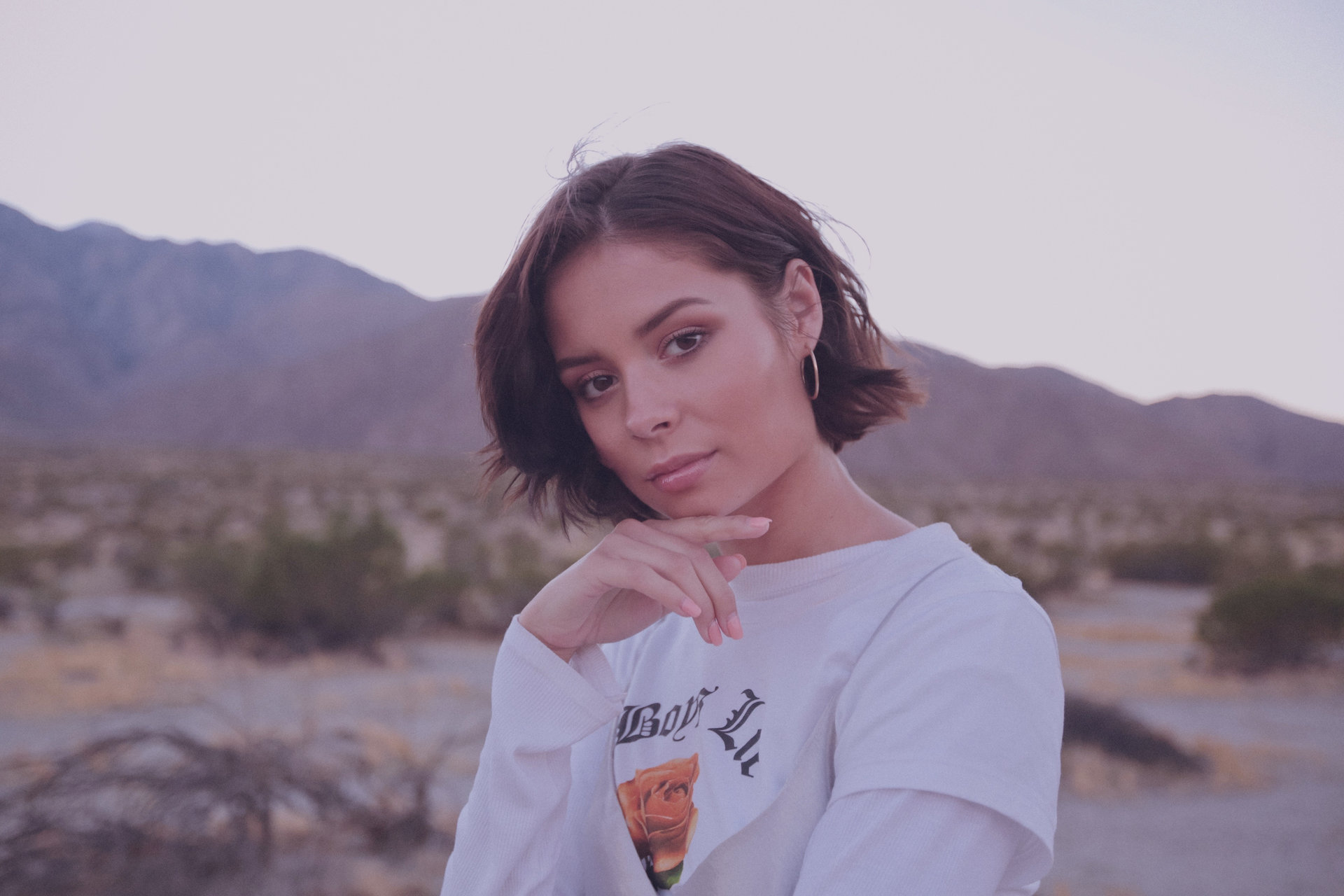
Spotify has helped cultivate the growth and subsequent cultural explosion of many artists across varied musical genres. In the “Amplified on Spotify” series, we’ll be interviewing artists who have not only made their names through the platform, but are shaping it as well.
Twenty-three-year-old singer-songwriter Nina Nesbitt has come a long way since writing and recording songs in her childhood bedroom in Edinburgh, Scotland. She experienced some early achievements by posting originally written songs to her YouTube channel and performing in pubs around Edinburgh, but Nesbitt could not have anticipated the success and wide reach of her music.
At only 17, Nesbitt performed in front of Ed Sheeran and asked him for advice—she impressed the fellow UK musician and ultimately landed a spot on his European tour, which launched her music career on the international stage. She’s since toured with artists including Justin Bieber, released her first album and plenty of singles, and is now producing her own songs for her second album, to be released in Spring 2018.
Spotify spoke with Nina to about her creative process, the importance of autonomy and why she loves Spotify—both as a musician and as a listener.
Q: Tell us about your beginnings as a musician.
I started off writing short stories and poems as a kid; I was obsessed with words. Then, I picked up piano at age 10 and put my words to music. When I turned 15 and taught myself guitar, I felt like the songs really took shape. It’s always been about the lyrics for me, and the music kind of accompanies that. I think in the past couple years I’ve taken much more of an interest in melody and chords and it has all come together more.
Q: You were discovered by Ed Sheeran. How did that come about, and how did your life change as a result?
He heard me play a song live [while he was waiting to go on a radio show] and then offered me a support slot [on his 2011 European tour]. It was great experience because I was playing to about 10 people in Edinburgh pubs before that. Playing to thousands of people was terrifying at such a young age and with such little experience, but it was the best thing for me. After the first few tours I did with Ed and [English singer-songwriter] Example, I felt like I could handle any stage. I ended up independently releasing an EP that charted in the UK. Next thing I knew I was signed [by Universal Music Group], so it was quite a turning point.
Q: How did you start producing your own music? How has that changed your creative process?
I’ve always been interested in production. At the time, I had recently left the label I was on because I didn’t like the thought of having to rely on other people to do what I love. I set up a little home [production] setup in my bedroom, and I just started experimenting. I found this massive sample database that I use a lot. It’s an easy way for someone that maybe doesn’t have the luxury of a fancy studio, or expensive equipment, to make music. Then it was just a case of trial and error until I was able to produce my songs. On my upcoming album, [to be released Spring 2018,] I produced some of the songs and had other producers produce some, but I showed them what I wanted in a strong demo. It’s really helpful to be able to create clear demos that you can take to another producer to give them an idea of what you want.
Q: How do new fans typically discover your music?
I’ve found most new fans have come from listening to playlists on Spotify and saving the songs to their libraries. Some people are happy to just listen, while others want to get to know you— which is cool and has been instrumental in promoting my new album. I love how natural the process of discovering new music is; it’s all about whether the song connects. It also gives people from all over the world the opportunity to find my music, which is exciting.
Q: How has the Spotify for Artists platform helped you better understand your fans?
I think the platform has helped me to better understand where the music industry is heading in 2018 and how to prepare for that. The industry has changed so much in the past few years and everyone has quickly had to educate themselves.
Q: How do you discover new music?
I like to put on a lot of chill Spotify playlists and just leave them running until I find something I like. I’m one of those people who likes sticking to the bands and artists I already know and enjoy (which is bad), so it gives me an opportunity to be more open minded and find new music through similar artist recommendations or playlists.
Q: What artists or songs are you obsessed with right now?
I love “About Time” by Sabrina Claudio. It’s such a beautiful, feminine record. I’ve also been listening to the Peaceful Piano Spotify playlist a lot; it’s so relaxing when I’m cooking or getting into bed.
Q: How has Spotify contributed to your success?
Spotify has been absolutely instrumental in growing my fan base and kicking off the new album campaign. I think it suits my music because I’m very DIY and I feel like Spotify really clicks with those types of artists. I like that it gives people the option to listen or skip, and gives listeners a real idea of what’s connecting and what’s not. I’m also quite obsessive over the Fan Insights page [now known as Spotify for Artists]—it’s really helpful to see.
Q: What have you learned from working with Spotify?
Spotify is a great indicator of which songs are connecting with the audience. It can also give you an idea of when a song’s life is coming to an end and when to release the next one, thanks to the increases and decreases on the Spotify for Artists audience chart. I was planning on releasing three singles last year but “The Best You Had” just kept escalating, so we just ran with it. Spotify’s insights allow you to be reactive, which is really necessary in 2018. Gone are the days of plans set in stone.




Recent Comments