Tag: Interview

St. Vincent, Diane Warren, and More Came Together for Spotify’s Created by Women Summit

Two people sitting in front of an audience, one of them is holding a guitar and another is holding a microphone. The words "Created by Women Summit" appear above them, alongside the Spotify logo.

Last week, Spotify welcomed 500 guests from across the songwriting, producing, and publishing world to the second annual Created by Women Summit, a day dedicated to building a more equitable music industry. Since its launch last year, Created by Women has facilitated much-needed community, mentorship, and connection across the industry.

During a series of panels and interviews held at Spotify’s LA office, attendees heard from leading voices on a range of topics including being a working parent in the music industry, Black women in songwriting, and the power of creative collaboration across borders. Spotify’s Chief Public Affairs Officer Dustee Jenkins hosted the day’s keynote alongside songwriter Liz Rose. 

“Today is about you,” Dustee said in her welcome remarks. “And it’s about what we can do together to make sure more people understand what you do and how much it matters. Your songs are traveling further and finding more listeners around the world. Fans want to build deeper connections with the artists and songs they love. They don’t want to just hear the songs, they want to know who made them.”

In the Heart & Soul Wellness Lounge, created in partnership with leading mental health and wellness non-profit Backline, attendees could stop by for a massage and nutrition consultation, and learn more about the resources and support available to them through the organization. 

The event also featured live performances, and closed out with a mixer where guests had another chance to connect and keep the conversation going.

NCT’s JOHNNY Invites Fans to Explore Korean Culture in ‘Journey with Johnny’

NCT's JOHNNY poses behind the title "Journey with JOHNNY". Johnny's podcast in partnership with Spotify.

NCT’s JOHNNY was born and raised in Chicago, but moved to South Korea as a teenager to train as an artist. Years later, he’s still discovering new things about his adopted home every day. Now he’s inviting fans to explore Korean culture alongside him with JOURNEY with JOHNNY, a new video podcast available now on Spotify. 

The show brings together personal stories and conversations about Korean customs and culture. Each episode also features a song handpicked by Johnny, connecting the conversation to music and moments from his everyday life. 

For the Record caught up with Johnny to talk about these unexpected discoveries, music’s power to connect people, and why he hopes listeners leave each episode feeling warm and cozy. 

What inspired you to start JOURNEY with JOHNNY, and what made this the right moment to bring it to life?

I’ve always thought it would be great to have more ways to talk and connect with fans around the world. So when this opportunity came up, I was excited to take it. The timing also felt right because, after spending many years in Korea, I feel like I’m now at a point where I can really put my experiences into words and share them in a more personal way.

Was there anything that surprised you when you were recording the show?

While filming, I actually caught myself being surprised quite a lot. There were so many things about Korea that I realized I still didn’t know, but also things that I didn’t realize I did know. Those little moments of discovery and realization will really be the key highlights. I really hope K-pop fans and anyone who’s curious about Korean culture can experience Korea alongside me. I’m still learning and discovering things too, so it really does feel like we’re going on this journey together.


Why was it important to you to make music a part of every episode? 

JOURNEY with JOHNNY is on Spotify, so how could I not have music? [Laughs.] I thought of it as an opportunity not only to share some of my own taste, but also to really dive into music together with the listeners—what fans want to hear, what songs are trending right now, why I think those songs are popular. A lot of people tuning into the podcast probably discovered me through listening to K-pop in the first place. Music has always had this incredible ability to connect and find unity around the world. 

With the podcast, NCTzens now have a new way to engage with you. What does it mean to you to have that kind of space, and how do you hope this show sits alongside your work in NCT?


I hope JOURNEY with JOHNNY can become a space that spreads positivity. Meeting fans throughout the years has taught me how much not only our music, but our personal experiences can give them strength. I think it will give people another way to get to know me, which hopefully also makes them curious about NCT, too. And if someone listens to the podcast without knowing NCT yet…I might have to make it my personal mission to change that. [Laughs.]

If you had to sum up the vibe of JOURNEY with JOHNNY in three words, what would they be?


Personal, relaxed, playful.

What are your biggest hopes for JOURNEY with JOHNNY? 

Just like the name suggests, I want this podcast to feel like a journey—for me and for everyone listening. I hope listeners can simply have a good time with it. The goal for me would be for listeners to feel warm and cozy. And, hopefully, we can keep this journey going for a long time.

Ready to take a journey with Johnny? Watch the first episodes on Spotify now. New episodes drop every Wednesday at 11 p.m. KST.

‘Gemischtes Hack’ Hosts on Dream Guests, Favorite Episodes, and Reaching 1 Billion Streams

Gemischtes Hack hosts standing alongside other people on a stage. The hosts are holding Spotify-branded Billions Club plaques.

Recently, fans of the German podcast Gemischtes Hack received a mysterious invitation to an event simply called “HACKTAG,” taking place September 22 at the Berliner Ensemble in Berlin. Without knowing anything else, an audience of 600 gathered, anxious to see what the evening might have in store. Then the curtain rose, revealing Gemischtes Hack hosts Felix Lobrecht and Tommi Schmitt seated in their signature studio setup, and the reason for the celebration: the series had officially reached one billion streams.

The milestone adds to an already impressive run for the show, which has been Germany’s most-streamed podcast for seven consecutive years and is the second most-streamed podcast on Spotify globally. Each episode, Felix and Tommi bring listeners into their wide-ranging conversations, covering whatever happens to be on their minds, from politics and culture to sports, music, and more.

HACKTAG was a one-of-a-kind celebration of the show’s milestone moment and a fitting tribute to its fan community. The name itself was a nod to longtime listeners, coming from “Mittwoch ist Hacktag” (“Wednesday is hack day”), one of the podcast’s signature phrases.

Along with watching a live episode recording, guests could snap photos with the hosts after the show and take them home in frames inspired by the 1 Billion Streams Award. There was also event-exclusive merch made especially for the celebration.

Corey Kent on the Song That Got Him Sent to the Principal’s Office

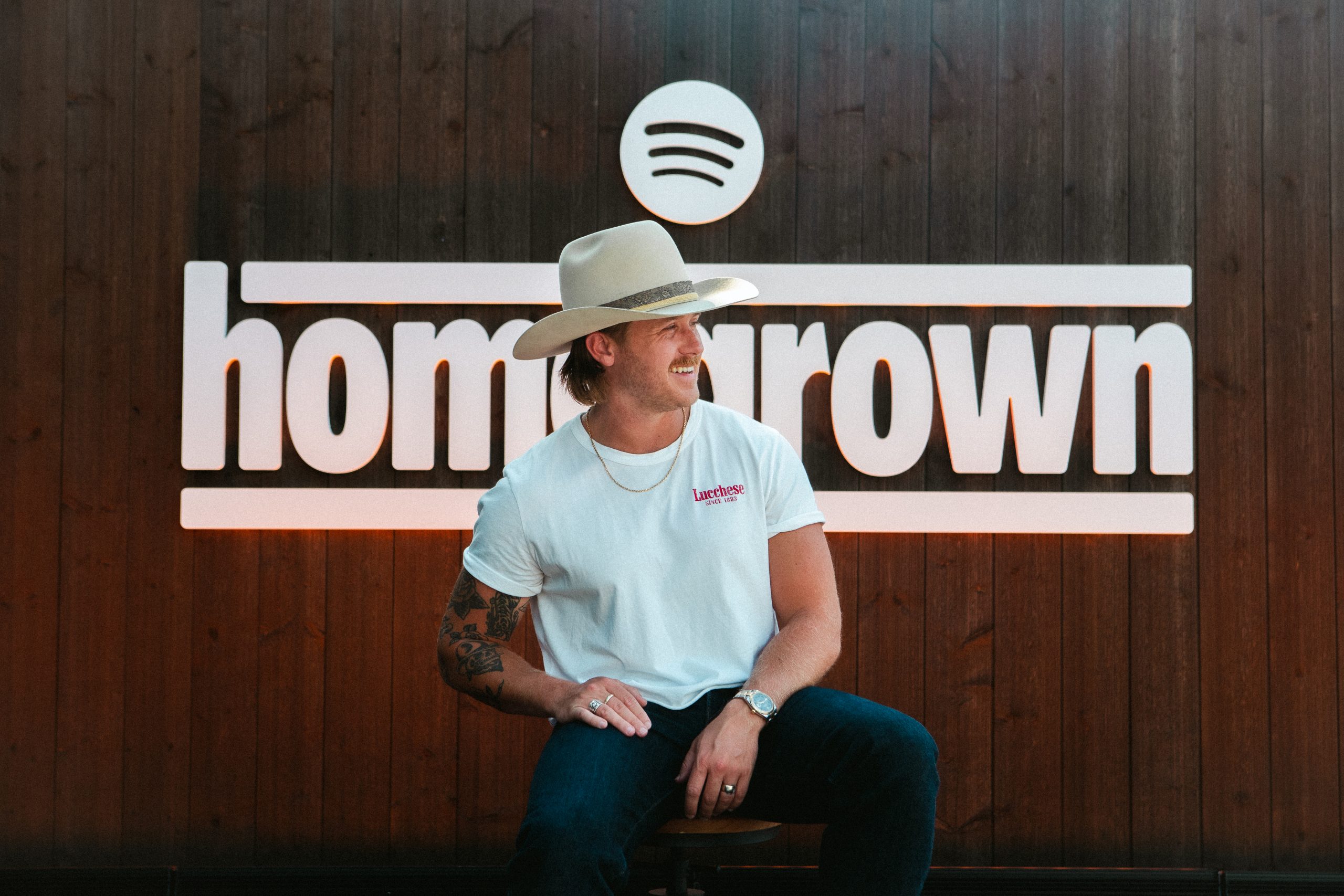
Corey Kent posing in front of a backdrop featuring the Spotify logo and the text "homegrown"

Corey Kent’s sound brings together his Oklahoma roots with country soul and a rocker’s edge. Earlier this month, he brought that mix to Bloomington, Indiana, for the latest iteration of Spotify Homegrown Live, presented by Hilton, ahead of the release of his new album Heartland Rock and Roll, out September 25.

It was the first sponsored live event for homegrown, Spotify’s editorial playlist spotlighting the next wave of country music. Fans gathered on the Graduate Hotel rooftop at Indiana University for an intimate experience featuring an acoustic performance from Corey, a live DJ, and panoramic views as Homegrown Live kicked off college football weekend in true Hoosier fashion. 

For the Record invited Corey to take our first-ever Spotify Questionnaire: a look at the songs and stories that make an artist who they are. From a preschool run-in over Garth Brooks to his favorite podcasts, here’s how Corey is listening. 

What’s the name of your daylist right now?

My daylist right now is  “vapor soul indie surf Thursday afternoon.” My most recent playlist is “90s throwback.” It’s got Sugar Ray, Semisonic, Macy Gray, Uncle Kracker, Kid Rock, Sheryl Crow, and Lenny Kravitz. 

What’s the first song you remember loving? 

I remember getting sent to the principal’s office and my mom having to come up to the school because I was singing “Two Pina Coladas” by Garth Brooks at my Christian preschool. Man, I love that song.

Who’s the best artist you’ve discovered recently?

I would probably say ROLE MODEL. “High Hopes 3000” was the last song I listened to. 

What’s the last song you sent to a friend, and why?

I sent my bass player “Fly” and “Someday” by Sugar Ray. I was just like, “These could be fun covers to throw into the set.” We love that style of rock. 

What album takes you back to a specific place or moment more than any other?

That’s an easy one for me. Come Around Sundown by Kings of Leon takes me right back to this little pond where we used to build fires and sit around until the super early hours of the morning. We’d be fishing out there and always listening to that record.

Is there such a thing as a guilty musical pleasure? If so, what’s yours?

I think so. Mine is U.K. rap. I think their accents are so dope. I also love lo-fi instrumentals. That’s what I listen to whenever I’m trying to get some work done and just need to zen out, or even when I’m working out. 

If you could swap music libraries with anyone for a day, who would it be?

That’s a tough one. If it was a playlist, I’d say my producer and my good friend Austin Goodloe. He’s always putting me on stuff I’ve never heard before, so I feel like his musical library would be super interesting. If it was an artist and I could swap all of my songs for all of their songs… I’m going to go with Chris Stapleton. I feel like a lot of his songs would be really fun to sing, and obviously they’re incredible. 

What’s your go-to podcast when you’re running errands or doing chores?

The Joe Rogan Experience is always a go-to. I am pretty selective about what guests I listen to because I’m more interested in the historical experts and the wonders of the world, or just crazy undiscovered mysteries about ancient civilizations. I listen to another called the Intentional Fatherhood podcast, which I’ve found super helpful in being a husband and a father. And The Daily Stoic. 

Who would you want to narrate the audiobook version of your memoir?

Close race between Morgan Freeman, just because his voice is epic, or Matthew McConaughey. I think that everything McConaughey says sounds interesting and my story is pretty dynamic. There are some highs and some lows, so I think he’d do a great job narrating it.

A Deep Dive Into Fandom and Podcasting With The Ringer’s Mallory Rubin

A person looking off to the side, with their hands in the air, holding a baseball

Mallory Rubin knows her career is unique. “Sometimes I describe my job to people and they’re like, ‘Wait, you get to just talk about Game of Thrones and football for a living? Like, what?’” she said recently, laughing. In her roles as The Ringer’s director of content and cohost of the House of R podcast, Mallory has spent her career diving deep into some of her favorite pop-culture properties (with plenty of detours to talk about her beloved Baltimore Ravens and Orioles). In the process, she’s had a firsthand look at the unique role podcasts play in strengthening the bonds between fans and their favorite things, from TV adaptations of fantasy novels to sports teams.

One of the funny things about fandom-driven podcasts is the way that being a superfan can earn you plenty of fans on your own, which is how Mallory and her cohost, Joanna Robinson, found themselves taping a live show at Camden Yards ahead of an Orioles game this summer. After they wrapped, Mal took to the mound to throw out the ceremonial first pitch before joining the show’s fans—the Bad Babies—in the stands to take in the game. For this child of Baltimore, it was a big deal. “I’m prone to hyperbole, so they’ll release a new flavor of a Dorito and I’m like, ‘What a life highlight!’ But this was actually a life highlight,” she said.

For the Record caught up with Mallory to talk about her fandom journey, the uniquely intimate qualities of podcasting, and the joy of seeing fans meet up in real life.

You threw out the first pitch at an Orioles game last night, but you didn’t just throw out the first pitch—it was House of R Night at Camden Yards! What did that mean to you?

It was totally bonkers and surreal—the kind of thing where, until people were sitting in the seats, I thought it was maybe an elaborate prank. The Orioles are a huge part of my life and always have been. It was truly a delight to come home and do a live pod at Camden and then throw the first pitch—and the people who bought tickets to the live show all watched the game together, so we got to basically do a watch-along with our listeners and viewers during the game. It’s a very special and meaningful thing to confront in real life what the shows mean to people, and this was a particularly special manifestation of that.

How was the first pitch itself?

It was wonderful as an experience. I have some notes for myself on the actual pitch.

Mallory on the field with ‘House of R’ cohost Joanna Robinson and the Oriole Bird.

Let’s talk about fandom. Is there an early memory or moment where you felt the fan thing switch on?

In a way that feels very appropriate given how I’ve chosen to spend my time, it really was a combo of sports and pop culture. My parents got divorced when I was really young, and when I would go to my dad’s every other weekend, we would watch [University of Maryland] Terps games, we would watch Orioles games. And he’s a huge fantasy literature fan, so he had put this little bookshelf in my room with some George R. R. Martin, Dune, but he never was, like, “Read these.” He just left them there, allowing me to discover them on my own when I was ready. In fifth grade, the first book that I read when I had kind of more confidence as a reader was The Hobbit, and The Lord of the Rings was really the first fictional universe that I fell deep deep deep into. 

The first one that I found on my own was Harry Potter. Back in the AIM days, I was putting up away messages, like, “If you don’t know what a Horcrux is, we can’t talk right now.” And then the last movie that I saw in college, like the week I graduated, was Iron Man, so I associate the MCU with moving to New York City and becoming an adult. I started reading A Song of Ice and Fire when I was a young whippersnapper working at Sports Illustrated, living in the Big Apple, trying to find my way. I read it together with a friend of mine who was working at Golf Magazine, and we would meet for lunch and talk about it.

An in-person podcast! What do you think it is about podcasts as a medium that makes them so effective for fan-driven work? Obviously we have TV recaps and movie reviews, but there’s something different that seems to happen in the podcast form.

It’s a couple things. Podcasting is a very intimate medium. We’re in the video era now, but if you think about the audio roots of podcasting, when you put your headphones on, you have someone’s voice in your head. They become a part of the rhythm of your day. We talk a lot at The Ringer about, “Come for the topic, stay for the hosts.” People have to care about both things, ultimately, and if and when they do, then podcasts afford a depth of connection that is distinct. 

We always talk about our shows being “expert but approachable.” You want the conversation to be the best version of the thing—if people give us their time, we don’t want to squander it. But it also has to be a good hang, and a lot of that is the rhythm and rapport and chemistry between the hosts, which you can’t fake. That allows people to form a connection, too, because then they’re like, “I’m hanging out with my friends.” That’s the great trick of podcasting: “I’m hanging out with my friends.” 

You talked about how important expertise is, and you’re infamous, I’d say, for the amount of prep you do for podcasts. Tell me about your process.

In some ways it’s more intense than ever, which, as I get older, I just honestly can’t stay up this late or wake up this early. But I don’t want to ever go into one of these runs feeling like I got this, because then maybe I won’t. It does vary property to property, but the prep is: I want to be able to watch the episode multiple times. I want to read, if I can, source text. I try to spend as much time with the actual thing we’re covering—the movie, the show, whatever the case may be—and if there’s a source text, to really dive in and to learn about the mythology and the lore, but I don’t only want to focus on the mythology and the lore. Because we talk about character arcs and narrative structure and the quality of the writing and the world-building, too. 

A packed house for the live taping of ‘House of R.’

At the O’s game, you got to hang out with all these fans and members of your community. What do they mean to the work you guys are doing?

I mean, it’s the best! It’s the best, it really is. Anybody who works on the internet in any capacity knows that sometimes it’s gnarly out there. I am a woman in sports media! And no stranger to how dark the feedback and reception on the internet can be. So I have felt astonished now twice in my career by the relationship that people have formed to a thing that my cohosts and I have made together. The Binge Mode fans were just unbelievable, and the House of R fans are at a god-tier level of love and enthusiasm for the thing we make. It’s unbelievable to us. I went to journalism school, I was editing football columns for years. I never thought I would be doing this professionally. The ability to spend time thinking about things that I actually care about is not something I take lightly, and to see other people respond to that is the gift of a lifetime.

The other thing that’s great about seeing people in real life is getting to see the listeners engage with each other. We met people who are huge House of R fans, but they had met in the Binge Mode days, and they had formed a trivia group because of Binge Mode. We’ve had a couple of House of R people reach out and invite us to their weddings. There are all of these different layers to the community around the shows that we make, and it’s been so cool to see the way that people discover the thing and then discover other people who love the thing, and then the depth of the bond just grows from there.

Last question: What’s the last thing that you were surprised to find yourself becoming a fan of?

To go back a few years, F1. Like a lot of American sports fans, during COVID, I caught up on every Drive to Survive season that had aired to that point. It was really the height of Danny Ricciardo-mania, and he had gone to McLaren at that point. We knew we wanted to pick an English team, and it felt like there was a little bit of an Orioles comp there with where they were at the time. So we became McLaren fans, and we started watching F1 in real time, waking up to watch the Grands Prix. And now, a few years in, we watch qualifying. We watch practice! Lando Norris is a very, very important figure in our lives. We’re coming off a couple Constructors’ Championships, and Lando won the Drivers’ title last year, so that was rewarding. Will the Orioles reward me similarly? I can’t say.

Keep an eye out for Mallory across the Ringer’s network of podcasts, and check out the latest episode of House of R on Spotify now.

All photos: Brian O’Doherty.

How Amy Poehler Became Such a ‘Good Hang’

A person staring at the camera from behind a laptop and microphone. A neon-lit "GOOD HANG" sign appears behind them

“Enough with improving ourselves! And listening to stuff about how we’re supposed to get better, and better, and better,” Amy Poehler joked on an early episode of her podcast, Good Hang with Amy Poehler. Over the 70-plus episodes the show has released since launching in early 2025, it’s become clear that Good Hang isn’t a place for typical podcast chat about optimization and self-improvement—but it is the spot for celebrity interviews with a ton of heart, lots of laughs, and the odd crying jag, too.

But making things look easy takes a lot of work. As executive producer Jenna Weiss-Berman explains, it helps to have a beloved-by-everyone host like Amy leading the charge. But the show has earned its success—it’s consistently at the top of Spotify’s podcast charts, and took home the first-ever Golden Globe award for Best Podcast—thanks to hard work and deep research, too.

After a live recording of the podcast in New York earlier this month, Jenna sat down with For the Record to talk about bringing Good Hang to life.

How did you guys talk about the show before it launched?

Amy and I talked about it for almost two years before it launched. She made three limited audio series where she played characters, and she is a true, massive podcast head, you know. She listens to everything. She was talking about how she wanted to build out more podcasts in her producing life, and I was basically, like, “I think you should host one as yourself.” She’s a private person, so it’s a little scary to think about hosting a podcast. We started kind of sending ideas back and forth, and thinking about what the show could be. 

What are some more granular editorial or or production choices that gave the show its footing early on? How do you set the very specific tone?

It’s a very specific tone, and it’s a very Amy tone. You meet Amy, and you’re like, “You would be the best in the world at this thing.” There is simply no one better. And we were thinking a lot about the times that we’re in—there are a lot of podcasts that are really heavy, about the news, and also a lot of self-betterment podcasts. And we knew—she says this in the first episode, or the trailer, “We’re not going to tell you how to be better.” We always just wanted to set a tone where it was like, This is a happy place. 

You get to come here and you don’t have to be anyone other than who you are, and you don’t have to strive to be better. We’re just here to make you laugh. We ask every guest what’s making them laugh—that’s a big part of it, too. And that was also in the early planning: how can we not just make this a fun, happy, safe place, but also bring the guests into helping our audience figure out what’s going to make them laugh?

Did the show title come first or last?

We were shopping it around as Whatever Works. I actually think it was Bill Simmons who was, like, “So it sounds like what you’re talking about is a good hang. Maybe that’s your title.” And we were, like, “Okay, that’s the title.” It wasn’t a thing that we workshopped or brought in an outside marketing group. It was literally Bill Simmons sitting in a meeting telling us that it sounded like a good hang.

You hit on what I suspect is the number-one thing that makes Amy a good host, which is that she’s just Amy Poehler. But besides that, what makes her so good at this?

She’s super curious about people. She just genuinely wants to know and understand people. She’s never judgmental, she’s very loving, and she just knows how to make everyone feel so comfortable. Every guest who comes in, afterwards, they’re all, like, “That was so great.” 

There’s more crying than maybe you would expect on a fun celebrity chat podcast. 

Maybe it sounds corny, but I think people feel comfortable to cry because they know that Amy sees them. And a lot of the crying on the show comes when Amy is shining people and telling them how amazing they are. And I think that they’re genuinely moved by feeling that she really sees and gets them. Seth Meyers was our first cryer, and it was really because he was talking about the early days of feeling like she was so supportive of him at SNL, and was really looking out for him. 

Darcy Carden and Amy Poehler, live onstage in New York. (Photo: Jess Williams)

How do you guys book the show? There’s a preponderance of people who seemingly know Amy or are friends with her, but I’m curious how you think about the mix.

At first, it was a lot of us going to her friends and being, like, “Please, please help us.” [Laughs] The early episodes, it was a lot of her friends—Tina Fey and Martin Short, Seth Meyers, Rachel Dratch. A lot of her buddies. And that’ll always be a part of the show. She also knows a lot of people from, say, hosting the Golden Globes. People feel very comfortable with her even if they’ve only met her a couple times. So sometimes people think that it’s a lot of her friends on the show, but a lot of people are just friendly with Amy because she’s so nice. But now a ton of it is inbound—we’re getting at least like 10 to 15 pitches a day from the biggest stars in the world. 

What qualities make for an ideal guest?

Honestly, the thing we think about a lot is, are they going to be a good hang? That’s really the bar for us.

The show has been way up on the charts, you guys won a Golden Globe—what does your success tell you about what people are looking for in a podcast?

I think people want joy, they want an escape, they want loving connection. And like that’s what the show is. I listen to news podcasts all day. Those are extremely important. Everyone should be listening to those. We should never check out of the world. But sometimes we just need like an hour to kind of just have a sweet, warm bath or whatever.

When you’re recording, how do you know you’re getting a moment that’s going to resonate?

Sometimes I see Amy laughing so hard that she puts her face down on the table, and I know that we have a good moment. Amy is also, at her core, one of the greatest comedians in the world, so she gets like excited at doing bits with people, and sometimes this like back-and-forth starts that gets crazier and crazier and elevates itself. And then we also have really deep moments where people feel really comfortable and safe to share heavy stuff. So the show is a lot of things. 

Looking for your next good hang? Find the latest episode of Good Hang with Amy Poehler on Spotify now.

Top photo courtesy of Good Hang with Amy Poehler.

The Art of Specificity: Designing an Experience for Every Atif Aslam Fan

Atif Aslam's Subah Aye Na album cover on a blue gradient backdrop

No two fans connect with an artist in exactly the same way. Some have been listening since the very beginning, while others may be discovering them through a shared playlist today. Some return to the same songs for comfort, while others are always eager to hear what’s next.

It’s that diversity that inspired Spotify’s new in-app experience celebrating Atif Aslam’s latest release, Subah Aye Na—his first studio album in nearly two decades. One of Pakistan’s most celebrated artists, Atif has built a catalog of pop hits, film soundtracks, and devotional performances. His audience spans generations and geographies, with nearly 8 billion all-time streams and more than 30 million monthly listeners. Remarkably, 96% of those streams come from outside Pakistan.

Available now in the Spotify app, Discover Your Inner Aadeez is a mobile experience named after the artist’s fan community. It groups listeners into one of four personas based on how they engage with Atif’s music: Borderless Aadeez, Moonrise Aadeez, OG Aadeez, or Early Discoverer Aadeez. Designed to be both personal and shareable, it gives fans a new way to see themselves in the music they love.

Gracie Abrams and Olivia Rodrigo Talk Friendship, Fame, and ‘Daughter from Hell’

Gracie Abrams standing next to Olivia Rodrigo. Their arms are around each other

With hit albums, sold-out tours, and a generation of fans hanging on every lyric, Gracie Abrams and Olivia Rodrigo are two of pop’s most exciting voices. Now, as Gracie prepares to usher in her next era with Daughter from Hell, she sits down with Olivia—fresh off the record-breaking release of you seem pretty sad for a girl so in love—for the latest episode of Spotify’s Countdown To video series. Together, they sat down at New York’s Cherry Lane Theatre to discuss songwriting, growing up in the spotlight, and the experiences that have shaped them as artists. Here are a few highlights:

Their friendship is built on years of mutual admiration.

Before they were selling out tours, they were each other’s fans. Gracie recalled finding Olivia’s Instagram when she was a teenager and being inspired, while Olivia revealed that she was a fan of the early videos Gracie recorded of herself playing guitar in her bedroom.

Gracie’s favorite lyric on the album comes from “Humming.”

It’s this one: I’m convinced our sinking ship will sing as it goes down / haunting hymns keep echoing after we’re in the ground.

Gracie said the lyric captures her own unease about the state of the world. “Lots of the songs, to me, feel more existential than diaristic. But that song in particular, [that’s] the lyric that comes to mind.”

“I think when I wrote that it came from this place of understanding—or just having eyes and ears and a heart—and knowing that so many people are in the midst of such despair and pain,” she continued. ‘But I really do believe in us […] and I have hope.”


View this post on Instagram


A post shared by Gracie Abrams (@gracieabrams)

Olivia’s favorite song on the album is “Death Wish.” 

“I remember watching the video of you performing it at The O2 and being like, ‘Oh my God, that song is so, so beautiful,’” she told Gracie. “Every lyric feels so poignant. It feels like there are no filler lyrics in it—it’s just perfect.”

Gracie’s evolving style has helped her feel more like herself.

After Olivia remarked that Gracie’s style has “never been cooler,” Gracie reflected on how cutting her hair has changed the way she sees herself. “More than anything, I have found, as I’ve continued to cut my hair off, I feel more like myself,” she said.

That shift has also changed how she shows up onstage. “I think I look back on even the last tour aesthetic, being in dresses, for example—I’m like, the person I am today, I don’t know that I will ever perform in a dress ever again.”

Touring helps Gracie cope with the “fishbowl” feeling of fame.

Both artists have experienced the strange realities of life in the spotlight. Gracie, who said she didn’t initially aspire to be a performer, described the “fishbowl” feeling she references on the album. But she’s found perspective by getting out on the road. “In reality, that isn’t remotely true, and the world is so big,” she said of the feeling that everyone is watching. “And I’m grateful to tour, because it lets you remember that in many ways.”

Watch the full conversation on Spotify and don’t forget to presave Daughter from Hell, out July 17.

From Audio to IRL: How ‘Let’s Get Haunted’ Is Building Community With Spotify RADAR

As podcasting continues to evolve, growth increasingly means building beyond audio. Creators are expanding into video, merch, and live events, finding new ways to deepen listener relationships and bring audiences together. One clear example is the paranormal-comedy podcast Let’s Get Haunted.

Hosted by best friends Alyssa Terry and Natalia Strawn, the show has built a devoted fanbase—affectionately known as the “Haunties”—around a shared love of the spooky and the absurd. Last year, the podcast joined Spotify’s 2025 RADAR creators class, our global program designed to help emerging creators reach new audiences.

That support helped pave the way for a new milestone: the show’s first-ever live taping, recently recorded in front of about 120 fans at Spotify Studios in Los Angeles. The episode is now streaming on Spotify, offering a snapshot of the community they’ve built.

To mark the occasion, For the Record caught up with Nat and Aly for a joint Q&A about the show’s evolution, their live debut, and what’s next.

For anyone hearing about Let’s Get Haunted for the first time, how would you describe the show?

It started as a tongue-in-cheek response to the horrors of everyday life. We take turns deep diving into paranormal topics—ghost encounters, alien abductions, cursed objects—with the assumption that each story is true. Our goal is to give the audience a chance to suspend their disbelief and tap into a sense of childlike wonder.

We also have a broad definition of “haunted.” Did you get three flat tires in a month, hunt down the person who stole your credit card instead of calling your bank like a normal person, or rescue a possum on the side of the highway and crowdfund its femur surgery? Congrats, you’re haunted! (These are all things that have really happened to us.) We try to match the chaos of the hauntings in our personal lives with the tales we select for the storytelling portion of the show.

How has the podcast changed since you first launched it? And how have your listeners helped shape where it’s gone?

Our podcast has always been very community-based. We use listener surveys to get feedback at the end of every season, then have a meeting where we go over that feedback and figure out which suggestions are feasible for us to incorporate.

When we first started the pod, we were living on opposite ends of Los Angeles and would scramble to find places to record that were roughly in the middle. We’ve recorded in bathrooms, cars, empty office buildings, and anywhere we could find. 

In 2023, thanks to the generosity of our audience, we were finally able to sublease an office space. Having a stable place to record was a total game changer: It allowed us to increase the number of episodes we were putting out, create vlogs, produce and store merch, and organize fan meet-ups. We literally would not exist without the support of our listeners.

Your first live taping was a big milestone. What did that moment feel like for you?

It was absolutely surreal! We were so nervous going into it, but as soon as we parked at the venue we immediately ran into two Haunties who had arrived three hours early to be first in line. Knowing we were walking into something brand new with the support of the people who’ve been with us since the beginning made us feel so much more at ease.

‘The Big Picture’ Co-Host Sean Fennessey on Spielberg and the Art of the Interview

Few filmmakers have shaped popular cinema as profoundly as Steven Spielberg. So when Sean Fennessey, co-host of The Big Picture from Spotify’s The Ringer, sat down with the director at SXSW earlier this month, it made for a conversation movie fans won’t want to miss.

Now streaming on Spotify, the interview spans from his filmmaking process to his career and the communal experience of going to the theater. But what does it take to prepare for a conversation with a figure like Spielberg? For the Record caught up with Sean to hear about his research process, his interviewing philosophy, and what helps a conversation feel both thoughtful and natural.

After having a little time to reflect, what has stayed with you most since your sit-down with Spielberg?

Well, aside from his confession that he believes we are not alone on this planet, I was struck by Spielberg’s balance between certitude and vulnerability. More than six decades into his legendary career, he’s as comfortable talking about being completely out of his depth while making Jaws as he is holding court on the communal nature of moviegoing.

It’s rare that such a godfather figure—someone who really knows everything about his field—retains that sensitivity, playfulness, and lack of cynicism. It was inspiring to find that he’s still the same guy who was excitedly putting his dreams on the big screen in the ’70s.

You’ve interviewed many filmmakers over the years. Do you prepare differently depending on who you’re speaking to, or is there a core approach you always come back to?

I always rewatch the work. Always. For directors whose films I already know well, I go hunting for themes and look for ways those ideas connect to their personal history. I’m an inveterate researcher, and I like to start with interview compendiums and contemporaneous magazine profiles. For this sit-down, I read a great collection of Spielberg interviews from The University of Mississippi Press. Spielberg is arguably the most famous film director in world history, so there’s no shortage of material, but he doesn’t often do State-of-the-Union-style conversations. That meant there was still a lot of ground we could cover together.

For other filmmakers, I look to biographies, criticism that connects their filmographies, and especially, director commentaries on physical media, where you can find subjects in a surprisingly revealing state talking about how and why they made certain creative and practical decisions.

These Music Trends Took 2025 in Surprising New Directions

Spotify Wrapped is back, and as always, it’s powered by the billions of streams that fans around the world delivered throughout the year. From the artists who dominated the charts to the unexpected tracks that found a home in playlists everywhere, Wrapped is shaped entirely by how our listeners hit play.

In 2025, music fans made bold choices. They pushed familiar names to new heights, championed emerging voices, and turned niche sounds into global movements. Pop, K-Pop, and country surged; cross-genre collaborations flourished; and a booming live landscape with a touch of social momentum shaped what broke through. What rose to the top wasn’t just a reflection of popularity, it was a reflection of passion.

To explore the biggest shifts in sound and the global fandoms behind them, we sat down with Ronny Ho, Head of Dance & Electronic Development, and James Foley, Lead of Global Editorial Strategy, both of whom are on Spotify’s music editorial team, for a look inside the data and trends that defined 2025.

Let’s start with a surprise. Which 2025 music trend caught you off guard the most this year?

Ronny: It’s not necessarily a 2025 trend, but I’m pleasantly surprised by the globalization of K-Pop this year. We couldn’t ignore the impact of K-Pop Demon Hunters, putting groups like HUNTR/X and Saja Boys at the forefront of pop music culture. Although fictional, they’re represented by real artists from around the world, including South Korea and the U.S. In addition to the aforementioned K-Pop Demon Hunters, KATSEYE, another group that became popular from a TV show, skyrocketed to stardom in 2025 and recently kicked off their headline tour. 

James: The continued growth of Afrobeats isn’t surprising, but perhaps the ways in which it now permeates global music has caught many unawares. This year has seen it morph further out of its West African roots into a staple of mainstream culture—the sonics are being adopted by other genres and places, further accelerating its reach. It’s now firmly part of mainstream pop and rap in North America and Europe. Notably especially is the cross-pollination happening with Latin artists such Kapo and Beéle, who interpret Afrobeats through their own lens while collaborating with some of the mainstays of the genre.To that end, our ever-growing Afro-Ritmo playlist spotlights Latin-African fusions, and Global Afrobeats gives you a true sense of this amazing global cultural shift.

We saw several new genres and microscenes pick up steam in 2025. Which ones stood out, and why do you think they resonated with listeners?

James: There’s something very gratifying to witness in the remarkable rise of Copenhagen’s alternative pop scene. It’s a perfect storm of a generation of super-talented independent artists—Erika De Casier, Smerz, and Astrid Sonne to name a few—the real life spaces and institutions in the city which have nurtured and supported musical innovation and collaboration, and a supportive industry infrastructure. Why has it resonated? The music is this fearless blend of trippy, left-field, sometimes experimental textures while retaining an accessible edge. On paper it’s incongruous, but in your ears, it’s just incredible. Hear for yourself on our Cph+ playlist.

Ronny: Rock is continuing to have its moment, especially influencing country music. This new wave of country rock is about the return of rock bands to the mainstream country sound, with groups like Treaty Oak Revival and Ole 60 growing massive fan bases in just a few short years. This is the next step in the expansion of the country genre, growing from the acoustic homegrown-y Zach Bryan arm of the genre but incorporating heavier production. Think big guitar and drum sounds over more mainstream country lyrics and imagery. You can get a taste of it on our newly launched GRAVEL playlist.

I’ve been noticing a wave of heart-on-sleeve pop taking over Spotify lately—the kind that feels pulled straight from a rom-com’s big montage moment. Artists like Olivia Dean, who has seven songs on the Global Chart, Role Model, Alex Warren, and Sombr are leading the way with songs that are emotionally direct and impossible not to feel. It’s romantic pop at its purest: earnest, catchy, a little self-aware, and perfect for anyone who wants life to sound a bit like falling in love on-screen.

On a personal note, what was your favorite music trend of the year? You know, the one you couldn’t stop listening to?

Ronny: I love that U.K. garage has properly crossed over in the U.S. this year! Speed garage was amongst the fastest-growing subgenres in music this year, and that’s thanks, in part, to the internet. Artists such as Sammy Virji and Girls Don’t Sync have added a modern touch to garage while paying homage to the classic sound. When I’m not out raving, I love listening to the emerging R&B artists coming from the U.K. If you’re not on the kwn train yet, it’s time to get on!

James: The surge and increasing international resonance of talent out of Ireland has been my favorite trend. There’s been a lot on repeat—the heartbreaking and hilarious CMAT on her album EURO-COUNTRY; KNEECAP’s bilingual rap, which is laced with humor and political intention; and hard-hitting, sophisticated bangers from KETTAMA. Irish artists in all their diversity are on a roll. Their music is connecting in ever more corners of the world and personally I couldn’t be happier about it!

We know social media is a discovery engine. In 2025, how did social platforms shape music trends?

Ronny: Social platforms continue to blur the lines of what it means to be regional. Artists are finding fans all around the world and genres are crossing borders faster than ever. As James mentioned, sub-Saharan Africa continues to showcase its cultural impact, with Afrobeats merging with Latin sounds and Afro house instrumentation weaved into pop and dance production. 

We also saw the revival of trip-hop as nostalgia continues to play a massive part in culture today. Trip-hop was the soundtrack of the mid-’90s, built on smoky vocals and hip-hop–leaning beats from icons like Portishead and Sneaker Pimps. Today, we’re hearing it everywhere, from the lush, atmospheric textures of FKA twigs and PinkPantheress to the glossy downtempo R&B of Oklou. Even Addison Rae’s brand of moody pop traces back to the genre. I recommend exploring our Deep Dive: Trip-Hop Revival playlist.

Looking ahead, are there any early signs or shifts that could hint at what’s coming in 2026? Any bold predictions?

James: Connecting the dots on what our editors are seeing and hearing around the world, it’s clear that artists have many more exciting moments ahead. This momentum is driven by a new generation of truly borderless listeners who don’t care about long-held boundaries of language or location. Specifically, I think we’ll see more Asian artists breaking through globally across a broader mix of styles and sounds. You can already see hints of this in the international reception for artists like Japanese rapper Yuki Chiba and Indonesian indie soul band Thee Marloes.

Ronny: Every year, we see harder, more aggressive sounds gain popularity and I predict that in 2026, it will infiltrate the mainstream. Whether it’s gabber, rage rap, country rock, Latin trap, or punk, we’re seeing communities galvanize online as much as they are in real life. 

Explore your personalized 2025 Wrapped and learn more about this year’s campaign and experience on our 2025 Wrapped hub.

Spotify’s Fiction Podcast ‘Caso 63’ Reaches an Epic Conclusion

Since its debut, the Spotify Original podcast Caso 63 has been more than just a story; it’s been a cultural sensation. The science fiction thriller captivated millions of listeners across Latin America, Spain, and the US, setting a new standard for what audio storytelling could accomplish and bringing attention to the creative depth of Latin American writers, actors, and directors. Now, the journey reaches its exciting conclusion with the fifth and final season, and all 14 bingeable episodes are dropping today.

Created by Julio Rojas and brought to life by the commanding performances of Antonia Zegers (Dr. Elisa Aldunate) and Néstor Cantillana (Patient 63), the series set a new bar for fiction podcasting in the Spanish-speaking world. It was also the first Latin American Spotify Original to be adapted into multiple languages, including English, Portuguese, and Hindi, becoming a global guide for immersive audio storytelling.

The final installment picks up in the year 2062 in a post-apocalyptic world that’s reeling from the aftermath of “Pegaso,” a mysterious event that fractured the timeline. A dedicated group of scientists and anonymous collaborators work tirelessly to locate a single, anomalous timeline—Caso 63—that may hold the key to saving humanity. But here’s the catch: The only way forward is to go backward and disrupt the original event that triggered civilization’s collapse 40 years prior.

The fifth season delivers an ambitious finale that honors the legacy of the series. It’s a conclusion that promises a nonstop mysterious and emotionally resonant journey, bringing a satisfying close to a story that’s riveted listeners around the world.

The team at For the Record had the chance to discuss the season finale of Caso 63 with its creator, Julio Rojas, about his thoughts on the project and the last season. 

As fans prepare to say goodbye, what can they expect from this final season?

Above all, it’s about closing a cycle that began four years ago. It’s a season that pays tribute to the fans, and we can expect the beginning of the unraveling, the final answers, and the closing of everything—which at the same time is also the opening of everything, because it’s a time loop. 

What message or emotion do you hope people take away after finishing the last episode?

First, nostalgia—for an audio fiction that accompanied us during such a difficult moment in human history, the pandemic. Then, reconnection with the main characters, and above all, the realization that every action we take has consequences. Events in the future may be significant, even if we don’t perceive them that way now.

Writers are often shaped by the worlds they create. How has Caso 63 affected you personally?

It has accompanied me over the past four years. I’ve felt a deep connection with the characters, but also on a personal level, because it has allowed me to see time not as an isolated event in our lives, but as a chain of causalities. I’ve become very aware that the events and words spoken now are relevant in the future—it has allowed me to contemplate the future.

Why should those who haven’t experienced Caso 63 listen to it?

Basically because it’s a story that concerns us all. We’re living in a time when the big question is: What does the future hold for us, and what are the consequences of the actions we’re taking today? This is an audio fiction that speaks precisely about that—about what’s coming, or perhaps what’s not.

With the creation of this story, how has your own perception of time and opportunity changed?

For me, time stopped being an invisible event—a variable only measured by clocks—and became part of the architecture of reality. Time is part of us as humanity, and we must understand that we can’t toy with that variable. What we do matters.

Ready to find out how it all ends? Start streaming the final season of Caso 63.