

Tag: R&B

On ‘The Bridge: 50 Years of Hip-Hop,’ Nas Dives Into the Stories Behind the Genre’s Biggest Moments

For the past five decades, hip-hop artists have leveraged the genre to change society, culture, and the music industry as we know it—and have created icons in the process. So to mark the genre’s half-century milestone, The Bridge: 50 Years of Hip Hop, a Spotify Original podcast in partnership with Mass Appeal’s #HipHop50 program, dives deep into how hip-hop went from the microphones, turntables, and sound systems to big business and a worldwide cultural phenomenon.

Over the past four months, the hosts—rapper and hip-hop icon Nas and veteran journalist Minya “Miss Info” Oh—have interviewed icons such as Ice Cube, Cordae, Mary J. Blige, Jeezy, and Yara Shahidi. Each tells a story as unique as their music, giving listeners a glimpse of their particular place in hip-hop history. But with so many decades and names to choose from, Nas originally wasn’t sure where to begin.

“When I first thought about doing this, I thought it would be impossible to choose who to go after first,” he told For the Record in an interview. “I got love for everybody.” 

We asked Nas to share more about his perspective as a hip-hop icon speaking to other genre giants and about what podcasts he pays attention to.

What are some of the biggest changes to the genre that you’ve noticed in the three decades you’ve been on the scene?

The constant changing of the guard. The pioneers have truly inspired the youth. And that youth, they eventually become giants, and then they inspire the new, next generation to do the same and more. And it keeps growing and growing. I like to see the different artists that come out every 10 years. It’s crazy.

What’s something surprising that you’ve learned on the show so far? 

Just some of the stories—there’s so many untold stories that connect to other stories and allow you to see it as a piece of history. You see the work that was put in that you didn’t know had happened. I didn’t even know how much MC Lyte had done, just being a female artist waking up and going into a male-dominated industry because it was just something that she felt was her calling. 

Then there’s the Ice Cube and N.W.A. stories, like when they talk about coming to New York for the first time and getting booed. Those were hard times in the game. Then Ice Cube had a sold-out solo show at the Apollo Theater. He told the story of it on the podcast. I was actually on 125th Street, outside the theater that night, and I couldn’t get in. It was super lit outside in Harlem, NYC. It was that show that really established him in New York City forever. People were crazy for him. I was happy to see it because I was really into his music. And so just hearing from his side of it, how he tore the house down, was really cool.

How did these deep dives into hip-hop history influence your creative process as you put the finishing touches on your latest album, Magic?

They were really different. With the podcast, I got the opportunity to really be a fan, a student, and enjoy the people that really moved me. With Magic, it was just me putting the artist hat on. So, completely two different things, but I can say that talking to all of these guys made me more happy to be an artist in this art form because I could see that there is so much more for me to do. It makes me more happy to be a part of something that the people I’m talking to on the podcast are a part of too. They’ve inspired me. I am happy to be in their world, pushing what they are pushing.

What was the most surprising thing about creating a podcast? What have been the easiest and hardest parts?

It’s been great to step out of my comfort zone and do something that I never thought would be as fun as it’s been. I thought I’d be terrible at talking. Timing. Listening clearly—and it’s being recorded. I said ‘I’ll just be me.’ I don’t even watch my own interviews, and I thought that I’d upset people with all my prying. But I pushed through the sh*t and it’s exciting; people tell me they like listening so I guess I’m doing aight.

There are a lot of hip-hop legends who are no longer here to share their stories. If you could pick one person to have on the show, who would it be?

It would be Eazy-E or Young Dolph. I would want to learn more about Young Dolph. I’ve heard some of his music, but the people I listen to mostly are older, so I want to know more about the things that I’ve missed that only he can say and explain to me.

What are some podcasts you’ve been listening to besides your own? 

1619, Drink Champs, and a true crime podcast. 

Get more Nas and Teddy Riley (and maybe one day find out which true crime podcast Nas has been streaming?) on the latest episode of The Bridge: 50 Years of Hip-Hop every Tuesday, only on Spotify. 
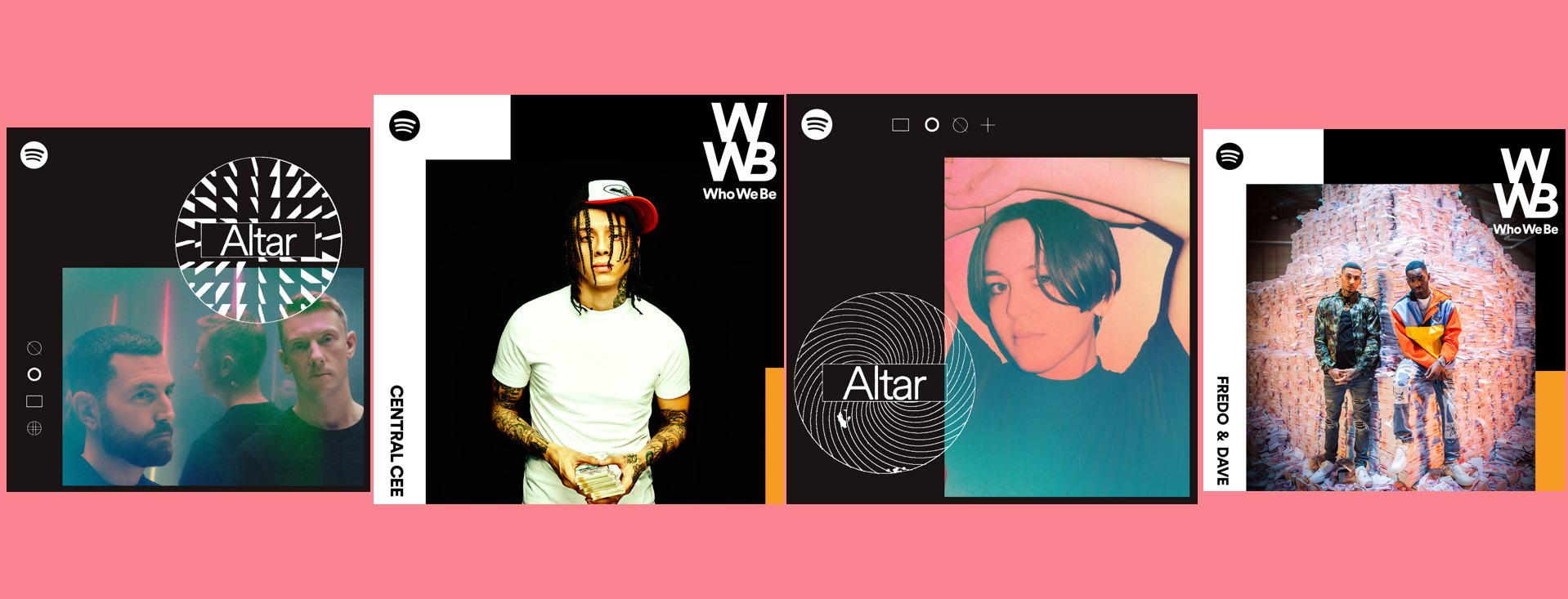
How Who We Be, Altar, and Our Generation Are Propelling UK and Irish Artists to the Top

Spotify’s editorial playlists are full of musical collections that fans won’t find anywhere else. Some of these playlists follow moods, while others contain songs curated for a specific genre—many of these playlists highlight emerging artists and help them connect their music with new audiences.

In the UK and Ireland, three flagship playlists are particularly influential. Listeners can find the UK’s biggest rap, grime, R&B, Afrobeat, and dancehall hits on Who We Be. Altar is the destination for the best electronic dance music. And for those looking to experience new and emerging genreless sounds, the Our Generation playlist contains some of the most exciting emerging acts on the UK and Irish scenes.

In 2020, many fans discovered new artists through these lists, and the proof is in the numbers. Read on to learn about some of the standout artists who saw success on these playlists last year. 

Who We Be

The Who We Be playlist has grown significantly since its launch in 2016, and it now has over half a million fiercely loyal and engaged followers. One of the playlist’s biggest breakthroughs in 2020 was Central Cee. The West London rapper commanded more than 200,000 streams from the Who We Be playlist alone, and he saw almost instant success with his single “Day In The Life.” Since he joined the Who We Be Community, the artist’s followers on Spotify have grown by almost 359%.

S1mba is another rapper who made waves last year with his debut single, “Rover (feat. DTG),” which peaked at number two in the UK Top 40 in April. The Zimbabwean-born Londoner is the 15th-most-streamed artist overall on the playlist, and since “Rover” was released, he has seen a 16,435% rise in listens.

After being featured on Who We Be, Tiana Blake’s “Cut Ties became the best-performing traditional R&B track from a British artist on the playlist. The track went on to make waves in other global Spotify playlists, such as Chilled R&B, and saw a 159% rise in streams.

Altar

Dance and Electronic music isn’t going anywhere. If you need proof, look no further than the Altar playlist, which saw a 193% increase in listens in 2020. One of the biggest artist breakthroughs of 2020 was award-winning producer Fred Gibson, who released tracks under his alias, Fred again... The artist’s unique sound blends raw vocal samples with club-ready euphoria and has been a hit with the Altar audience; they’ve made him one of the top 20 most-streamed artists on the playlist last year.

TSHA was the third-most-streamed UK female on the playlist in 2020. She saw an increase in year-on-year streams of 134%. TSHA’s single “Change” with Gabrielle Aplin, which was recorded at a Spotify Song Writing Camp in 2019, became one of the top-100-streamed tracks from Altar in 2020. 

In May, one of Europe’s most exciting DJs and producers, India Jordan, launched their genre-defining EP For You. Two of the tracks, “For You” and “I’m Waiting,” were featured on the Altar playlist, and over the course of the year, their streams increased by 388%. India was also one of Spotify’s RADAR first listen artists in 2020.

Our Generation

Genreless playlists are growing in popularity around the world, and the case is no different for Our Generation. The playlist, which surfaces the new wave of artists emerging across the UK and Irish musical landscape, saw an 18% increase in streams in 2020. With playlist takeovers from some of the most exciting breakthrough artists on the scene, including beabadoobee, Thomas Headon, and Biig Piig, the home of genre-defying artists has driven huge discovery for fans this year.

Our Generation played an influential role in elevating many artists, including rising star Holly Humberstone, who has grown her audience to over 2 million monthly listeners since her first release, “Deep End,” was added to the playlist in early 2020. 

Other acts that saw great first-time success include Tayo Sound, who was busking on the streets of Reading less than a year before making it onto the cover of the Our Generation playlist in May 2020. His hits “Cold Feet” and “Heartbreaker” were two of the most-streamed tracks on the playlist in 2020, and overall his streams soared by more than 1,000% in the last six months. 

Kamal, an 18-year-old London alternative R&B star, secured the second-most-streamed track on Our Generation with “homebody” after he was featured on his first Spotify playlist cover art in early 2020. Since then, the artist has seen an 84% growth in listens.

With a new year comes more new music. Follow these playlists to discover the latest finds when it comes to emerging artists and hit tracks.

Spotify’s Virtual Notting Hill Carnival Microsite Amplifies Black Creators Like Never Before

London’s annual Notting Hill Carnival is a 54-year-old celebration of the United Kingdom’s Caribbean community, and it’s often filled with parades, food, and, of course, music. Due to this year’s social distancing recommendations, the Carnival’s in-person events are on hold, but the art and culture of the U.K.’s Black creative community can be heard just as loudly as Notting Hill Carnival goes online. As an official partner for Notting Hill Carnival 2020, Spotify is excited to share our dedicated Carnival microsite, with a full virtual musical lineup, playlist takeovers, art experiences, and more.

That’s right: The party isn’t stopping; it’s just moving from the streets into your home. Our new microsite is filled with playlist takeovers from big names, and it gives fans a chance to explore over 40 of the official Notting Hill Carnival sound systems and on-the-road DJs who spin dub, reggae, soca, soulful house and everything in between. Plus, we’ll be featuring an exclusive portrait and film gallery from renowned photographer Ekua King, podcast episodes covering Carnival’s rich history and a look forward, and ways to tune into live events throughout the weekend.

“Notting Hill Carnival is such an important celebration of Caribbean heritage for communities in London and beyond—enriched in tradition and activism and lived through music and dance,” says Sulinna Ong, Head of Music at Spotify U.K. and Ireland. “While it can’t take place in its usual way, it’s key that the celebration continue—in homes, living rooms and gardens—especially given the current climate.”

Learn how you can celebrate Carnival through some of Spotify’s microsite features.

Playlist takeovers

We’ve worked with some of the U.K.’s leading Black creators in music, film, and entertainment to help guide fans through some of our most popular playlists, which will be dedicated to Notting Hill Carnival for the long weekend event. Fans can enjoy:

  • Lockdown success story No Signal’s take on Who We Be, the U.K.’s biggest hip-hop, Afrobeat, dancehall and R&B playlist
  • The legendary Marleys, who will help fans jam along to One Love
  • Little Mix’s Leigh-Anne Pinnock’s compilation of tunes for Throwback Thursday
  • Everything from reggae legends to the new school as Koffee introduces our Irie playlist
  • Spice, the Jamaican dancehall artist and star of Love & Hip Hop: Atlanta’s Dancehall Queen takeover

Notting Hill Carnival sound systems

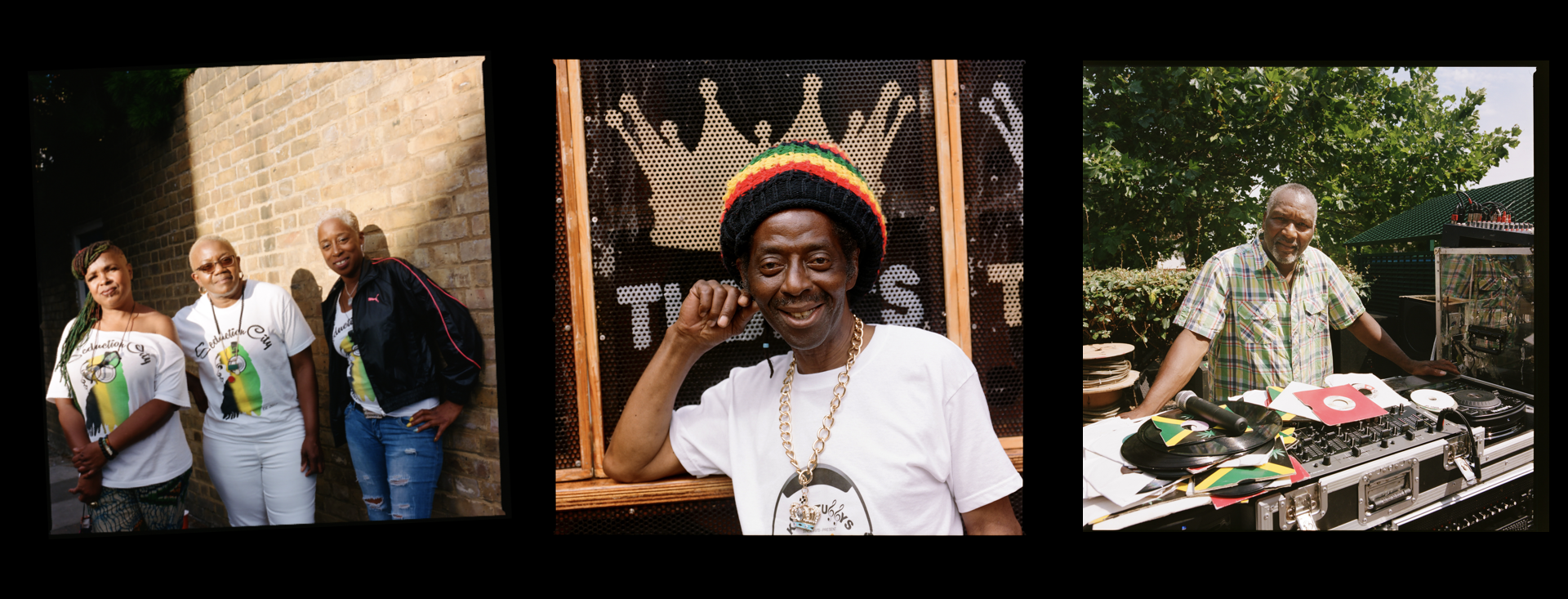
Our microsite also gives fans the chance to explore over 40 of the official Notting Hill Carnival sound systems (aka large DJ booths) and on-the-road DJs. Check in with King Tubby’s, Carnival’s oldest sound; Rampage Sound, one of Carnival’s most coveted spots, the prince of U.K. soca, Martin Jay; and even Carnival’s only all-female sound system, Seduction City Sound.

“Last year I celebrated 25 years of being the only female sound system in Carnival,” says Lady Banton of Seduction City Sound. “I’m a woman and a Black woman, and I’m proud to be a Black woman. I’m also a child of the Windrush generation, so we never forget. I thought, ‘What a relief I am here again.’”

Exclusive photo and film gallery from Ekua King

Just as the in-person Carnival has music and art to boot, so will the microsite, thanks to exclusive work from Ekua King. The renowned London-based photographer of Jamaican heritage who shoots for the likes of i-D, Paper, and Vogue, has created an exclusive photo and film gallery on the site. Check out her stunning portraiture of the over 40 sound systems and on-the-road DJs, whose stories come to life through her shots.

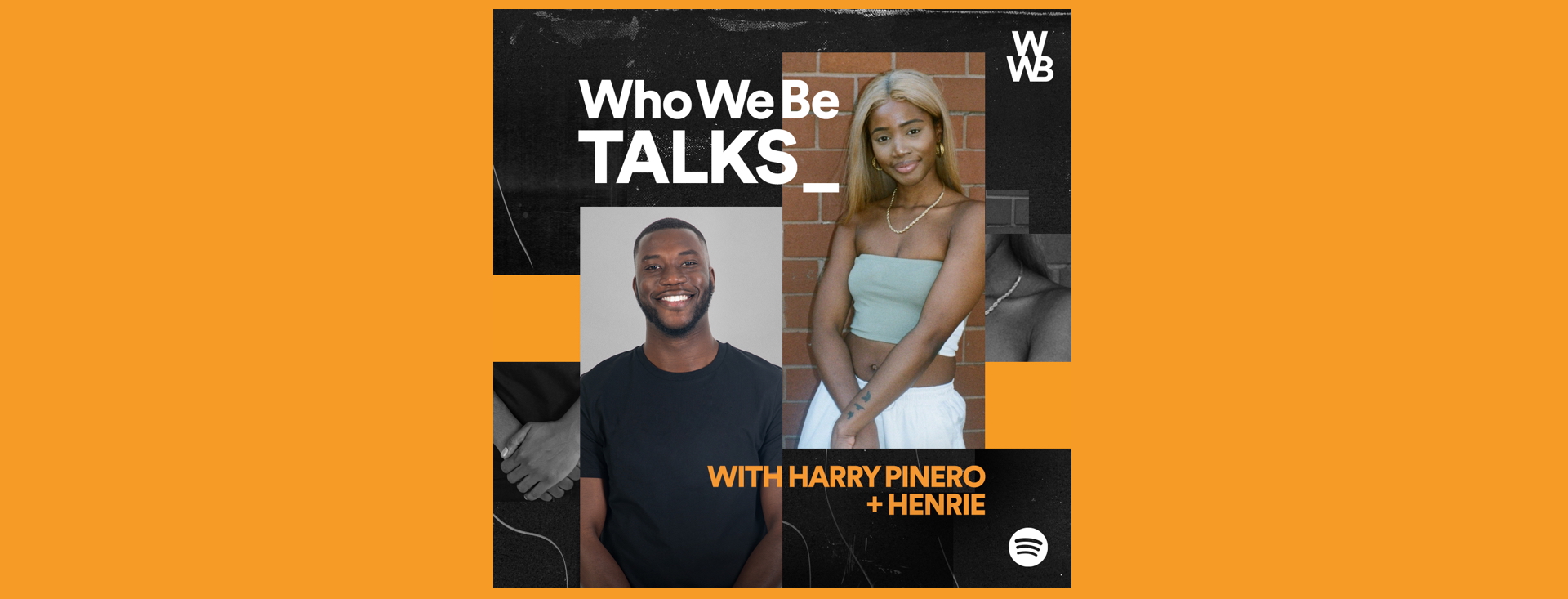
Harry Pinero and Henrie Celebrate Black Music and Culture on the Latest Season of “Who We Be TALKS_”

What happens when you combine the most relevant topics in Black culture, a Spotify playlist with over 600,000 followers, and two hosts who can find humor in just about anything? You get Who We Be TALKS_—the podcast partner to the UK’s biggest rap, grime, R&B, and Afrobeat playlist, Who We Be. The show, which has been running since 2018, recently launched its latest season with two exciting new hosts: Harry Pinero and Henrie.

The weekly podcast celebrates Black music and culture by offering insights directly from the people who help shape it. The episodes, which are recorded on Mondays and drop the next day, are centered around the hot topics of the moment. Each week, the duo is joined by a special guest, and together they share their unique perspectives on the most pressing issues in Black music and culture today.

We caught up with Harry and Henrie to talk about how they’re using their platform to amplify Black voices and why they choose to approach difficult topics with humor.

Who We Be TALKS_ goes hand in hand with the Who We Be playlist. Why is it not enough to just listen to the music? Why do we need both the playlist and the podcast in tandem?

Henrie: We can’t talk about Black music without talking about Black culture: They go hand in hand. It’s something that I think we all talk about without even thinking about.

Harry: The artists create music, but they all have a story. I think the podcast gives artists room to be themselves without being filtered. Some of the artists that have come on the show, Tion Wayne and Big Zuu for example, probably spoke more in-depth than they ever have because our platform is set up for them to do that.

Why do you think it’s important to have a playlist like Who We Be that combines music from Black creators across genres including rap, grime, R&B, and Afrobeat?

Harry: I think for a long time a lot of the Black genres have been umbrellaed under one category: urban. But it’s more than just that. The Who We Be playlist highlights dance, soul, Afrobeat, rap, trap music individually. It puts everything in one place where people can listen to so many different genres.

How have you switched up Who We Be TALKS_ for the new season?

Henrie: We’re now making it more about culture—it’s not just about music and the artist. When we talk to artists, yes, we talk about their latest project or song, but we get their take on what’s happening right now as well. When we had Tion Wayne in, he talked about Black Lives Matter. I think that is incredible to see something like that because you now get a different script of the artist. 

How else are you addressing the Black Lives Matter movement and tying together current events and music?

Henrie: If you’re interested in the music, then of course you’re going to be interested in what’s happening with Black Lives Matter, because the music is reflective of Black lives. 

Harry: When you strip away the job titles of artists or creatives, at the end of the day, these are Black people who are dealing with racial injustice. These are real emotions that they’re feeling. I think that anyone that comes on the show, White or Black, will want to talk about these things, because it’s affecting all of us. What we, and Spotify, are trying to accomplish here is celebrating our culture and saying that we are stronger together than we are against each other.

What do you think is comedy’s role in pushing some of these really important, serious conversations?

Henrie: Comedy plays an important role because even though life is serious, I don’t take life too seriously. I think that finding the lighthearted factor in these times is something that Black people just do really well.

Harry: I agree. I watched Dave Chappelle’s special “8:46,” which was very deep but also very funny. I respect Dave Chappelle because he’s got that balance where he can touch on very technical issues while still finding the humor. 

What are you hoping to bring to Who We Be TALKS_ that you’ve learned from your other work?

Henrie: I do quite a few things at the moment, including No Signal Radio, which recently announced a partnership with Spotify. That show has taught me a lot about myself. Because it’s Black radio, I don’t have to filter what I say or who I am. But at the same time, I don’t necessarily have to have an opinion there. On Who We Be TALKS_, it’s a part of the show. We need to have an opinion, and everybody gets to share theirs whether or not we agree with each other. 

Harry: I started my career on social media talking about real-life issues in the funniest way possible. Then I began hosting events, including one for Spotify. After I did the BET Awards and the BRIT Awards, I started to become more interested in music professionally. Now when I sit down and I talk to people in the music industry, it’s helping me broaden my understanding of the scene. I’m still learning every day.

What do you hope listeners will take away from the show?

Henrie: It’s not really meant to be rigid conversations. It’s meant to be how you would just chat with your friends if you went to their house. I want the audience to imagine us as their friends. See it as being an inclusive conversation as opposed to just an interview.

Harry: I want people to learn from these episodes. I want people to be inspired, to want to chase their dreams, to listen to music, and for artists to get streams. But I also want people to know that just because it’s Black culture doesn’t mean it’s just for Black people. There are a lot of different cultures within Black culture, and I hope this show is a place where anyone who’s interested in any of its many aspects can go to listen to their favorite artist, discover, and learn new things. 

Who We Be TALKS_ is available to stream exclusively on Spotify. Check out the first episode of the latest season, featuring rapper Tion Wayne, below.

Meet Lous and the Yakuza, the Belgian Artist Who Can Sing in Any Language

A subtle assortment of styles swirl together in the music of Lous and the Yakuza, the stage name of Marie Pierra-Kakoma. Across her first three singles, Pierra-Kakoma leans into snappy, minimalistic R&B (“Dilemme), slinky, melodic trap (“Tout est gore”), and nuanced, introspective pop (“Solo”), all of which she sings in French with equal parts age-old poise and modern swagger.

Having penned her very first songs at the same time as she learned how to read and write—around age 6 or 7—Pierra-Kakoma found her calling early on and hasn’t doubted herself since. “I started writing and never really stopped. I was writing until my wrist hurt, but now I’m more relaxed about it,” she said to For the Record.

How Música Urbana is Redrawing Spain’s Musical Map

On a recent summer night in Barcelona, more than 10,000 fans sang along to Bad Bunny’s every word as the Puerto Rican star paced the stage. Their adulation was hardly surprising; the reggaeton heavyweight is one of the genre’s most popular artists. The venue, however, was less expected: This was Sónar, the long-running, avant-garde electronic-music festival, where names like Kraftwerk and Four Tet are more customary headliners. The rising rapper and pop star’s rapturous reception even here only underscored the extent to which urban music, known locally as música urbana, has taken over Spain.

The numbers bear out too. No matter how you parse the data, música urbana—an umbrella category comprising reggaeton, trap, hip-hop, R&B, and their offshoots—comes out on top. Among música urbana’s individual subgenres, reggaeton caps the list, followed by trap and hip-hop. Taking all of those categories together, música urbana has grown by 44% in the last two years and is currently the most-streamed genre in Spain.

Partly, these numbers reflect changing demographics in Spain—and, more importantly, changing attitudes. Federica Tremolada, our Managing Director, Southern & Eastern Europe, feels Spanish teenagers today “are used to having classmates from Ecuador or Colombia and hearing different accents from across Latin America. They are more used to sounds like reggaeton.” 

Música urbana has traditionally been driven by artists from the Americas—particularly Panama and Puerto Rico, widely considered the twin birthplaces of reggaeton, and Colombia, home to artists like J Balvin, Karol G, Maluma, and the Puerto Rican transplant Nicky Jam. But Spain is gradually emerging as a source of música urbana in its own right. Rosalía’s reggaeton collaboration with J Balvin, “Con Altura,” might be the most visible evidence of the phenomenon, with more 250 million streams to date, but in many ways it’s just the tip of the iceberg. In fact, música urbana by Spanish artists has seen 80% growth in worldwide popularity over the past two years.

Little by little, Spanish artists are beginning to carve out their own lanes within a genre traditionally dominated by Latin American musicians. The Madrid-based trap artist C. Tangana—one of Spanish música urbana’s biggest stars, with over 5 million monthly listeners—brings an unmistakably Madrileño attitude that sets him apart. Granada’s DELLAFUENTE draws upon his flamenco roots in music that fuses reggaeton, trap, and tropical.

And while there is no distinctive Spanish sound, says Federica, the fact that the worldwide música urbana scene is a big melting pot works in Spanish artists’ favor. “Listening to an urban song from Puerto Rico, Colombia, or Argentina, you can’t really tell the difference other than the accent and the slang they use,” says Federica. “I wouldn’t say there’s a sound to each region, the way there was maybe five years ago.” And the more that urbano artists collaborate internationally, the more exposure they get.

For example, Rels B has done collaborations with Latin American artists and worked with Latin American producers. Tangana has put out songs with Paloma Mami and Becky G. Maikel Delacalle worked with Sky, a super-popular Colombian producer who works with J Balvin. Those collaborations have helped Latin American artists find an audience in Spain, and Spanish artists to reach Latin American fans. 

The big question now is: What comes next? As música urbana connects Spanish-speaking audiences around the globe, it seems inevitable that Spanish artists themselves will continue to put their own unique stamp on the music—whether that means DELLAFUENTE collaborating with groundbreaking flamenco artist Lin Cortés or indie group Cupido releasing a remix of the hit single “Autoestima” featuring Lola Indigo and Alizzz.

With the Iberian urban scene growing at a fast clip, these are some of the Spanish música urbana artists to listen for: 

C. Tangana

Since emerging a decade ago, the Madrid rapper’s hypnotic delivery, futuristic beats, and savvy taste-making have placed him at the forefront of the Spanish scene.

Rels B

The Mallorcan rapper is the rare Spanish música urbana musician for whom Spain isn’t his No. 1 streaming market—it’s Mexico.

Lola Indigo

This Operación Triunfo contestant has parlayed collaborations with Mala Rodríguez, Maikel Delacalle, Lalo Ebratt, and Don Patricio into an effortless balancing act between pop and música urbana.

Maikel Delacalle

On both his solo tracks and collabs with Rels B, Cazzu, and Fuego, this Tenerife-born singer brings a serious dose of R&B smoothness to Spanish urbano.

DELLAFUENTE

Granada’s DELLAFUENTE represents his native Andalusia by weaving elements of flamenco into his music.

Mala Rodríguez

The Seville-bred musician represented one of the first generations of Spanish rappers back in the early 2000s, and her recent collabs with DELLAFUENTE and Lola Indigo prove she’s still a force to be reckoned with.

Alizzz

This Barcelona producer graduated from early releases on Diplo’s Mad Decent offshoot, Jeffree’s, to become Spain’s premier beatmaker, with dozens of records under his belt for the likes of C. Tangana, DELLAFUENTE, Becky G, Aitana, and even a pre-fame Rosalía on the C. Tangana collaboration Antes de Morirme.

Bad Gyal

The Barcelona artist is heavily influenced by Jamaica’s dancehall scene and is leading a wave of women making a major impact in the reggaeton and neo-perreo scenes, including Ms Nina, La Zowi, and Bea Pelea.

Interested in exploring more? Check out De Tranquis, Radar Urbano, and Leyendas Urbanas.

Spotify House of Are & Be Highlights Black Women in R&B and Podcasts

Essence Fest, held annually in New Orleans, LA, is the ultimate “Party with a Purpose.” The music festival serves to magnify the voices of Black female creators, and this year, Spotify’s House of Are & Be will help turn the volume up even higher. 

The House of Are & Be celebrates Spotify’s Are & Be playlist hitting five million followers. The house is also a multi-storied tribute to Black women in R&B and podcasts that includes an art gallery showcasing musicians and podcasters, recording studio, and performance space. 

Each of the six rooms on the first floor of the house are designed based on different eras in R&B. Album and podcast art on display tell the stories of true works of art from legends Patti LaBelle, Erykah Badu, Sade, Chaka Khan, Mary J. Blige, Destiny’s Child, H.E.R, and more.  

In the Bar Room, find The Classics. Move onto the Red Room for Neo Soul, followed by Contemporary R&B in the White Room. Things heat up in the Pool Room, which is a tribute to the many ladies of 90’s R&B, followed by R&B Excellence in the Dining Room and New R&B in the Backyard. 

Move from the first floor to the second and remember that Black women’s talents extend beyond music, with a podcasting studio and gallery showcasing six Black women-led podcasts including Jemele Hill is Unbothered, Dope Labs, The Nod, Still Processing, and Therapy for Black Girls. The focal point of the room is Jemele Hill is Unbothered, an honest, thought-provoking, always-entertaining weekly podcast that focuses on American life, culture, politics and more. 

Beyond the installations, Spotify House will also host a live recording of Jemele’s podcast, featuring Kamala Harris, The Black Girl Magic brunch and day party with performances from Summer Walker and Ari Lennox as well as an evening Are & Be Jam Session curated by musician and producer Raphael Saadiq.  

Black women have incredible stories to tell—and the Spotify House of Are & Be is handing them the mic.