Tag: playlists

Get Even More Out of Spotify With Muse, From Meta

Meta's Muse mascot holding spotify logo

At Spotify, we’re always thinking (obsessing) about new ways to connect listeners to the music, podcasts, audiobooks, and videos they love. You can talk to Spotify. You can turn any idea into a playlist. You can even ask Spotify to soundtrack your next run. Spotify is already available across more than 2,000 devices—from cars, TVs, and speakers to ChatGPT, Claude, and more—and this is the latest way we’re meeting users where they are.

Enter Muse, Meta’s new personal agent. By asking Muse to connect to Spotify, listeners have even more new ways to make Spotify work for them. Your agent can play music on Spotify, save songs to your Library, build playlists, help you find a book or podcast, and more—all from a conversation. For example: got a road trip on your calendar? Ask Muse to spin up a driving playlist inspired by your destination, and schedule it to start automatically once you hit the road.

Here are a few more things you can do with Spotify and Muse.

Control your listening

Spotify users can have their Muse queue and play audio on Spotify. Want to pick back up on the podcast you started this morning? Ask Muse. Want to hear your Dinner Jams playlist on your kitchen speaker? Muse will take care of it while you get started with dinner prep.

Search, listen, and create

You can ask Muse to play your favorite songs, podcasts, and audiobooks on Spotify. You can also ask it to help you find new ones, and then add them all to your favorite playlists. Even better: have Muse create a new playlist, name it, and add your new music finds all in one place. You can also use Muse to create a Personal Podcast, turning your daily briefings, notes, and ideas into audio saved right to your Spotify Library.

Work on your schedule

With Muse, Spotify users can seamlessly soundtrack their lives. If you head out for a run every morning at 7 a.m., you can ask Muse to hit play on your workout playlist at that exact moment. When you have an hour blocked off on your calendar for focused work, Muse can play your focus playlist to help you lock in.

And that’s just the beginning. Check back for more cool ways to deepen your Spotify experience.

To link your Spotify with Muse, head to muse.ai.

Reclaim Your Wrapped: You Can Now Control Whether Kids and Family Music Shapes Your Recommendations

a toggle tool appearing beside album and playlist cover art

Parents love using Spotify to play music for their families. But parents don’t always share the same taste as their young children—and playing music for your kids shouldn’t have to affect your own recommendations. (If your Wrapped is full of the singing princesses you played for the family, you know what we’re talking about.)

Starting today, we’re rolling out a new toggle in your settings that lets you exclude kids and family music from your taste profile, so those streams no longer shape your recommendations. This includes, for example, the songs you play on repeat from your kids’ favorite animated movies, theme songs from family TV shows, nursery rhymes, and more. 

When you turn this setting off, you can still search for, listen to, and build playlists of kids and family music, but those streams won’t affect what Spotify suggests for you. That means experiences like Discover Weekly, Daily Mix, and Wrapped more accurately reflect your taste. And yes, it applies retroactively, so kids music you’ve already listened to won’t count toward your Wrapped top song or artist, for example.

This update is the latest step in our ongoing efforts to give parents and guardians more control over how they and their kids listen. It builds on our existing tools, like the ability to exclude specific tracks or playlists from your taste profile, and works hand-in-hand with our recently expanded managed accounts for young listeners.


Here’s a quick look at how these features work together:

    • The new toggle is a one-tap feature rolling out globally on mobile to Free and Premium users. It’s set to include kids and family music in your taste profile by default, but you can turn it off anytime. Doing so quickly removes the influence of listening to kids and family music on your recommendations, keeping them focused on your taste. So you can play kid-friendly tunes when your children are around, like on a road trip or at bedtime, without letting those songs shape what you hear next.
    • Managed accounts give listeners 13 and under (or the region-equivalent age) a space to discover music on their own, with parental controls that can be adjusted as they grow. Available to parents and guardians on any plan in many countries, managed accounts give kids their own music library and year-end Wrapped experience.

Superfans Chose El Bogueto’s Setlist at Bogueto Pa’ los OG, Hosted by Spotify

El Bogueto performing at Bogueto Pa’ los OG event

When you think about seeing your favorite artist live, there are probably a few songs that you hope make the setlist. For El Bogueto’s fans, Spotify made that dream a reality at last week’s Bogueto Pa’ los OG—a one-of-a-kind event shaped by his most dedicated listeners.

Before the performance, top fans of the Reggaetón Mexa artist voted in the Spotify app for the songs they most wanted to hear live. After revealing the tracks with the most votes—which included “Cuando No Era Cantante,” “Dale Bogueto,” and “G Low Kitty”—we invited 600 of those fans to see the show they helped create. 

The immersive experience put the audience at the center of the show, with portraits and fan-shot photos taken at the event projected onstage. Guests also had the chance to step deeper into El Bogueto’s world by exploring an installation of photos of his past and present along with imagery inspired by reggaetón culture.

Spotify Gets More Personal With Playlist Notes

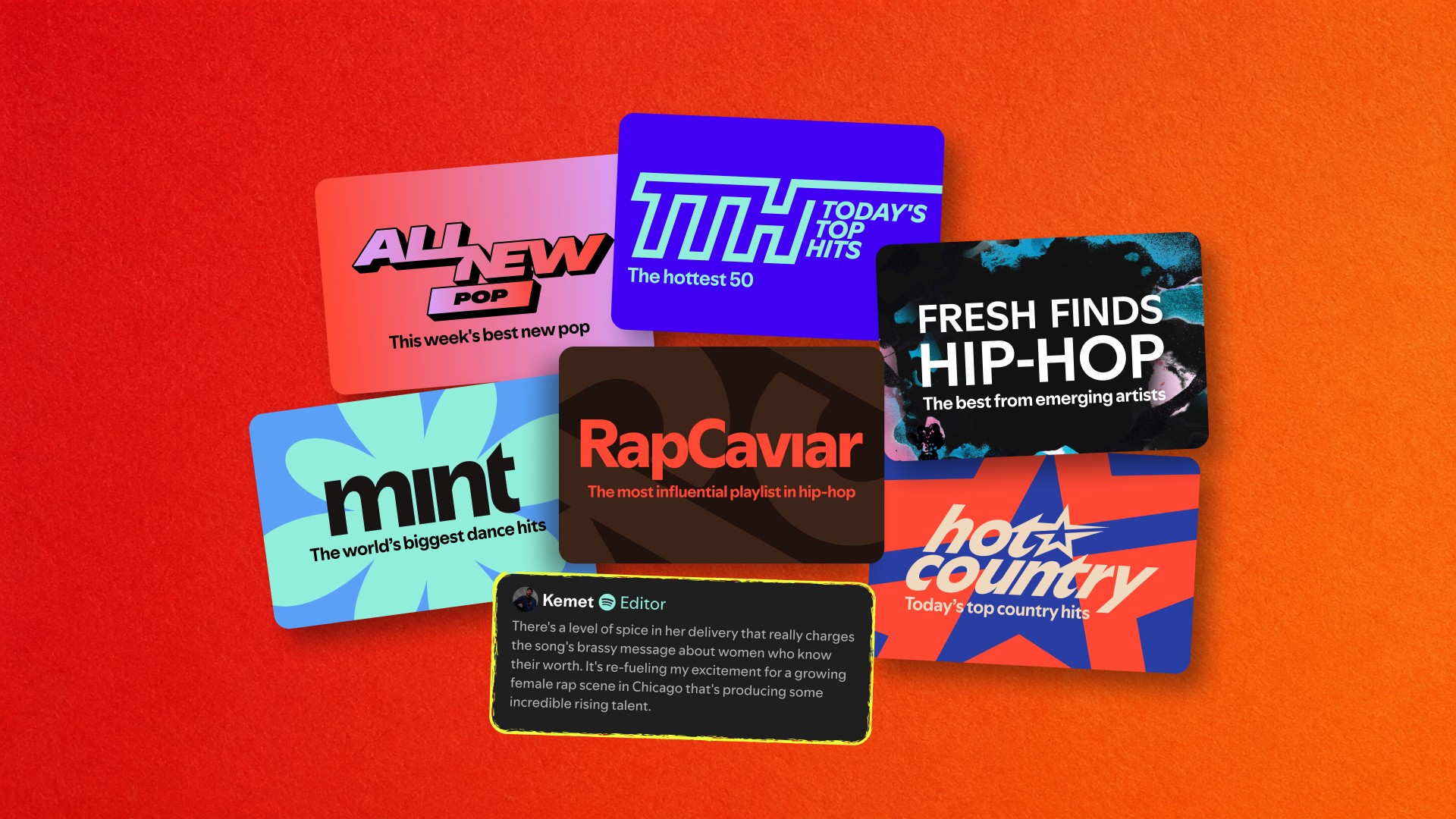
various Spotify playlist covers with an example of a playlist note from a music editor

A great playlist does more than line up songs: it sets a mood, reflects a point of view, tells a story.

We keep giving playlist makers more ways to tell that story, from custom cover art and playlist descriptions to tools for customizing transitions between tracks. Today, we’re introducing Playlist Notes, a new way to add your thoughts and context right inside the playlists you make.

Our globe-spanning team of editors will use this new feature—which grew out of a concept called User Notes—to share the thinking behind their picks on some of Spotify’s biggest playlists, while listeners can add their own notes to playlists they create or collaborate on.

Go behind the picks with Spotify’s editors

With Playlist Notes, editors share why a track matters, what makes it culturally relevant, or why it belongs in that particular playlist. You can also get to know the people behind the playlists through Editor Profiles. Each profile features an editor’s top tracks and albums, along with the playlists they contribute to.

Playlist Notes from editors and Editor Profiles are currently rolling out to Free and Premium users ages 16 and older in the U.S., Canada, the U.K., Ireland, Australia, and New Zealand. To start, you’ll find notes in Today’s Top Hits, RapCaviar, Hot Country, All New Pop, mint, and Fresh Finds Hip-Hop.

Tap Notes at the top of participating playlists to start exploring. To visit an Editor Profile, tap an editor’s name alongside a note or at the top of the playlist.

You’ll also see notes in Now Playing, even when you’re listening to a song outside the playlist where the note originated.

Spotify's Today Top Hits playlist with an example of a playlist note from one of the editors

Bring more of yourself to your playlists

Of course, our editors aren’t the only ones with stories to tell. On mobile, you can add your own notes to the tracks, podcast episodes, and audiobooks you’ve added to your playlists. Capture a memory, share a recommendation, or explain why a pick made the cut.

Anyone who can view your playlist can also see your notes, with your name linking to your profile. Playlist Notes, like everything shared on Spotify, must follow our Platform Rules and Terms of Use.

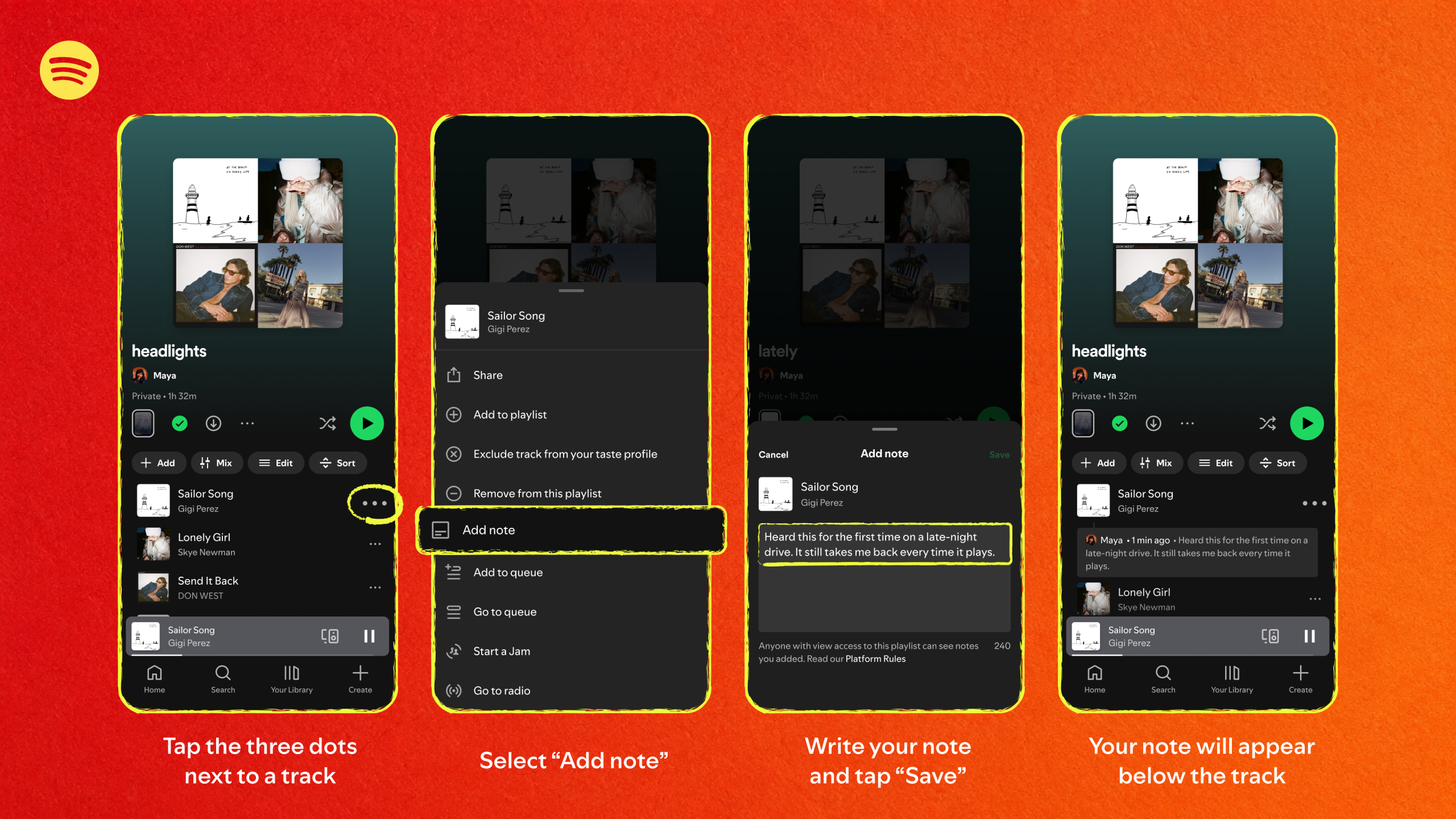
How to add a note to one of your playlists on Spotify: Tap the three dots next to a track, select "add note," write your note and tap "save," then your note will appear below the track

How to add a note

Playlist Notes on user-curated playlists are currently rolling out on iOS and Android in more than 100 markets globally. Availability may differ from editors’ Playlist Notes.

    1. Open a playlist you own or collaborate on. 
    2. Tap the three dots (…) next to a track, podcast episode, or audiobook you’ve added to the playlist.
    3. Select Add note.
    4. Enter your note, then tap Save.

From the way songs flow together to the stories behind each pick, your playlists just got more personal. Update your app to get the latest features as they roll out.

Your Summer 2026 Soundtrack? Spotify’s Predictions Are In

"Songs of Summer predictions" text appearing on a stylized postcard

The days are getting longer, the temperatures are rising, and playlists are filling up for the season. With summer around the corner, Spotify’s global editors have been keeping a close eye on the musical landscape and are ready to unveil the songs they think could shape this year’s soundtrack.

“I think above everything, we all know that a song of the summer is about the vibes,” said Talia Kraines, Editorial Lead, Pop at Spotify. “It’s a song that makes you feel good, that you can listen to outside in the sunshine with your friends, and that has the ability to travel across genres, people, and countries.”

From hot new releases to chart-climbing anthems and surprise viral hits, our picks are made for beach days, road trips, rooftop parties, and everything in between.

And for the first time, we’re letting listeners predict the song they think will be the season’s biggest hit with in-app voting. Just tap “Vote” at the top of the Songs of Summer playlist, then share your pick on social media or via Spotify Messages.

Songs of Summer 2026 predictions

Dance music is a summer staple, but this year we’re seeing several party-ready tracks turning up the heat with a nostalgic twist. “New Religion” (Bebe Rexha and Faithless) and “Jamaican (Bam Bam)” (HUGEL and SOLTO) sample sounds from summers past, while “Talk To You” (ANOTR and 54 Ultra) and “DANCE…” (Slayyyter) channel disco, ’90s house, and early 2000s French electronica.

But the energy doesn’t stop there. Artists from Ghana to Colombia are keeping partygoers moving this season with internationally-inspired sounds. “Kakalika” by DopeNation fuses Ghanaian azonto with South African Amapiano, while “CHÉVERE” by ARIA VEGA and Ryan Castro brings Caribbean and Latin Afrobeats energy. 

Sadboy summer is also trending. Songs like “Freakin’ Out” by Dexter and The Moonrocks, “Babydoll” by Dominic Fike, and “Earrings” by Malcolm Todd are perfect for nights when you’re looking for something moodier.

And for storytelling in song, country is taking us places. Ella Langley’s “Choosin’ Texas” and STELLA LEFTY’s “Boston” are rooted in specific locations, evoking the warmth and reflection of long summer nights.

Without further ado, here are Spotify’s 2026 Songs of Summer predictions, listed in alphabetical order by artist first name. 

Whether it’s a pop powerhouse, an Afrobeats groove, or a dancefloor-ready hit, these songs all have one thing in common: the potential to define summer 2026.

Stay tuned! We’ve got more surprises coming all summer long. 

Celebrate Bad Bunny’s ‘DeBÍ TiRAR MáS FOToS’ Anniversary With Playlist Cover Art Stickers and More

Bad Bunny themed stickers on a bright yellow background

Bad Bunny’s DeBÍ TiRAR MáS FOToS defined the sound of 2025 for listeners everywhere, becoming Spotify’s Global Top Album of the Year. To mark its first anniversary, we’re celebrating with a new set of playlist cover art stickers inspired by the album’s vibrant visual world. 

Cover art stickers let listeners customize their Spotify playlists while connecting with artists they love in new ways. Bad Bunny fans around the world can now remix their playlist covers with a limited-edition set that includes the Puerto Rican flag, a piragua cart (for the beloved island street treat), Concho in a hoodie, and more designs that channel the album’s vibe.

Here’s how to get started:

  1. Pick a playlist: Open the Spotify mobile app and select any playlist you’ve created, or make a new one.
  2. Create cover art: Tap the three dots (…) under the playlist name and choose “Create cover art.”
  3. Add your stickers: Head to the “stickers” tab, browse the DeBÍ TiRAR MáS FOToS pack, and drag and drop your favorites onto your cover.
  4. Finish customizing: Layer in text, colors, and your own images to complete the look.

The anniversary celebration doesn’t stop at playlist stickers. Across Spotify, fans will spot shoutouts to DeBÍ TiRAR MáS FOToS, including a cover takeover of Éxitos Puerto Rico, a dedicated destination spotlighting the album and This Is Bad Bunny, and special nods throughout the Latin hub. Plus, stay tuned for special Watchfeed moments that keep the party going.

Get creative with the DeBÍ TiRAR MáS FOToS sticker pack in the Spotify app, and press play below to revisit the album that inspired it all.

Spotify Gives You Even More Control With the Ability to Exclude Tracks From Your Taste Profile

Personalization is at the heart of Spotify. When you ask listeners what they love most about Spotify, more than 81% cite our personalization, and we’re always evolving to help you create a listening journey that’s uniquely yours. Starting today, you can exclude individual tracks from your taste profile, in addition to playlists.

Your taste profile is Spotify’s interpretation of your taste, based on what you listen to and how you listen to it. It helps inform your recommendations, from Discover Weekly to your Home page, and personalizes experiences like Wrapped and Blend.

Excluding a track will lessen the impact of both past and future streams of that song on your recommendations, so your “just for the moment” listening doesn’t end up skewing your Spotify experience.

You’ve already been able to exclude select playlists from your taste profile, and now you can do the same for any track, whether it’s a calming sleep sound, your kids’ go-to song, or a one-off listen that doesn’t fit your usual vibe.

How to exclude a track from your taste profile

This feature is available now for Free and Premium users globally on web, desktop, iOS, and Android. Here’s how it works for individual tracks and playlists:

    1. Select the track or playlist you want to exclude.
    2. Tap the three dots in the top-right corner of your screen.
    3. Choose “Exclude from your taste profile” (or “Include in your taste profile” to add it back later).

With more control over your taste profile, your recommendations and personalized features can stay true to your unique musical taste, even if your listening habits sometimes take a detour. Spotify’s recommendations will keep evolving with you so your listening experience stays fresh and personal.

Ready to dive in? Explore the Made For You hub on Spotify, your one-stop shop for playlists, podcasts, and recommendations tailored just for you.

On the Rise: Introducing 10 of Southeast Asia’s Hottest Artists

Southeast Asia’s music scene is one of the most culturally diverse and it’s not just growing, it’s exploding. Here, listeners actively champion homegrown sounds and propel niche local genres. From Indonesia’s Ambyar and to the Philippines’ hip hop and Thailand’s Thai Indie, local sounds are bubbling out of the region as listeners embrace music that reflects unique local cultures. As appetite for local music grows, artists like Thailand’s Jeff Satur, the Philippines’ Cup of Joe, and Indonesia’s Hindia are proving that regional traction is the new benchmark, building fanbases across Southeast Asia.

Get to know some of the artists defining what it means to be making music in  Southeast Asia today. They are bold, personal, and unmistakably original.

52Hz, Vietnam

Vietnam’s 52Hz is a rising star in Asian music, bending alt-R&B, indie pop, and electronic sounds. Her breakout hit, “Đợi,” showcases her gift for intimate yet expansive storytelling. “No matter how messy, unclear, joyful, or painful, creativity can be shaped into something meaningful that can truly move others,” she says. 52Hz believes that artists should “confidently bring something personal and uniquely “theirs”.” As an Asian artist shaping the global soundscape, she balances individuality and cultural identity, amplifying her reach to global listeners through Spotify. 

BUS, Thailand

Thailand’s BUS is a rising 12-member T-Pop group named as a Spotify RADAR Thailand artist in 2024. For BUS, music is personal, with each track reflecting their personality and passion. “The most exciting thing is seeing fans happy, that connection drives everything we do,” they say. “That connection drives everything we do.” Whether crafting songs or dropping music videos, “the moment it’s out,” they continue. “We look forward to hearing what fans think. Their support pushes us to keep getting better.”

Cup of Joe, Philippines

Hailing from the Philippines, Cup of Joe is a band pushing the boundaries of modern Pinoy music with their inspirational lyrics, fun visual identity, and catchy melodies that spike LSS (last song syndrome). As they aptly describe, “Asian music has many stories to tell, and [it has] always been a blend of tradition and new wave forms.” Driven by the belief that “with good music and the right platform, anything is possible,” the band is turning international heads while staying rooted in what makes them uniquely Filipino.

Firdhaus, Malaysia

Known for crafting soul-baring ballads that balance delicacy and depth, Firdhaus first captured regional hearts with the viral phenomenon, “在加納共和國離婚,” which soared onto the Top 50 charts in Singapore, Malaysia, and Taiwan. This proves that “a good song with a real story” and genuine emotion possesses a universal language capable of reaching audiences beyond borders. He’s among Asian artists who are “no longer just trying to fit into typical molds,” he says, but are “creating our own stories.” That raw authenticity doesn’t just define his music; it also fuels his profound connection with fans.

Hev Abi, Philippines

Filipino artist Hev Abi is a Spotify RADAR Philippines artist carving his own musical world with fresh and captivating sounds in the Philippines hip-hop scene. Since launching his smash album Kung Alam Mo Lang, in partnership with Spotify, he continues to cement his musical style and connect with new audiences through the platform. Fueled by a passionate fanbase, he says “it’s just a different feeling when you’re performing onstage and you can hear and feel the sheer energy, love, and support from the crowd, it really gets you going.”

Hindia, Indonesia

Indonesian artist Hindia mixes indie rock, alt-pop, and electronic sounds to create raw, soul-stirring music. His breakout album, Menari Dengan Bayangan, became a generational soundtrack, now reaching over 12 million monthly Spotify listeners. As listeners today increasingly embrace music beyond language barriers, valuing artistry over literal understanding, Hindia urges Asian artists to “keep making sounds unapologetically our way.”

MILLI, Thailand

Thai superstar MILLI fuses hip-hop, pop, R&B, and traditional Thai music into a signature genre-defining style. As the voice behind massive viral moment “สุดปัง Sudpang” and F.HERO’s “Mirror Mirror” featuring MILLI and Changbin of Stray Kids, she made history as the first solo Thai artist at Coachella 2022 and more recently proved regional success with her sold-out Japan debut. Beyond personal expression, “music has become my life,” she says. As she celebrates the wave of Asian artists gaining traction in the global music scene, her message is clear: “Don’t let language limit you, spread our culture to the world.”

Regina Song, Singapore

Singapore’s Regina Song makes Asian alt-pop sound intimate with confessional songwriting and soft-spoken vocals. Standout track “the cutest pair” performed during her 2025 Southeast Asia tour marked a powerful breakthrough, proving her honest storytelling resonates with listeners across borders. “I like to be very diaristic in my writing,” she explains, using lyrics and music to process emotions while helping others do the same. 

Wren Evans, Vietnam

Wren Evans is breaking the boundaries of Vietnam’s alt-pop scene with his bold mix of R&B, hip-hop, and striking visuals. His viral hit, “Thích Em Hơi Nhiều,” amassed millions of streams, dominated Vietnamese charts and propelled his debut album, LOI CHOI: The Neo Pop Punk  across Asia. As the first Vietnamese artist to share the stage with South Korean singer-songwriter on.T, he says “music is becoming a borderless concept, empowering collaborations and connections, while letting each artist stay true to their identity.” 

Yura Yunita, Indonesia

With more than 500 million streams on Spotify and a spot on Spotify’s Top Indonesian Artists playlist, Yura Yunita introduces Indonesian culture to global audiences through music rooted in raw emotion. She acknowledges that “integrating culture creates a wider space for audiences to appreciate local music.” For Yura, every song begins with a story. “Lyrics are the heart of what I do,” she says. And with every verse, she brings listeners closer to something heartfelt and uniquely hers, to “build a strong emotional connection with the listener” no matter where they are.

Stream the We SEA You playlist to discover some of the region’s greatest hits.

Spotify Rolls Out Playlist Cover Art Tool in More Markets and New Languages—Plus, Summer Stickers Are Here

When a music fan creates a playlist on Spotify, it’s not just for listening—it’s a canvas for creative expression. Around the world, listeners have created more than 8 billion playlists to tell stories, set moods, and soundtrack their lives. Now, we’re making it even easier for more listeners to add a visual dimension to their creations: Starting today, our “Create Cover Art” feature is available in 41 new languages and 63 additional markets.

With this expansion, both Free and Premium users on mobile in these markets can design and customize their playlist covers with unique images, text, graphic elements, and more. Whether you want your cover to reflect your mood, highlight a favorite artist, or simply add a personal touch to your go-to mix, you can now make any playlist look as good as it sounds—right from the Spotify app.

How to customize your playlist cover

    • Open the Spotify mobile app on iOS or Android (make sure it’s up-to-date) and select a playlist that you created (or create a new one).
    • Tap the three-dot menu and choose “Create cover art.”
    • From there, you can upload original photos and add or update a variety of elements, including:
      • Text styles, colors, and effects
      • Background colors and gradients
      • Image masking and visual effects
      • Exclusive stickers
    • Once complete, save and share your playlist with friends.

Pro tip: You can only save one custom cover art per playlist at a time, and each new cover you create will override the previous one for that specific playlist. If you’d like to create multiple covers for a playlist, make a copy of the playlist first: Open the playlist, tap the three-dot menu, select “Add to other playlist,” and then tap “New playlist.”

Summertime stickers 

To celebrate, we’re also rolling out our latest digital sticker pack: a summer-themed collection of 13 stickers, from bumblebees and butterflies to rainbows and waterdrops. This marks our fourth sticker pack release, joining our Valentine’s Day collection and limited-edition Tyler, The Creator and COWBOY CARTER packs. Users in all markets where the feature is live can access the summer stickers to personalize their playlists for the season.

By expanding playlist cover customization, we’re giving even more fans the tools to unleash their creativity. We’ll keep innovating and building new ways for our users to express themselves—so stay tuned for what’s next.

Celebrate Beyoncé’s COWBOY CARTER Tour With Exclusive Cover Art Stickers

As Beyoncé‘s COWBOY CARTER Tour sparks excitement around the world, Spotify is helping the BeyHive get concert-ready with a limited-edition collection of playlist cover art stickers created especially for the tour.

Made to celebrate the COWBOY CARTER Tour, this exclusive set of nine digital stickers includes designs including a “TEXAS HOLD ‘EM” license plate, COWBOY CARTER sash, cowboy boots and more. Featured in our “Create Cover Art” tool, the stickers will be available for fans to use on their playlists throughout the COWBOY CARTER Tour. 

The new sticker pack will help fans create their dream COWBOY CARTER Tour set list—right down to the cover art—as they get ready for the big event. Following the tour’s kick-off on April 29, Spotify saw a 2,400% increase in the creation of COWBOY CARTER-related playlists across the U.S.

And dropping on Spotify, fans can now stream Beyoncé’s official COWBOY CARTER setlist playlist to celebrate and get ready for the tour themselves.

Get your playlist ready for the COWBOY CARTER Tour

  • Head to the Spotify mobile app on iOS or Android (make sure it’s up-to-date) and select a playlist that you personally created (or create a new one) to get started. Then tap the three-dot menu and choose “Create cover art.”
  • From there, you can access Beyoncé’s sticker collection, along with:
    • Customized Stickers
    • Spotify Mix Text Styles, Colors and Effects
    • Background Colors and Gradients
    • Image Masking and Effects 
  • Once complete, save and share your playlist with friends.
  • In addition to the new COWBOY CARTER collection, listeners can choose from dozens of other stickers.

Get ready for the COWBOY CARTER Tour by rediscovering all your favorite jams from the album:

Celebrate Arab Heritage Month With the Local Genres and Artists Making Waves Globally

April is Arab Heritage Month, a time to celebrate the vibrant creators from across the diaspora. In the age of streaming, music from the region is resonating far and wide—in fact, the 2025 Global Music Report from the International Federation of the Phonographic Industry (IFPI) confirmed that the Middle East and North Africa (MENA) is the fastest-growing music market in the world, with revenues up nearly 23% last year.

And that rise is echoed on Spotify. Our recent Loud and Clear report found that Arabic was one of the fastest-growing languages on Spotify in 2024, while Egypt had one of the strongest indie music performances globally.
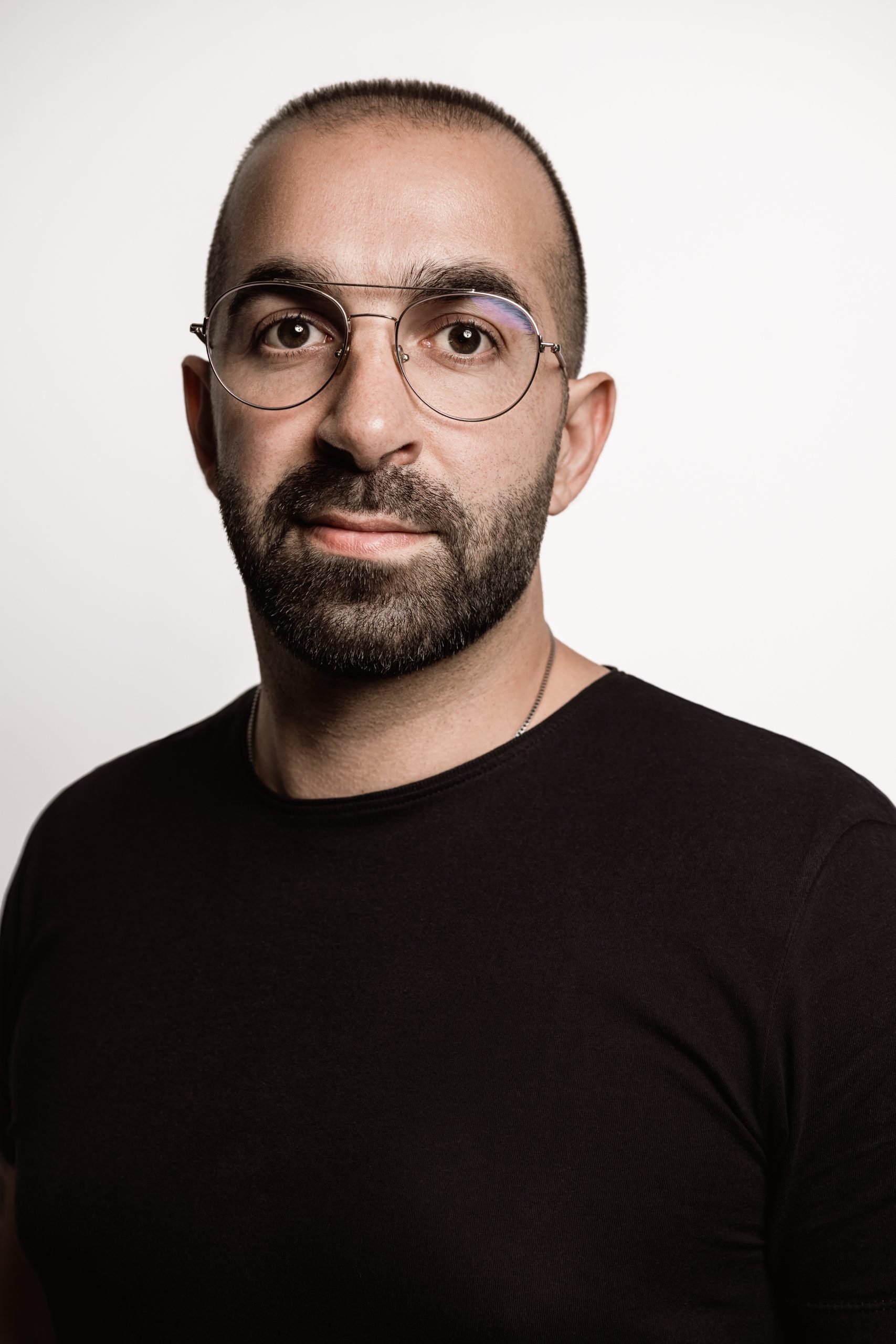
Mark Abou Jaoude is Spotify’s Head of Music for the Middle East, North Africa, and Pakistan. He’s focused on amplifying Arab music on the global stage and bringing Spotify’s flagship music programs to new audiences in the region. For the Record sat down with Mark to learn more about the trends, artists, and genres that are illuminating the Arab world.

What emerging music trends are you currently seeing across the Arab world?

The past couple of years have been incredible for Arabic music. We’re seeing more Arab artists make their way onto global charts. Egyptian pop star Tamer Ashour, for example, is known for his heartfelt breakup anthems, and he recently landed on our Global Album Charts.

Household names like ElGrandeToto, Stormy, and Zouhair Bahaoui continue to push boundaries, building loyal fanbases not just across the region, but in places like Spain, France, and Italy. 

We’re also seeing more Arab representation on major global stages. From Elyanna and Saint Levant to Mohamed Ramadan, Arab artists are showing up at festivals and other landmark events, claiming space with pride.

At the same time, there’s a beautiful resurgence of nostalgia. More listeners are returning to classic tracks—diving into catalog music that feels deeply rooted in identity and memory. What’s even more special is how younger fans are reinterpreting these songs through social media, giving old favorites a new life. It feels like a cultural reawakening—one that stays grounded in tradition while moving us forward. 

And perhaps one of the most exciting trends is the rise of bold, brilliant women in the scene. Artists like Lella Fadda, Kawthar, Lullysnake, zeyne, and Asayel are carving out space with fierce, unapologetic energy. Their voices are powerful, their stories personal, and their presence absolutely necessary.

Which Arabic artists or genres are making their mark globally?

We’re witnessing a powerful and diverse wave of Arabic music gaining global traction. And it’s not confined to one sound, one country, or one generation—it’s a spectrum.

Take DYSTINCT, for example. Born in Belgium with Moroccan roots, he’s carving out a sound that blends North African melodies with Afrobeats, reggaeton, and French rap—all while singing in a mix of Darija, Dutch, and French. His music hits with emotional depth and rich cultural texture.

His track “SPIDER” with GIMS, where he sings in Moroccan Darija, topped the charts in France and has racked up more than 200 million streams. He’s also teamed up with artists like Rvfv from Spain and even reimagined his Moroccan hits “Ghazali” and “Tek Tek” alongside Indian stars like Shreya Ghoshal and Vishal Mishra. 

At the same time, artists like Mishaal Tamer—a young Saudi Ecuadorian—are creating global sounds rooted in the region but delivered in English. He’s charting in unexpected markets like Peru and Mexico, proving there’s room for Arabic artists to reach new audiences on their own terms. It’s fascinating to see how some artists are breaking through by leaning into the universality of English, while others, like DYSTINCT, are showing that even dialects like Darija can break through when the music connects emotionally.

Then there’s mahraganat—raw, defiant, and hyper-local. What began as street music in Egypt has grown into one of the country’s most exported genres. Artists like Eslam Kabonga and Fares Sokar are proof that the genre is unstoppable, constantly being reimagined by younger voices. That kind of creative continuity tells us that mahraganat isn’t a trend—it’s culture in motion.

We continue to see a surge in the global appeal of legacy Arabic pop. Tracks by icons like Sherine and Amr Diab are being remixed, sampled, and reinterpreted—not only by Arab artists, but by international acts. DJs around the world are sampling Arabic vocals. When they visit places like the UAE or Saudi Arabia and feel the energy firsthand, many are inspired to localize their sound, collaborate, or return with something entirely new. There’s a creative exchange happening—something visceral that international artists tap into when they connect with the region, from Keinemusik to Francis Mercier. 

Raï is another genre having its moment. Long celebrated for its emotional intensity and cross-border appeal, attracting the North African diaspora, it’s now being modernized by younger artists who respect its roots while reimagining its future.

What role does Spotify play in supporting and amplifying Arab creators?

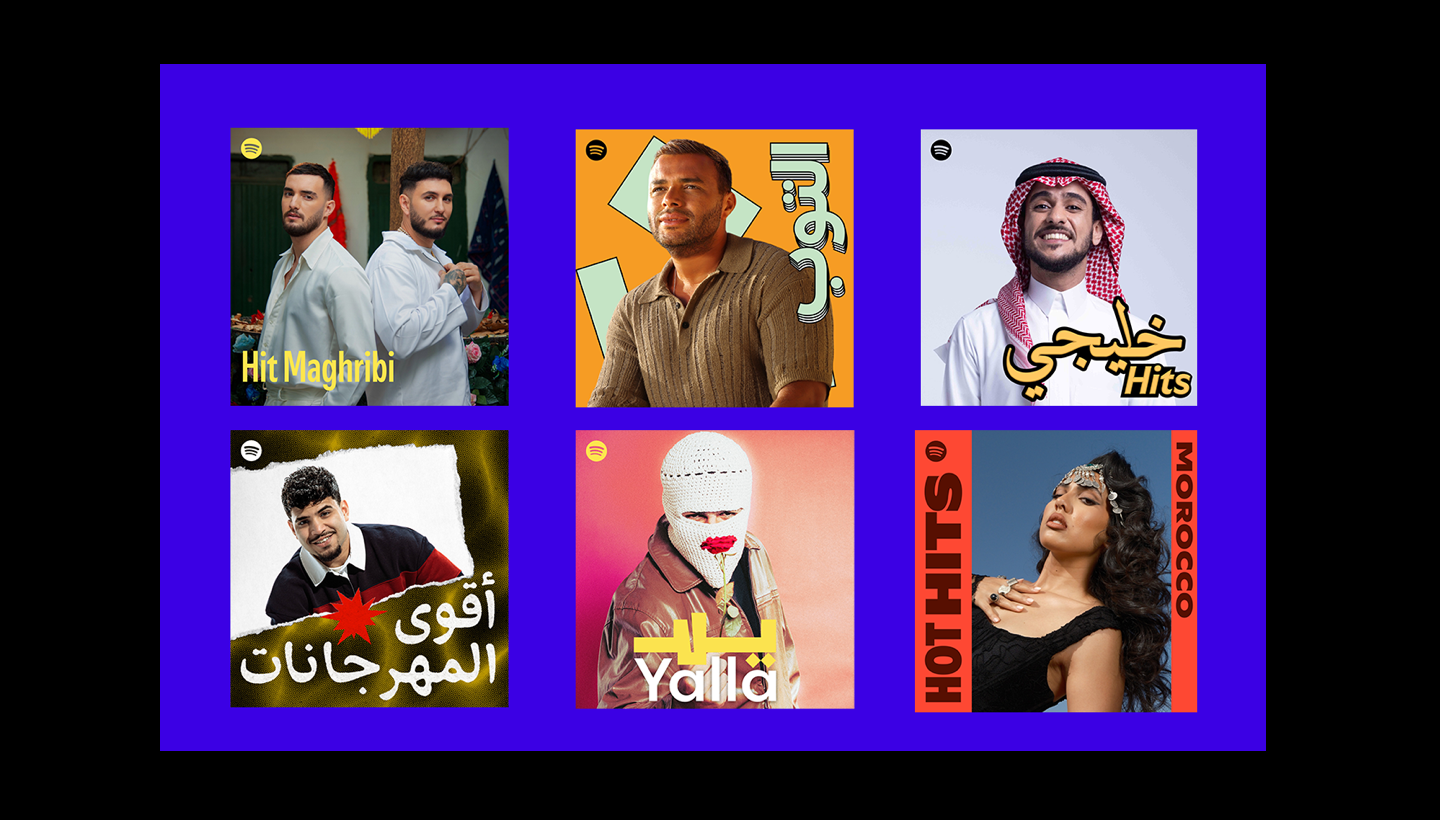
It’s always been about creating a real, meaningful space where Arab creators feel seen, heard, and supported. It’s about understanding the depth and nuances of the region: the sounds, the languages, the emotions, the cultural context, and building something that truly speaks to that. From our Aqwa El Mahraganat playlist in Egypt to Khaleeji Hits in Saudi, from ABATERA in Morocco Top Sharqi Hits Right Now for the Levant region—these are just a few examples of how we are creating room for artists in all genres but also for fans to find their latest obsessions.

And through our music programs—whether it’s RADAR Arabia, EQUAL Arabia, curated and personalized master classes, or custom-built residencies—we’re committed to meeting artists where they are in their journeys. A great example is what we did last year in Saudi Arabia with Fresh Finds Saudi: Class 2K24. We brought together up-and-coming homegrown talent in an intimate setting and gave them access to industry experts, mentorship, and each other.

This work simply couldn’t happen without our MENA Editorial team. They know when a sound is bubbling, when a new voice needs a spotlight, and how to use both data and intuition to guide that discovery. It’s curation with care. They help shape how the algorithm understands our music, our moods, and our moments.

At the heart of it all is one clear intention: to use our platform to help unlock global stages for Arab creators. The world deserves to hear more Arabic music—and we’re here to help make that happen.

What are your thoughts on the Middle East and North Africa being the world’s fastest-growing music market?

To me, it’s a reflection of the resilience, creativity, and unwavering spirit of artists from the region. It’s also a moment of reaffirmation—not just for the artists themselves, but for all of us who have believed in the potential of this region for years. And this isn’t a one-time spike, this is the second time MENA has been named the world’s fastest-growing music market by the IFPI.

This growth also highlights the impact of streaming, which now accounts for nearly all of the region’s music revenues. It reinforces just how important our role is in supporting and promoting homegrown talent. 

One of the most exciting insights from our Loud & Clear report was that Arabic was among the fastest-growing languages listened to by global music fans last year. That tells us something powerful: We’re now heading toward a more inclusive, multilingual, and borderless music landscape, with MENA at the center of it.

We’ve always believed in the region’s potential, and today, more than ever, we’re confident that Arabic music is on its way to becoming a global success story—just like we saw with the rise of Latin music years ago. 

How can listeners immerse themselves in Arab culture on Spotify?

I’d start with our Arab hub. It’s like a window into the region—full of music and stories that span generations and genres. You’ll find everything from nostalgic classics in our Arabic Decades section to fresh new releases that show where the sound is heading today.

It’s not just about music either—the podcast section is packed with powerful voices from the region, like #ABTalks and Finjan with Abdulrahman Abumalih. Whether you’re in the mood to vibe, learn, or just explore something new, there’s something in there that’ll pull you in.

Ready to dive in? Stream our Yalla playlist to discover a sampling of the hottest songs from across the Arab world.


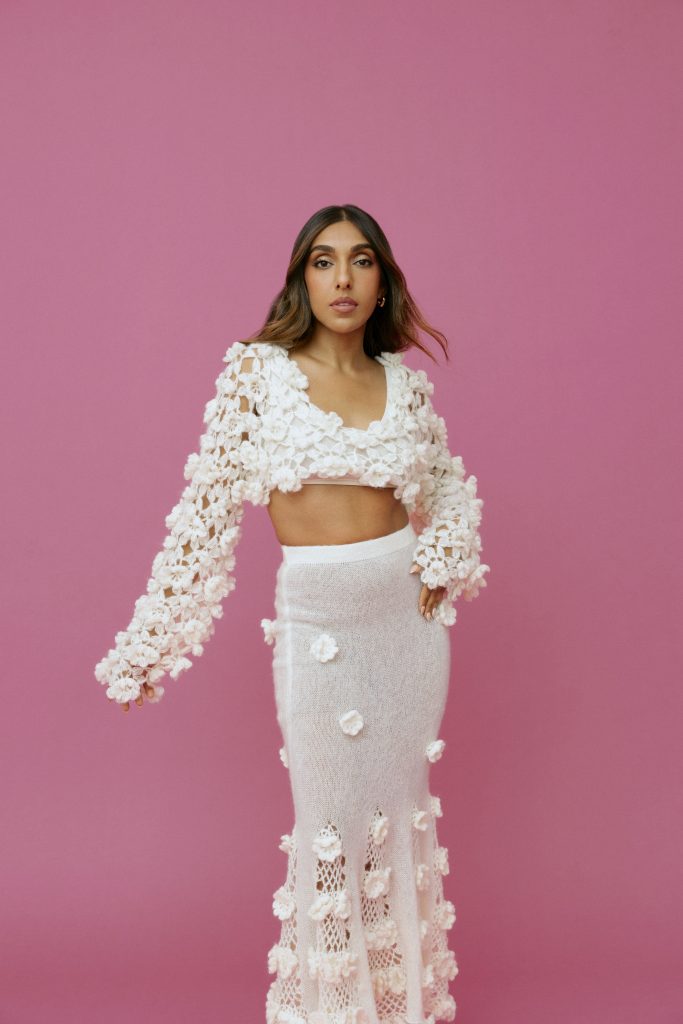
Canada’s Own Rupi Kaur Curates the Latest Edition of Local Spot, Revealing the Songs and Artists That Shaped Her

For many people, music can serve as a reflection of their roots and upbringing. With Spotify’s playlist series Local Spot, celebrated Canadians are given a cool, eclectic space to introduce fans to their favorite Canadian artists. 

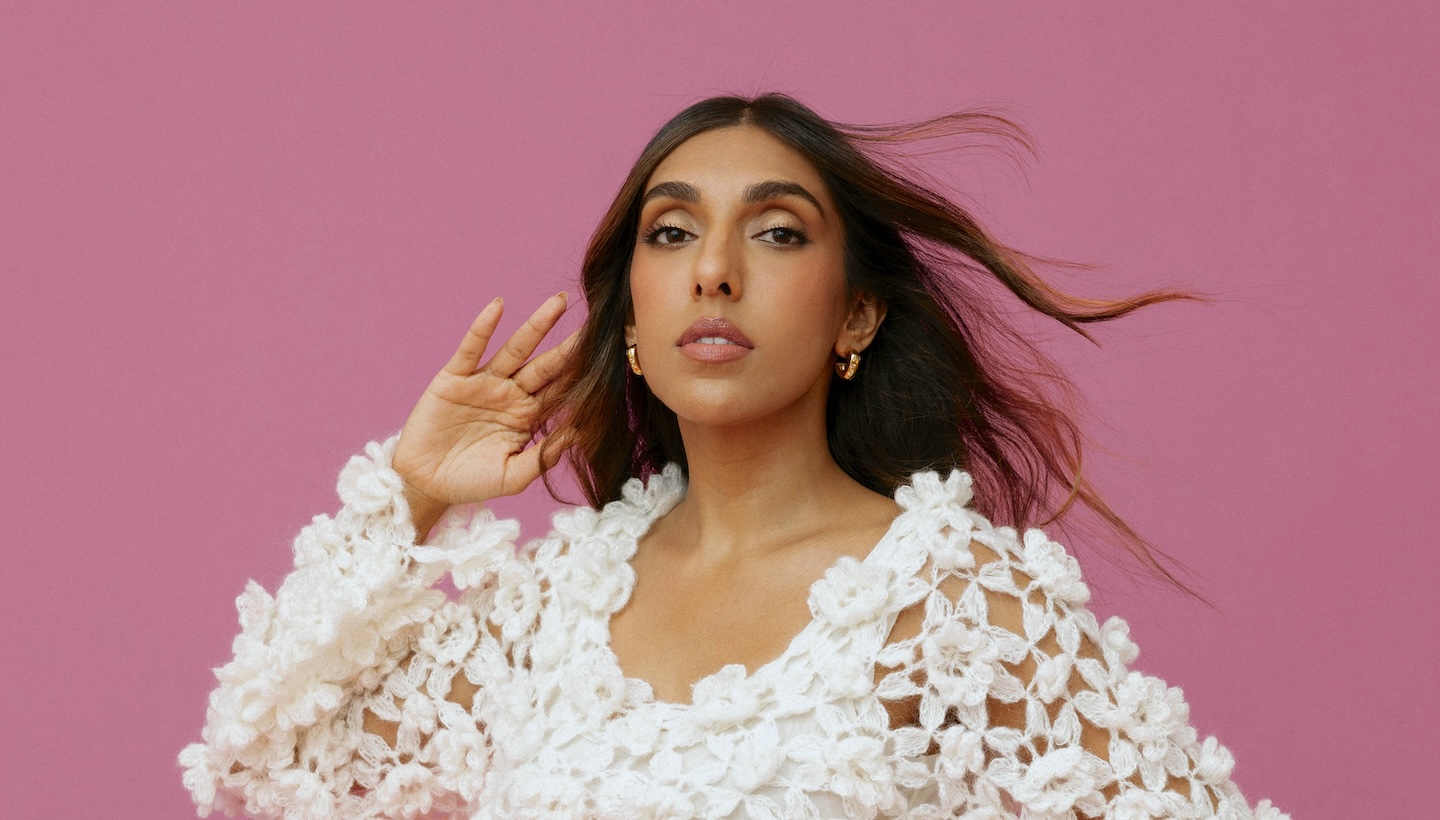
Featuring all-Canadian music curation, Local Spot offers global audiences a glimpse into the unique music tastes of the country’s celebrated figures. For our latest edition of Local Spot, poet, artist, and performer Rupi Kaur takes over as our featured curator. 

A breakout literary phenomenon and number-one New York Times bestselling author, Rupi wrote, illustrated, and self-published her first poetry collection, milk and honey, in 2014, followed by the sun and her flowers, home body, and healing through words. Together, these collections have sold more than 12 million copies and have been translated into more than 40 languages.

Rupi has also made her mark in film and television, producing a first-of-its-kind poetry special, Rupi Kaur Live, the film This Place, and the 2024 Academy Award–nominated film To Kill a Tiger.

For her contribution to Local Spot, Rupi takes listeners on a journey through the songs and artists who inspire her, including Shawn Mendes, Charlotte Day Wilson, The Weeknd, Avril Lavigne, Daniel Caesar, KAYTRANADA, and Celine Dion. Ahead of the playlist’s release, For the Record sat down with Rupi to talk about her experience curating Local Spot, her influences and creative process, and how growing up in Canada has shaped her.

Talk to us about curating Local Spot.

It was so much fun to revisit some of my favorite tracks from the last 15 years or so. I actually felt very at home listening to them and was moved to write. 

In one sentence, how would you describe your playlist?

The songs that raised and healed me. 

What does your Canadian identity mean to you?

As an immigrant, I have always felt like Canada is a place of inclusivity and hope. I have always existed between two worlds—my parents’ homeland and the one we built here. That duality is in everything I write. Now, as I travel the world, I’m often reminded of how much the diversity of Canada has contributed to my art. 

Who are some of your favorite Canadian authors and music artists?

Canadian writers I have deep love for include Michael Ondaatje, Lawrence Hill, Alice Munro. My favorite Canadian music artists are Charlotte Cardin, Charlotte Day Wilson, and The Weeknd. 

What’s your writing process like?

Writing is a conversation with myself. It starts with a feeling—something stirring deep in my gut. I sit with it and let it rise to the surface. My best ideas come when I give them space. They visit in the quiet moments—long walks, in the middle of a conversation, or right before I fall asleep. 

How do you incorporate listening to music into that process?

Music sets the tone and pulls me back into memories of the past or hopes for the future. Sometimes I need silence—to hear the rhythm of the poem itself. But oftentimes I use music to set the mood.  

Do you think there’s a crossover between music and literature?

Absolutely. Both are rhythmic. Both tell stories. A poem is a song stripped of its melody, and a song is a poem brought to life through sound. Before he started his career as a musician, Leonard Cohen was a poet and novelist. That’s just one of many examples that showcase that there’s so much natural crossover between the crafts. 

What writer or music artist has had the biggest influence on you?

Khalil Gibran taught me about duality. Audre Lorde and Bell Hooks taught me about power. In music, I return to Nina Simone, Florence Welch, and the haunting melodies of Nusrat Fateh Ali Khan.

Your books milk and honey, the sun and her flowers, and homebody touch on love, loss, trauma, and healing. Is listening to music, podcasts, or audiobooks part of a healthy routine for you?

Music, podcasts, books are all part of my healing. Some days, I need a song that holds me. Other days, I need words that remind me I am not alone. 

What does it mean to you to know that your fans get to hear you read your works on the audiobook versions of your books?

I write my poetry with sound in mind—the way the words flow, the rhythm of each line. Hearing me read it aloud brings that element to life. For a reader, poetry is personal and they interpret it through their own lens. For a listener, they hear it the way it was meant to be spoken. 

What’s your earliest memory of stories being read aloud to you?

My father’s voice. He would sit with me and recite Punjabi poetry, letting the words dance in the air between us. He taught me that poetry is meant to be felt, not just understood.

Press play to listen to Rupi’s collection of Canadian gems in the latest edition of Local Spot: