

Tag: q&a

Netflix Hit ‘Heartstopper’ Showcases Several LGBTQIA+ Artists in Its Official Playlist for Season 2

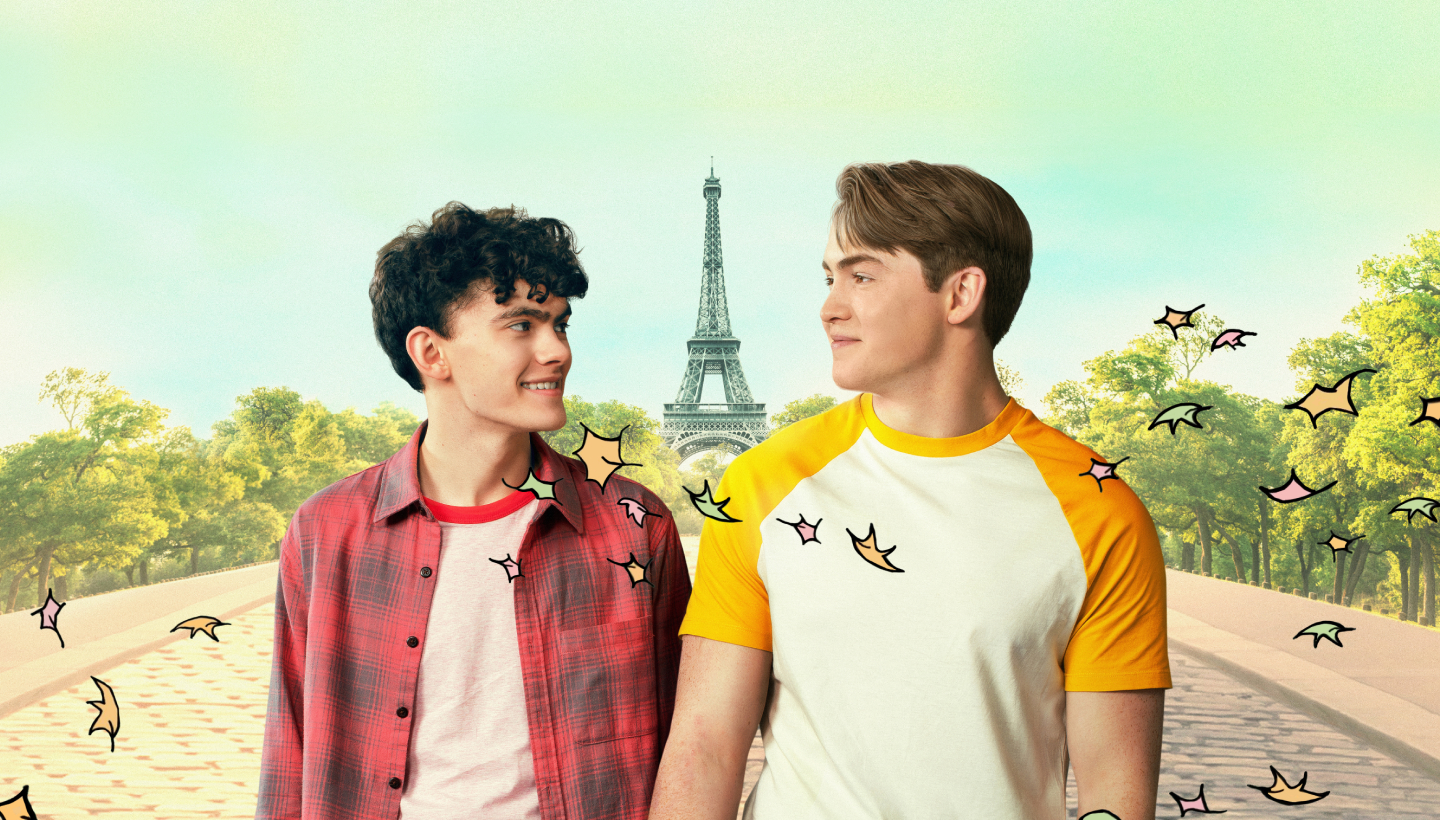
In 2022 Netflix released Heartstopper, a British television series that follows high schooler Charlie Spring, who falls in love with his classmate Nick Nelson. The coming-of-age show, based on the hit graphic novel, includes doses of drama, comedy, and romance as Charlie and his group of close-knit friends navigate the trials and tribulations of teenagedom.

The show features a captivating score from Adiescar Chase and a perfect parallel playlist from Spotify, Heartstopper: Official Playlist. It’s now back for a second season.

For Season 1, the official playlist featured 36 songs, many of which are by both established and emerging LGBTQIA+ artists. A track from Norwegian indie-pop star girl in red appeared alongside a song from Irish singer-songwriter Ezra Williams, giving users the opportunity to listen to their favorite artists while also discovering new ones. Fans can find the playlist within our Netflix hub, as well as our GLOW hub, a dedicated space on Spotify that highlights music and podcasts of LGBTQIA+ voices for queer listeners and allies.

To celebrate the release of Season 2, Spotify is updating the official Heartstopper playlist with a new batch of tracks, including ones from Baby Queen and Tegan and Sara. Devoted fans listening to Spotify on their phones will also quickly spot an Easter egg: animated leaves floating across the screen in a nod to the illustrated visual elements depicted in the show. And as a little extra love, visuals from the series will also be depicted on select tracks in the playlist through Spotify Canvas. 

Listeners looking for more can also dive into the character-driven playlists for Nick and Charlie, Tara and Darcy, and Elle and Tao. Music is a critical component of the series, and each character has music that uniquely defines them. When For the Record asked Yasmin Finney, who plays Elle Argent on the show, which song she thinks best represents her character, she said, “‘Dog Days Are Over’ by Florence + The Machine,” because it sort of represents new beginnings. “The dog days are over, the hiding is over,” she explained. “Elle gets to step into herself, and we all see that—and she’s a boss. That song, to me, resonates with her a lot.”

In advance of Season 2, For the Record caught up with Patrick Walters*, executive producer for the show, to learn more about the integral role music plays in Heartstopper, and what artists and music fans should look forward to hearing this season.

Of all the songs on Heartstopper’s official playlist, roughly half are by queer artists. How did you discover some of the emerging talent? 

Alice and I had been developing Season 1 during the pandemic, and lockdowns meant Alice had a whole year to write all eight episodes before we could get into production. Across that time, we would send songs back and forth to each other to our favorite tracks for particular moments, like Nick and Charlie’s first kiss, Charlie running in the rain, Nick typing “am I gay?” into Google, etc. The songs and artists we found were just what we were listening to at the time. Alice had found “Why Am I Like This?” by Orla Gartland around that time, and as soon as we discussed it as a potential song for Nick’s internet search, we became pretty sure it was the one. That was long before we started filming. I remember listening to “Internet Religion” by Baby Queen from a playlist on Spotify and thinking it could be a good song for Tara in Season 1. That ultimately didn’t work, but we found Baby Queen’s other tracks, and she ended up having more music than any other artist in the series! It was a very organic process.

Many of the artists on the playlist are bedroom pop stars with effervescent sounds that match perfectly with the light hues and illustrations that accompany the show. Why was it important for you to keep the music in this style?

There’s something raw and emotional in the music made by young artists independently. They wear their hearts on their sleeves, just like the characters in Heartstopper. Our music syncs work best when the emotion of the scene is underlined by the lyrics and swagger of the song and artist. We wanted the songs in the mixtape to feel like the characters’ favorite songs. “Bedroom pop” is perfect for us because we spend a lot of time in the bedrooms of our characters, where they can most freely express themselves and feel safe.

What can we look forward to musically in the new season? 

We wanted to remain consistent with Season 1 while also broadening the musical palette to be slightly more mature and in line with the characters’ journeys. There are more commercial tracks in Season 2. We spent a long time clearing some key tracks that felt important to us. “seven” by Taylor Swift initially reflects Tara and Darcy’s relationship breakthrough in Episode 8, but we then decided to keep it over the montage of all of the friends spending time together after prom. We also have “ur so pretty” by Wasia Project, Will Gao’s own band, as the final song of the season. Both of these tracks were vital for us because they show a maturity and an intimacy we hadn’t really conjured yet in Season 1. Season 2’s music tracks also nod more to different worlds and nostalgia—a reference to the characters stepping into adulthood. When we are in Paris, we have some French songs to reflect their new surroundings. And at the prom in Episode 8, Baby Queen makes a cameo to sing her own version of The Cure’s song “Just Like Heaven.” It’s an 80s throwback she expertly brings into the world and style of the show.

If you were creating a playlist for the graphic novel, how much would change?

A playlist for the graphic novel might have more variety. When we choose the music for the show it has to have a really clear identity that sits alongside the score by Adiescar Chase. We go back to a lot of the same artists again and again for this reason. For example, in the graphic novel, “Everywhere” by Fleetwood Mac is Nick and Charlie’s song, and would definitely be on the playlist. But for the show, this would sit so outside of our signature style; it would really take the audience out of the drama to suddenly have such a recognizable song from a different era. Maybe Baby Queen can cover it for Season 3 though . . .

If you had to pick a theme song for each of the four main characters, what would they be?

This is so tough! For Season 2 Charlie, I’d say “Shatter” by Maggie Rogers. For Nick, maybe “How Can I Make It OK?” by Wolf Alice. There’s a really great one for Tao we wanted to use but didn’t manage to get in this season: “The Most Beautiful Thing” by Thomas Headon. Elle’s would definitely be “mona lisa” by mxmtoon.

In addition to Patrick, Alice Oseman, the writer and creator of Heartstopper, revealed what songs she thinks best represent each character. Her picks did not disappoint:

Whether you’re planning to binge-watch Season 2 today or you’re saving it for a later date, get your heart pumping in anticipation with the Heartstopper: Official Playlist now.


*Interview content captured prior to July 13, 2023.
Creating a New Podcast Space for Underrepresented Voices in Atlanta

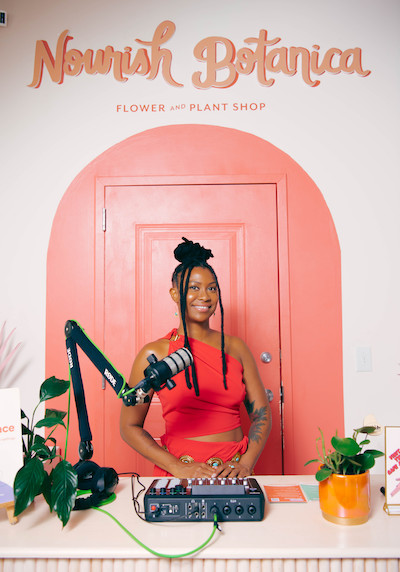
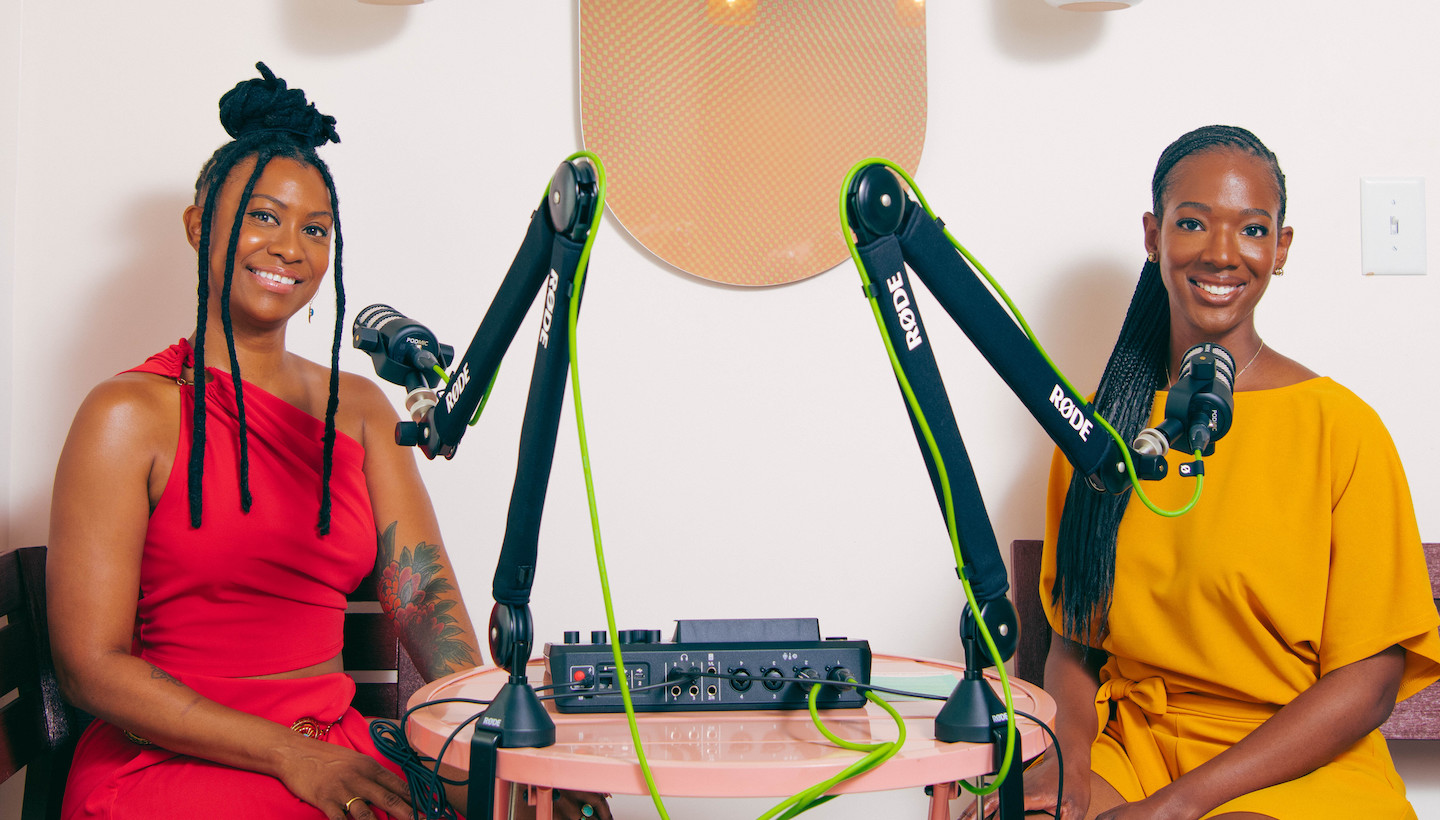
Quianah Upton and Jennifer Lind sitting in the new podcast studio in front of two mics at Nourish Botanica

Removing barriers increases accessibility. Making Space, a Spotify for Podcasters initiative aiming to elevate underrepresented creators by making studio-quality podcasting gear available to communities for free, is our way of doing just that. By partnering with local businesses—Greenville, South Carolina–based Savereign, a plant store, and Curia on the Drag café in Gainesville, Florida, are two recent examples—Spotify provides a safe place for storytellers to share and helps build a more diverse ecosystem of podcast creators.

Our third Making Space studio, which received support from Spotify’s Creator Equity Fund, is in Nourish Botanica, an Atlanta, Georgia, plant shop and community space that offers weekly markets, queer karaoke nights, plant festivals, free plant swaps, and more. 

Quianah Upton standing inside nourish botanica in front of the recording equipment

“I really appreciate Spotify partnering with us to model high-level creative entrepreneurship. I love the idea that we can be a Black-owned business in a historically Black neighborhood and provide a level of cool, quirk, and professionalism that you can’t find anywhere else,” shared Quianah Upton, the owner of Nourish Botanica. “It’s also a really good reminder to large companies worldwide how much artists and creative spaces need funding and collaboration support.”

Motivated by her own experiences of childhood food insecurity, Quianah conceived the idea for Nourish Botanica in 2013. Her hope was to create food-based events that featured talks surrounding art, storytelling, gentrification, food sovereignty, and justice issues. Now Nourish Botanica will be joined by a podcast studio. “Making Space will allow us to begin to build a safe space where dialogue, education, and conversation can take place,” Quianah explained. “Storytelling affects social justice, conveys history, builds empathy, and educates audiences by instilling a sense of belonging and community among those listening. Through our storytelling programming, Nourish Botanica works towards building an inclusive and equitable world.”  

Jennifer Lind is one creator who hopes to educate audiences by sharing her family’s history through her podcast, Telling HERstory. The Atlanta native had no podcast experience but was able to bring her idea from concept to fruition in just one month by using Spotify for Podcasters. Jennifer’s show explores the life and legacy of her maternal grandmother, longtime Augusta, Georgia, educator Rosa T. Beard, through interviews with those who were closest to her. 

After launching the podcast in 2020, Jennifer is now part of a thriving Atlanta podcast scene. She explained to For the Record that she’s excited that Spotify’s Making Space studio will provide another low-barrier way for those looking to get involved.

Did you have any idea how to make a podcast?

I really knew nothing about podcasting! But most people who know me know that once I decide that I want to do something, it’s not a matter of if I’m going to do it, but how. When I decided to create the Telling HERstory podcast, I started researching everything I could, and that’s how I discovered the Anchor app, which is now Spotify for Podcasters. I saw that it was not only an all-in-one tool, but also free to use. And within four weeks of deciding that I was going to start a podcast, I actually launched it. To me, that is a testament to what a great tool Spotify for Podcasters is—it makes it possible for just about anyone to become a creator.  

Why do you think a podcast was the perfect medium for sharing your grandmother’s story?

I wanted to not only tell her story, but also the stories of those whose lives she touched, and document them for future generations. Especially as someone who comes from the community of color—and when you think back to our roots, of African American and African history, it involves a lot of oral storytelling. There’s something about podcasting that, in a way, goes back to those roots of documenting stories. And to have people say it in their own voice, it’s really impactful.

For example, I was able to interview Ambassador Larry L. Palmer in episode five. He was one of my grandmother’s former students who went on to become a Senior Foreign Service member and U.S. ambassador, serving under six different U.S. presidents. This is someone who had grown up in the segregated South, so there were a lot of barriers—and yet he was still able to go and do these great things. I interviewed him in January of 2021, and sadly he passed away in April 2021. And so to have his voice documented telling his story . . . that kind of solidified why this is so important. 

How did your grandmother influence your life?

One of the things that impressed me the most about her was her pursuit of education. She received her undergrad degree from Paine College in 1942, which was unusual for women then, especially Black women in the South. And then she followed that up by getting a master’s degree from Columbia University in 1951. So here she was, at a top school for her master’s at a time when most people weren’t even able to go to school. She started a legacy that not only changed the trajectory of her life, but the lives of generations to come. Education has also played a big part in my life. I have a doctor of pharmacy degree and two master’s degrees, as well. 

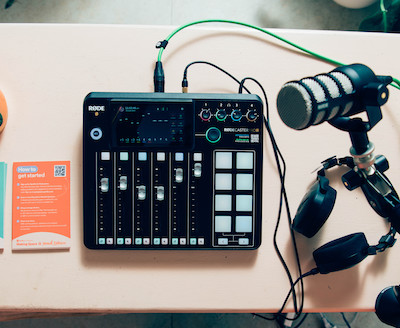
the recording equipment located at nourish botanica

What are you looking forward to most with the new Making Space studio?

I’m excited that other people who want to tell a story now have a free podcasting studio in the community that’s accessible with the tools and the resources they need. I hope that it will give a lot of people the boost in confidence they need to actually start that podcast they’ve been dreaming about.

What’s your advice to others who want to create a podcast but aren’t sure how to get started?

Don’t overthink it. I think we get in our heads and paralyzed by the thought of where to begin. If you have the tools, which we now have, whether you’re using the Spotify for Podcasters app at home or if you’re going into the new Making Space studio in Atlanta, that barrier is removed. 

Also, don’t question your story or your voice. People, me included, are nervous about putting themselves out there. When you start your podcast, know your “why” and know what your motivation is. 

I started The Avana Company LLC, a brand rooted in diversity and creative expression, to focus on amplifying voices and telling our stories because I believe podcasting can open doors. So many doors have been opened to me through this podcasting journey, and I would love to reach back and pull as many people as I can through those doors. A lot of people have asked how I started the podcast, so I decided to make a free launch checklist to help others get started. I want to help as many people as possible realize that it’s not impossible. It’s really about having the confidence to get started. If you have the tools and resources available, it can be a little less intimidating.

Everybody brings a unique perspective from their lived experience to a conversation. And so, the more people we can have out there sharing their stories, the better.


Hear more from Jennifer, and learn about the incredible legacy of Mrs. Rosa T. Beard, in her podcast, Telling HERstory, below.


From Underground Clubs to Eurovision Fame, GLOW Artist Dana International Inspires and Ignites

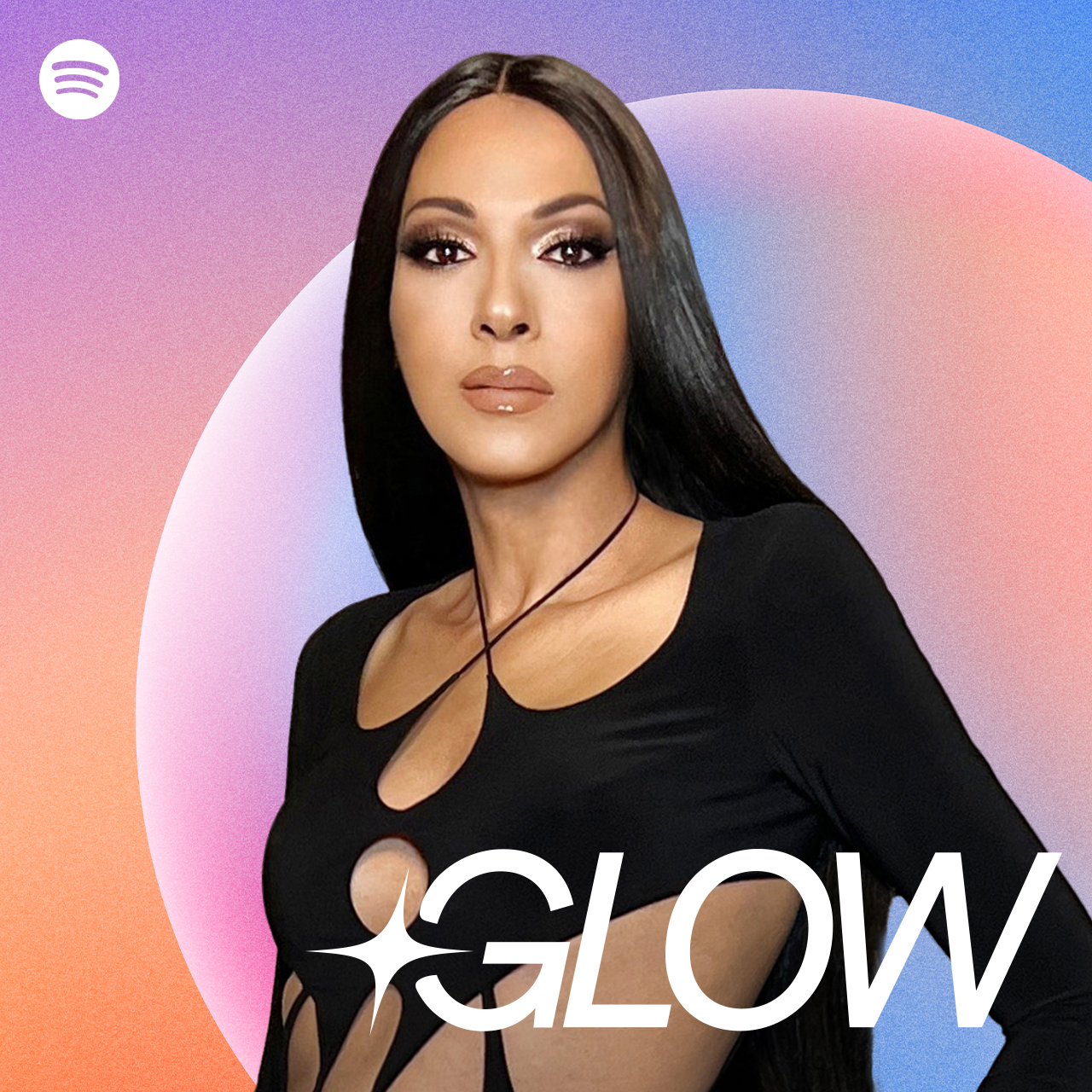
Dana International playlist equal cover art

Dana International defied the odds and the critics when, in 1998, she was selected to represent Israel for Europe’s biggest music event, Eurovision. Her performance of “Diva” captivated the audience in person and at home, and she was crowned contest winner.

Dana’s success on one of the world’s biggest stages is but one example of the Israeli singer’s powerful, dazzling musical presence. Over the past three decades she has released a number of albums and singles and even represented her home country a second time at Eurovision in 2011.

Dana’s perseverance, passion, and talent are just a few of the reasons why she’s one of Spotify’s featured GLOW artists for the month of June. Through GLOW, our global music program celebrating and amplifying LGBTQIA+ artists and creators all year round, we’re supporting Dana International on our platform with a dedicated hub and flagship GLOW playlist, and off our platform via billboards like those in New York City’s Times Square and on the city’s MTA subway system.

From finding her voice to the importance of celebrating Pride, Dana International shares more with For the Record below.

Tell us about your journey into music. How did you find your voice?

I released my first song almost 30 years ago. I was very content to have one hit song—I believed that someone like me couldn’t truly pursue a singing career. As a teenager, I had begun to realize that I was a woman, and that desire was stronger than anything else. Choosing to live as a woman meant giving up on my dreams of living a normative life. That’s when I discovered nightlife. Hiding under the cover of darkness—clubs, music, the exaggerated atmosphere of the 1980s—brought everything to life in Tel Aviv. The night became my refuge.

At the age of 18, I started performing with the drag team at the only gay club that existed in Israel at the time. One day we created a parody of Whitney Houston‘s song “My Name Is Not Susan” and turned it into a humorous Arabic song called “Sa’ida Soltana.” The song became a summer hit in Israel. After that song, I released a second solo song, followed by my first album. The album was quite successful, so, against all odds, I released three more. I became the singer of the year twice and sold gold and platinum albums.

The beginning of my career wasn’t easy. There were performances where people spat on me, cursed me, and threw trash at me. But it only gave me strength and motivated me to continue. After two years, I became one of the most successful singers in an early 1990s Israel that was mostly conservative. Soon, I started receiving offers for a TV series, a movie, and a musical about my life. And in 1998, I was chosen to represent Israel in Eurovision. 

What was it like performing at Eurovision for the first time?

As soon as it was announced, there was a big controversy in Israel. It wasn’t easy for me, and I admit that there were moments when it shook me. But I won first place with the song “Diva.” My life changed that night of the victory. I returned to Israel to pack a suitcase, and then I traveled to Europe and lived there for almost a year. The media in England declared that the new pop queen was born, but I suffered greatly.

How did your life change after winning the competition?

I became a media star. All the entertainment shows and news programs in Europe wanted me, but the interviewers felt entitled to pry into my life in a way they wouldn’t dare to do today. They invaded my privacy, and I provided them with everything they wanted to hear, overflowing with smiles and charm. But inside, it deeply offended me. I was publicized as a singer who won Eurovision. Why are you only interested in my sexuality and gender? How dare you talk to me about things you wouldn’t discuss with other female singers? I felt like I was living in a gilded cage.

So I returned to Israel to gather my strength and then released an intimate album that was different from anything I had done before.

What are you up to now?

At the age of 55, I am still onstage. I have become a gay icon, and it feels strange and somewhat overwhelming because I don’t want to be seen solely through that lens.

From all the musical activity and hundreds of performances worldwide, the joyful successes and the painful failures, the achievements, the awards, and the journey, the thing I’m most proud of and what I truly understand to be the most important is when people—of all ages, in all languages, from all over the world—approach me and say: “You changed my life. You gave me the strength to believe in myself. I realized I’m not alone. You were with me in the toughest and loneliest moments.” Very few artists truly manage to change something in the world, to change lives and help those who are struggling. Only in recent years have I truly understood this and realized that it’s much more important than whether my new song succeeds or not. 

Why is it important to amplify LGBTQIA+ voices year-round?

I believe that queer culture disperses a lot of color, sensitivity, and interesting and different perspectives in the world. It’s known that even during periods when people didn’t come out of the closet, writers, poets, singers, and gay artists brought the world great and important cultural creations. The world would be much grayer and much more boring if the voices of our community weren’t heard. Our community is the decoration committee of the world, but we’re not only that. 

What’s one thing fans might be surprised to learn about you?

This whole character of mine is a big show. I’m not satisfied with my character. I hate flashy designer clothes and makeup. My battle is when I go up onstage. I don’t feel brave, and I’m very shy in my everyday life. In that period at the beginning of my career when I fought for my right to be onstage and sing, I created this shining, radiant, and audacious character of Dana International. 

There’ve been so many advances in LGBTQIA+ rights and representation in the last decade. Why is it still important to celebrate Pride?

It’s important for all those children and teenagers who are sitting at home right now, afraid of who they are, afraid to tell their parents and friends at school, and feeling sad and alone. In every Pride parade, we tell them, “You’re not alone, we’re with you,” and we embrace them. Since Eurovision, I have appeared in Pride parades all over the world. And still, I get extremely excited about Pride parade performances. I think it’s important for us and for the children who used to be scared and embarrassed, too. Once a year, we celebrate our Pride holiday, where we spread the message of love, acceptance, equality, and the freedom to be who you are. 

What do you hope audiences take away from your music?

In one of my songs, I sang, “My joy is my protest.” I come from a difficult place, and it was very easy to sink into sadness and give up. My songs are happy. Pop music that reminds us of the beautiful and joyful side of the world. Pop songs are generally considered light and shallow, but I believe that happiness also holds a lot of power. It’s hard for me to express pain; I don’t cry. In life and in my music, I don’t cry. My message is that despite everything, we are obligated to find joy. I try to bring happiness to people and also find joy within myself, and it’s not always easy.

How does music empower queer communities?

I believe that music influences everyone. In my eyes, it’s the true prayer of humanity. We, as a community, are much more dramatic and sensitive, and I think music plays a much bigger role in our lives.


Catch Dana International and many other LGBTQIA+ artists this month and all year round on our flagship GLOW playlist.

Rock On During Black Music Month With These Frequency x Spotify Singles Tracks

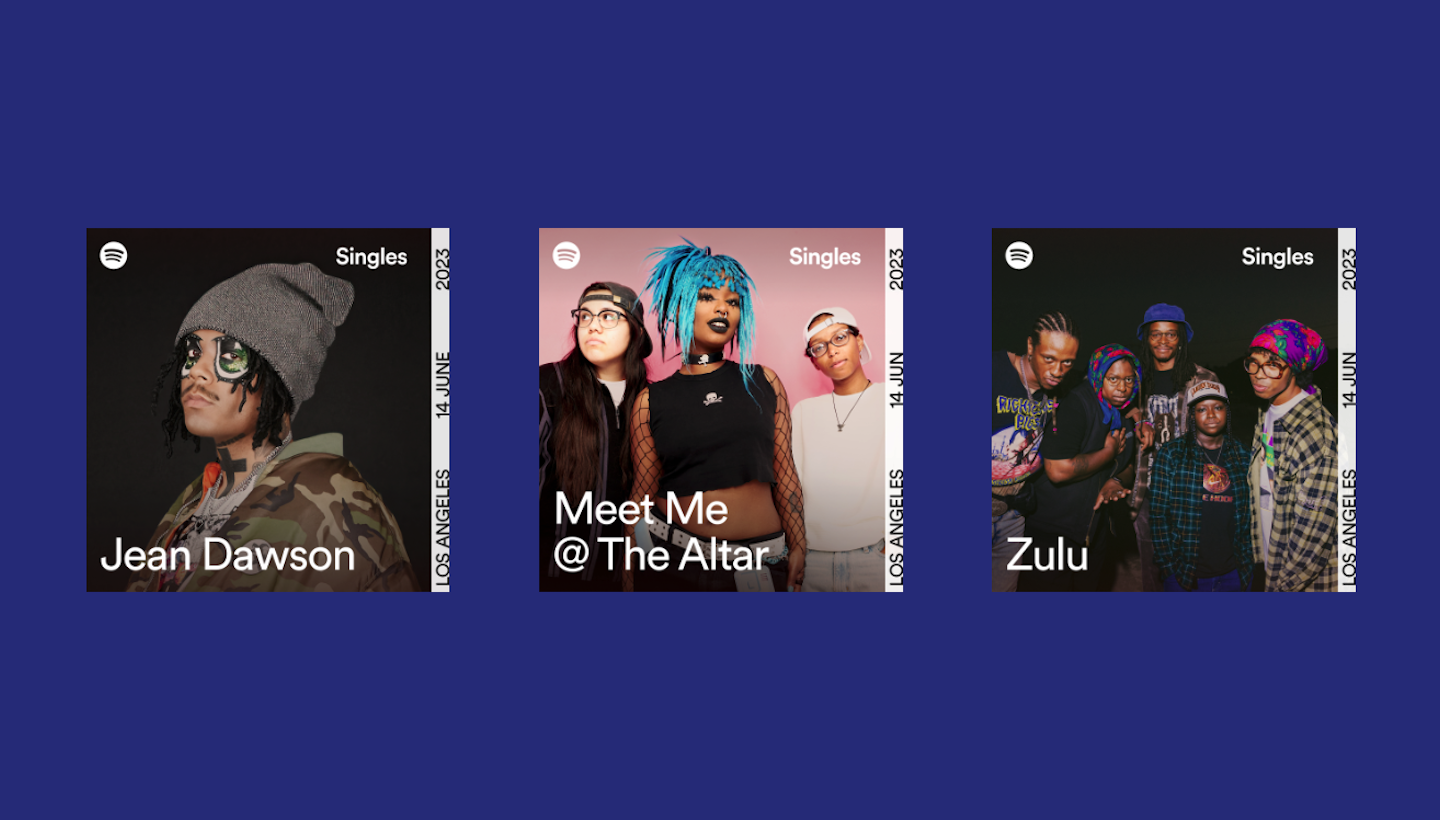
a compilation of song cover art featuring bands: Zulu, Meet Me @ The Altar and Jean Dawson

This June, in honor of Black Music Month, a group of talented Black rockers recorded new tracks as part of a Frequency x Spotify Singles collaboration. Pop-punk darlings Meet Me @ The Altar, hardcore/metal band Zulu, and alternative artist Jean Dawson each showcase their distinct music stylings on a reimagining of one of their original songs and a cover of another artist’s single that they love.

Frequency’s year-round program celebrates Black art, entertainment, creativity, culture, and community both on- and off-platform.

“Frequency was launched in 2021 out of the desire to create a space where listeners and creators can come together to celebrate Black expression in music. Since its inception, we’ve fostered community within diverse subgenres through marketing, editorial, and shared experiences,” explained Kimmy Summers, Lead for Artist Partnerships at Spotify.  “We take pride in our responsibility to partner and invest in artists that redefine what Black artistry looks and sounds like, and are thrilled to support the next generation of rising stars.”

These particular Spotify Singles reflect the diversity and talent within the Black music community and help expand perceptions of the range of genres in which Black artists excel.

“For this iteration of Spotify Singles, we chose to highlight Black artists making waves in Rock— whose contributions, despite the expansiveness of the genre, are not traditionally amplified,” shared Chissy Nkemere, Lead for Rock & Alternative Artist Partnerships at Spotify. “Each artist comes from a different subgenre within rock, and their distinct styles are reflected through the songs they chose and the recordings themselves.”

Get to know these musicians and check out their new Spotify Singles.

Meet Me @ The Altar is a critically acclaimed trio currently on tour for their debut album, Past // Present // Future. They put a new spin on their second single, Kool,” and covered Kelly Clarkson’s 2003 hit “Miss Independent.” 

How did you choose and add your personal stamp to the song you’re covering?

Kelly Clarkson is an artist that we have looked up to all of our lives. Our favorite Kelly Clarkson era is the early 2000s pop rock she was serving. I mean . . . everyone loves “Since U Been Gone”! We are giving this song [Miss Independent] our personal spin by making it an even more rock ’n’ roll–leaning listen.

How does your music reflect your identity?

The music we make is the manifestation of many forces and influences throughout our lives, but primarily we would say that it’s exactly what we would’ve wanted to hear from the stage when we were kids and started experiencing live music, or playing on the radio on the way to school. It’s reaffirming for us to be able to say it’s fully authentic to what we want our sound to be. Nobody tells Meet Me @ The Altar what we have to sound like or be other than the three of us.

What advice do you have for other Black rockers?

Take up space and be yourself. Be proud of your identity, but don’t let it be the only thing people talk about. At the end of the day, your music is the most important thing. You being Black should be an afterthought, not the first thought. 


Zulu, whose sound blends hard-core and power-violence with elements of jazz, hip-hop, funk, and soul, recently released their first full-length album, A New Tomorrow. Their Spotify Singles are a reworking of “Shine Eternally” and a cover of  Slipknot’s Wait and Bleed.”

How did you choose and add your personal stamp to the song you’re covering?

Honestly, some of us kind of naturally thought of either Slipknot or System Of A Down for some reason, and we ended up going with Slipknot. It’s funny how we all naturally shared that same thought. 

How does your music reflect your identity?

It’s a musical representation of my identity—it is who I am, and no matter what I make, it’s represented. Different styles of music are just different aspects of my identity. 

What advice do you have for other Black rockers?

Don’t let anyone tell you this music isn’t for you, or that you’re playing white-people music. Our ancestors made it possible for this music to exist, and we can’t let people take that away from us.


Jean Dawson is a Black and Mexican musician and visual artist whose most recent album CHAOS NOW* debuted in 2022. He reimagined his track PORN ACTING*” and covered “Window Shopper” by 50 Cent for his Spotify Singles. 

How did you choose and add your personal stamp to the song you’re covering?

“I’ve always looked at this song as a rock song, so I decided I would take it there and add my twist to it. People fail to realize that 50 Cent was an innovator in being hyper melodic while doing a format of music that was known for being more rhythmic. I have always seen him as being very punk rock. 

Austria’s My Ugly Clementine Rocks the Indie Scene as Spotify’s EQUAL Global Artist of the Month

the band My Ugly Clementine posting in front of the camera in a room

Listen to one song from My Ugly Clementine and you might imagine that the ’90s are back. Counting Radiohead as one of its inspirations, the Vienna-based indie outfit is comprised of Sophie Lindinger, Mira Lu Kovacs, and Nastasja Ronck. All three members of the non-male rock band have experienced success in previous musical projects—whether solo, as a duo, or in a band—but their talents collided in 2020 on their debut album, Vitamin C.

Vitamin C was critically acclaimed and earned the trio the 2021 IMPALA Album of the Year Award. Since then, the band has performed across Europe and is readying its next album, The Good Life, due in August.

My Ugly Clementine is also Spotify’s EQUAL Global Artist for June. The EQUAL Global Music Program launched in 2021 with the aim of combating gender disparity in the music industry by amplifying and celebrating the work of women creators around the world. Sophie, Mira, and Nastasja currently adorn the cover of the EQUAL Global playlist, and their new single “Feet Up” is featured in the top spot.

For the Record asked the band to fill in the blanks about its creative process and inspirations.

The artists who have most inspired us are _____.

HAIM, Avril Lavigne, Radiohead, Ani DiFranco, Julia Jacklin, and Courtney Barnett.

One piece of advice we’d give other emerging artists is _____.

Communicate! Communication is key when it comes to working as a team and with a crew. To get anything accomplished, it is absolutely necessary to talk to each other. Without that, we wouldn’t be able to put anything together—a tour, a music video—let alone write songs together.

One notable moment in our career so far is _____.

When we won the IMPALA award in 2021. That meant a lot to us, but it was hard to grasp because we couldn’t celebrate like we wanted to . . . COVID, remember?

Our creative process consists of _____.

Spending time with each other, having deep talks, and trying to make sense of our struggles and insecurities by working through it . . . mostly together. Art is therapy.

One way we’d like to see greater gender equity in the music industry is _____.

By simply booking the big festivals equally. Honestly, we find it embarrassing to see a festival nowadays announcing a lineup with maybe 2% non-cis-male-fronted bands. That still happens a lot and it’s unacceptable, especially because there is impeccable queer and female talent everywhere you look.

A few up-and-coming women and nonbinary artists we’re excited to watch are _____.

Albertine Sarges, Mhaol, Slow Pulp, Squirrel Flower, and Claud.

Songs that make us feel gender euphoria are _____.

There are definitely songs like “Faceshopping” by SOPHIE or “Europe Is Lost” by Kae Tempest that we celebrate! Also, artists who defy gender roles and norms just by existing and being seen are the ones we aspire to and who we want to see on festival lineups much more.


Check out music from My Ugly Clementine, as well as other talented women artists, in our EQUAL playlist below.

Cristobal Tapia de Veer, Composer of the Viral ‘White Lotus’ Theme Song, Reveals His Process and Expectations for Season 3

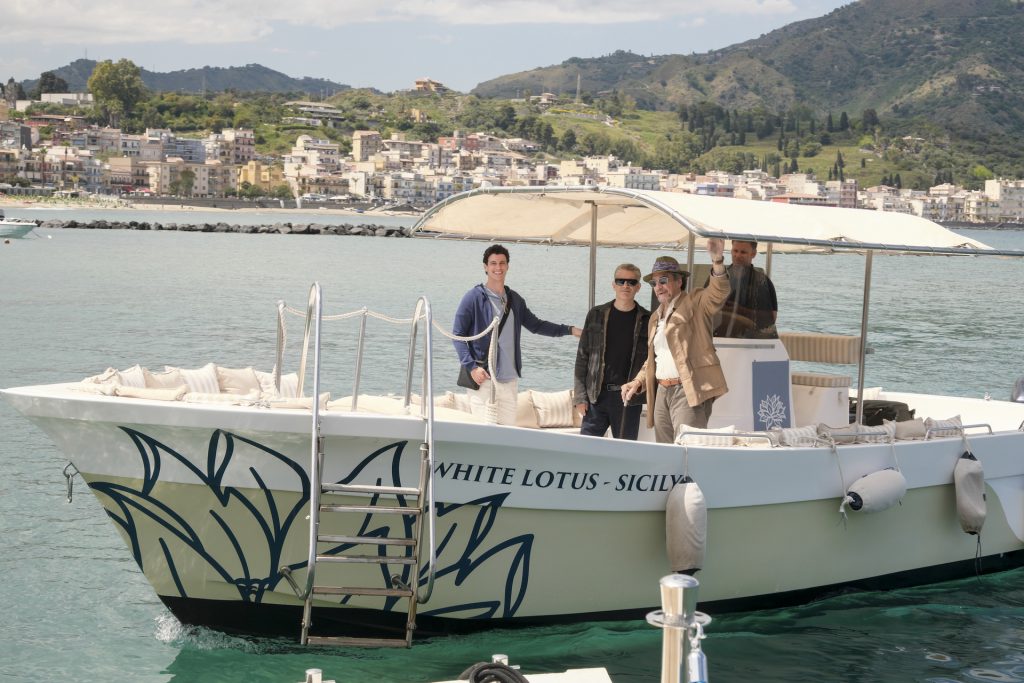
Plenty of TV sitcom theme songs stand the test of time. The singability of The Fresh Prince of Bel-Air, clap-infused pop of “I’ll Be There For You” from Friends, and nostalgic harmonies of “Where Everybody Knows Your Name” from Cheers each holds a notable slot in the cultural zeitgeist. It’s less common for a drama’s theme song to meet the same reception. And that picture is even more complicated when the theme is a wordless instrumental used—in the first moments of the show—to set the scene for dead bodies washing ashore.  

Yet composer Cristobal Tapia de Veer’s Aloha!” and “Renaissance,” which serve as the theme songs for first and second seasons of The White Lotus, respectively, have reached such success. Each track features a consistent melody with high-pitched instrumentation, a  danceable beat, and breathless vocals. Each is also tailored to reflect its season’s location—Hawaii in the first and Sicily in the second. 

Each season, The White Lotus offers colorful, suspenseful commentary on exploitation, wealth, class, and race with a backdrop of murder and dysfunction set in a fictional luxury resort. The combination of Cristobal’s masterful composition, the show’s alluring storytelling, and a rabid global fan base has propelled both themes to viral fame and millions of Spotify streams, and raised the profile of their composer. 

Fans on the prowl 

Since its July 2021 release, “Aloha!” has been streamed most by fans in Warsaw, Berlin, and Paris. The song’s popularity only grew in the lead-up to the October 2022 premier of the second season, with fans taking to the internet to share commentary on the song. 

One popular fan theory was that its repeated notes created a musical allusion to the Gregorian chant “Dies Irae,” or “The Day of Wrath.” In a rare interview with For the Record, Cristobal explained that this is but a coincidence. “Those melodies are the result of chanting with voices and finding a melody that works with the sound. For lots of reasons, I ended up with those types of harmonies, but I wasn’t specifically inspired by that music or trying to use it intentionally.” 

Following the debut episode of the second season on October 30, 2022, searches for “White Lotus” on Spotify increased more than 500%. But to the chagrin of fans, “Renaissance” wasn’t released on Spotify until December 11, the end of the season. 

Even so, dedicated fans steadily played “Aloha!” on Spotify while they waited, and on December 12, streams of “Aloha!” jumped 200% compared to the month prior. Searches for “White Lotus” soared to 4,800% compared to two months prior. 

Once released, daily streams of “Renaissance” hit an all-time high on December 13, 2022, with fans in Paris, Oslo, and Berlin leading the charge. And as for Cristobal? The composer saw a 162% lift in his own catalog’s daily streams following season two. 

Even after the season came to an end, fans continued to circulate the song, using it as the musical background to their viral videos. On February 17, 2023, Dutch DJ Tiësto put out his own remix of “Renaissance,” which became a favorite among fans in Sydney, New York, and Oslo in particular.  

Soundtracking suspense

So what went into creating the right soundtrack? Cristobal employed wind instruments to create the whirling bird sounds on “Aloha!” “For the first season, I wasn’t trying to make Hawaiian music. It was more about making something about nature kicking the characters in the ass, and the wild stuff coming for the characters,” Cristobal explained. To hit his mark, he combined bird calls with tribal chants for an island feel with a spooky tropical depth.

Composer Cristobal Tapia de Veer

“The temp score was this loungy, rather soft thing—something that would be playing in a nice luxury cafe when you’re on vacation somewhere,” he recalled. “It was very different from what I came up with. I went with a tribal, rather aggressive screaming, and drums and flutes.” 

That “screaming,” which seems to be the best way to describe the vocal sounds, became a driving force behind the song’s virality when it came time to adapt it for the second season. Cristobal knew he wanted to match the vibe of the location and utilize disconcerting vocal tones.

“The ‘oululus’ are the most important thing,” said Cristobal, using his tongue heavily to propel the sound from his own mouth. “For the second season, I was trying to fit into the Italian and the Sicilian vibe. We spoke about having some renaissance sounds, some harps, mandolin, violin, things that we’d connect with Italian music and opera. I did a demo of some classical Italian music, something operatic, and that’s the beginning of the track. From there, I wanted to somehow bring back the sound of the first season, which is these screaming voices that are so recognizable.” 

He also wanted to evoke a different journey for a new cast of characters. 

“In the first season, there’s a lot of conflict in the music,” he said. “It feels very stressful and more tense than how it should; it has more dissonance. But this was something calculated. And I think the second season is funnier because things become dark later, towards the end of the show. So the song keeps it more playful, more light and harmonious.” 

A trip to Thailand

Cristobal finds the composing process as tumultuous as life is for the White Lotus patrons at times. “I don’t do anything particular to get into the zone,” he notes. “Sometimes people try to have the best conditions—relaxed and with a view—but surprisingly, for me, I like to see the stuff that results from being in a bad situation, a stressful situation, not having the right equipment, or not being in the right place.” 

For Cristobal, discomfort is more impactful, motivating, and conducive to creativity than pleasure or perfection. “When I feel that I’m in danger, it feels like I’m gonna probably come up with something better, a more original idea—as long as I’m surviving a situation—than if I’m too comfortable.” 

With the third season of The White Lotus confirmed for Thailand, we asked Cristobal to hint at some musical elements fans might expect when the show debuts.  

“For Thailand, I want to bring in some Eastern philosophy, something a little bit spiritual,” he said. “I love the Buddhist temples there, and funnily enough I have a collection of Thai gongs. I have 36 Thai gongs to make melodies with, so you can expect to hear some of those. I’d really like to go deep with it, make it take a journey.” 

Prepare for the third season of The White Lotus with The White Lotus Official Playlist on Spotify.

Criadores latino americanos mostram sua criatividade com podcasts em vídeo

Muitos apresentadores de podcast estão se aproximando dos fãs de uma nova maneira: por meio do vídeo. Os podcasts em vídeo oferecem uma uma dimensão extra de interatividade e proximidade, permitindo que os ouvintes observem as reações ou prestem atenção no ambiente onde o apresentador está. Alguns criadores estão até animados em se vestir e mostrar seus melhores looks. 

A mudança para podcasts em vídeo está ocorrendo em todo o mundo e, especificamente no mercado latino americano, alguns dos podcast favoritos do público estão trazendo essa nova camada para seus programas. 

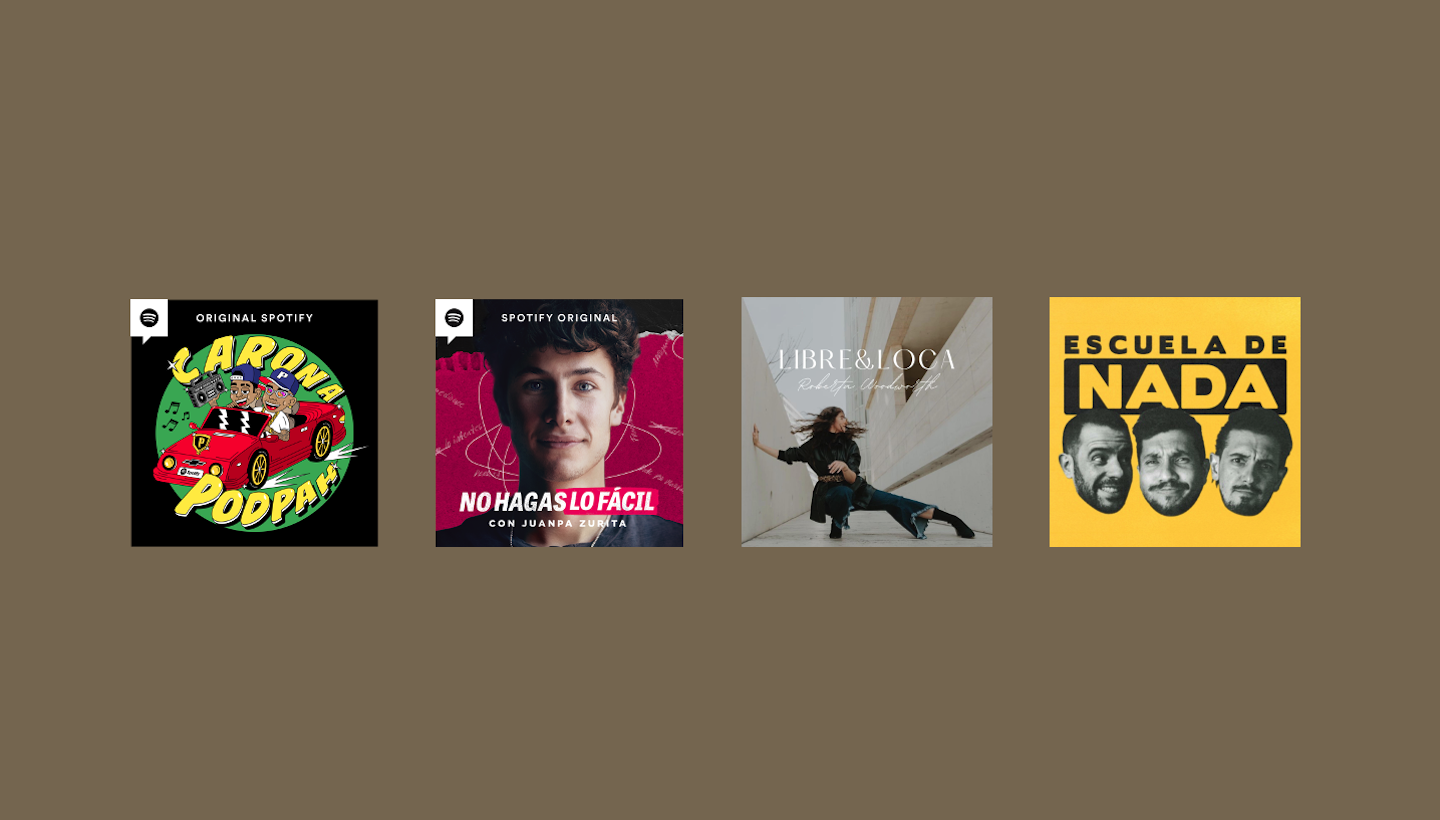
A criadora mexicana Roberta Woodworth, cujo podcast  LIBRE&LOCA traz temas íntimos e pessoais, como amor próprio e mágoas, é uma dessas criadoras que está fazendo experiências com vídeo em sua mais nova temporada. O programa Escuela de Nada, criado por três amigos venezuelanos radicados no México, também está adotando o vídeo como uma nova maneira de se conectar com os ouvintes. E há ainda o criador mexicano multifacetado Juanpa Zurita, que introduziu o vídeo na segunda temporada de seu podcast original do Spotify, No Hagas Lo Fácil.

Enquanto isso, alguns podcasts já estão usando o recurso de vídeo desde o início. O podcast brasileiro Spotify Original Carona Podpah, com Igor Cavalari (Igão) e Thiago Marques (Mitico) do Podpah, estreia no Spotify em 7 de junho e incluirá vídeos em seus episódios semanais. O programa acompanha os apresentadores enquanto eles entrevistam convidados dentro de um carro, tornando o vídeo uma parte essencial do podcast.

Conversamos com Roberta, apresentadora do Libre & Loca, Juanpa, apresentador do No Hagas Lo Fácil, Chris Andrade, fundador e co-apresentador da Escuela de Nada, e Igão e Mitico, anfitriões do Carona Podpah, para saber como o vídeo está revolucionando seus podcasts. 

O que mais o empolga na ideia de ter o recurso de vídeos em seu podcast?

Igão & Mitico:O Podpah nasceu como um podcast em vídeo e o público sempre gostou muito desse aspecto – fomos o podcast mais ouvido no Spotify no Brasil em 2022 e o 24º em todo o mundo. O vídeo é fundamental para o formato do nosso programa porque temos o entretenimento como pano de fundo de tudo o que produzimos – seja falando sobre culinária, futebol ou música. Quando uma plataforma tão relevante como o Spotify se interessa por uma parceria conosco para um podcast em vídeo, isso mostra para nós e para o mercado que o produto ainda tem muito a ser explorado.

Roberta Woodworth: Meu podcast é muito íntimo e acho que o vídeo convida o ouvinte a se aproximar, refletir e ter ainda mais empatia com esses tópicos “íntimos e universais” que abordamos no Libre & Loca.

Juanpa Zurita: Foi algo que minha comunidade me pediu em todos os episódios da última temporada. Por isso, fico muito feliz por termos conseguido isso para a segunda temporada! Ouvir é bom, mas nada se compara a ver. Acho que a conexão e a dinâmica do podcast são mais íntimas do que antes. E as pessoas estão felizes, o que me deixa muito feliz!

Chris Andrade: A Escuela de Nada, por ser um podcast de comédia improvisada, usa o poder da interação em seus vídeos com os fãs. Poder reagir às piadas e ver a resposta dos seguidores foi uma mudança que nos empolgou muito.

Como o vídeo influenciou a maneira como vocês conduzem cada episódio?

Igão & Mitico: O vídeo nos dá liberdade para criar mais e mais. Existem alguns desafios, como por exemplo, o Carona Podpah envolve filmar em um espaço apertado, pois levamos nossos convidados para dentro do carro enquanto conversamos sobre as músicas que marcaram suas vidas – mas isso não nos impede de tentar coisas novas.

Roberta: Sou muito expressiva, e estar diante das câmeras me faz lembrar que o mundo inteiro verá meu rosto. Isso, por si só, torna tudo mais humano, orgânico e real. Não sou mais apenas uma voz que o acompanha. Sou uma pessoa.

Juanpa: Houve uma mudança drástica em nosso cenário para dar a ele o visual e a sensação de NHLF que queríamos. Também tivemos que reinventar as introduções dos episódios e estou muito orgulhoso do resultado.

Chris: O vídeo nos levou a ter um novo tipo de continuidade e proximidade com nossos fãs. Como podemos nos ver e ouvir como apresentadores, estamos percebendo que o interesse dos fãs é muito maior.

Como o vídeo está ajudando você a se conectar com seus fãs?

Igão & Mitico: A principal característica de um podcast em vídeo é que o público pode testemunhar as reações. O que gostamos em ter o recurso de vídeo é que nosso público poderá acompanhar o podcast como se estivesse conosco no carro, vendo tudo o que está acontecendo. O vídeo torna o programa mais dinâmico e nos permite estabelecer uma conexão maior, não apenas com nossos convidados, mas com quem está do outro lado da tela.

Roberta: Isso nos aproxima muito mais porque as pessoas não apenas ouvem o que penso e sinto, mas também o veem. E eu falo muito sobre emoções, então é muito interessante como essa conexão se torna mais profunda.

Juanpa: Há algo muito especial na linguagem corporal que você não pode sentir se não puder ver. Também quero agradecer aos nossos fãs por todo o carinho durante a primeira temporada e pela insistência de todos em usarmos o vídeo. Sem eles, não teríamos conseguido.

Chris: O vídeo nos ajudou a expandir e disseminar ainda mais nosso conteúdo em uma plataforma de mídia social em que o vídeo é dominante. Cada pessoa tem sua própria maneira de consumir conteúdo e, sem dúvida, o vídeo agrega muito para nós e traz muito valor para as novas gerações.

Podcast Q&A and Polls Help Creators Talk to Fans Where They Are

Looking back, it’s clear the early days of podcasting were uncharted territory. Avid listeners would finish an episode and engage with each other elsewhere—on, say, a Reddit forum or Discord channel—but rarely with the podcast host. There was a desire for deeper conversations, but there wasn’t a channel. For podcasters, this disconnect kept them from the community interaction they needed to sustain momentum for their show. 

In 2019, when Spotify founder and CEO Daniel Ek announced that podcasts and podcasting would be the next phase of growth for the company, it was an opportunity to reimagine the future of podcasting by making a historically one-sided medium more engaging and dynamic for both listeners and hosts. So, as we grew our podcast offerings, Spotify was also able to expand capabilities for creators with the acquisition of Anchor—the world’s biggest podcast hosting platform—which has since become Spotify for Podcasters. In fall 2021, we launched Q&A and polls. 

“Podcasting can be two-way; it can be interactive. It can be a format that helps people connect with each other, instead of just one-way broadcasting,” says Maya Prohovnik, VP and Head of Podcast Product at Spotify. “As Spotify has become the number one audio listening platform in the world, as we’ve gotten a critical mass of listeners and creators in one place, it’s allowed us to really innovate and add these new ways to interact over audio.” 

Q&A and polls enable creators to incorporate a level of engagement by asking questions or soliciting voted responses. The tools allow podcasters to directly communicate with fans in a way that’s more personal. And since we enabled these features for all creators on our new Spotify for Podcasters platform, we’ve seen the number of podcasters who use them more than double.

“The creator response has been really strong, and it’s growing fast,” says Alex Yamamoto, a Product Marketing Manager in Spotify’s Podcast Mission who is focused on Creator Growth tools. “For the creators who are using it, it’s a way for them to get closer with their audiences. A lot of the creators we’ve seen have taken it in different directions. Some want to hear personal stories from their fans, others look for debate-like conversations. In general, it’s about getting people talking.”

Jump-starting conversations

In December of 2021, a few months after the features rolled out, Sapphire Sandolo, host of Stories with Sapphire, started experimenting and saw fans engaging almost immediately. “Before, you had to go off the thing that you were listening to the podcast to. You couldn’t interact right then and there,” she shares with For the Record. “I think that’s why people are really drawn to it. It keeps you there. You don’t have to go find where the discussions are happening.” 

Sapphire Sandolo

Sapphire was quick to adopt the features and has been using them in creative ways ever since. Since Stories with Sapphire focuses on encounters with the supernatural in cultures around the world, her engagement with these tools focuses on normalizing the topics she covers. “With the type of content that I do, people usually listen to paranormal stories because they have also experienced things, or they like to talk about paranormal stuff. Because of that, when I ask people, ‘Have you experienced something similar?’ people start chiming in because they most likely have,” she explains. 

Crafting the perfect question can be daunting, so our product team added a default question, “What did you think about this episode?” to all shows. With this addition, listeners and creators alike can experience and see the benefits from the Q&A capabilities—and get the conversation started. 

“The default Q&A helps people and it starts getting listeners engaged and using the tool,” says Chris Larson, a Product Manager for our podcast fan engagement features. “But where we really see benefits is when the creators put it in their own voice and customize it, either to their podcast category or to a specific show, or they ask about future shows and shape the direction of where they want to go. So, we’re trying to encourage more of that. We’ve learned from creators that that’s been really valuable. We look at the data and we see that it gets a lot more listener responses and there’s more engagement there when it’s been customized in their own voice.”  

For example, Teenager Therapy, a show hosted by a handful of Gen Z friends who try to normalize conversations around the harder topics within their lives, asks listeners to share their own personal stories. Gimlet’s Science Vs podcast, which takes on hot topics in science and health, asks listeners questions about their prior knowledge on a subject. And head to Stories with Sapphire for a deep cut: “What is your relationship with death?” 

In their own hands

Prior to the development of these tools, podcasters found other creative ways to generate two-way conversations. Smaller shows, in particular, were able to utilize voice memos and other alternatives to mimic call-in radio shows. “Some found workarounds maybe five or 10 years ago—it started being really popular to use a Google Voice number,” remembers Maya. “So people could call in, which is awesome, but it was not easy to set up. It was a lot of work for the fans and a lot of work for the creators—you had to listen to voicemails, export them, edit them. It was really cool to start to see that happening, but still really high friction.”

Beyond those who chose to call in, podcasters weren’t able to solicit feedback from fans. Now, Maya, who hosts a handful of podcasts herself, uses the Spotify for Podcasters fan engagement tools to crowdsource ideas for guests and topics and content. 

For Alex, keeping these features conveniently available on the Spotify environment—where listeners already are—also means that control and decision-making remain in the hands of the creators. “The power is really with the creators. They can initiate, engage with fans in what they see as the most positive and creative way,” he says. “The most creative Q&A and polls come from hosts who inherently understand the connection they have with their fans—and they’re the ones who see more listeners engage on Spotify. The beauty of the product is that it accentuates the connection a host already has with their fan base.” 

The tools also enable hosts to build community among their listeners.

“One of my main goals with my podcast is to normalize the paranormal,” says Sapphire.” A lot of the time, people don’t like to share their experiences because they think people will think they’re crazy. I want to create a space where people know they’re safe. I think that’s why people are more comfortable opening up when it comes to my show. They know other people who listen are going to be just as open.” 

A question for the future

As more creators start to use the tools and see the benefits of interactivity, the Spotify team is able to incorporate creator needs to help push conversations even further. “The things we’re committed to for the current functionality are just making sure we improve all the existing ways that creators are interacting with their audiences, and improve discoverability,” says Chris. “We want to close the feedback loop so that when creators do get feedback on their episodes, they’re notified in a timely manner and can actually engage. Because we know that for listeners, if they’re not getting feedback from the creators, it feels like fans are shouting into a black box. We want to encourage creators to start giving listeners that reinforcement.”

Alex’s tip to creators? Mention these new features in the episode intros and the show notes. “The best source of discovery of the feature for listeners is when the creator calls it out,” he says. 

And there’s always more to learn and experiment with. Sapphire, an early adopter of Q&A and polls, recently started using Spotify for Podcasters for analytics. After publishing two video podcasts, she noticed the number of people responding to her questions doubled. 

For Sapphire and Maya, podcasting incorporates an element of magic. “The world is a lot more magical than we give it credit sometimes,” Sapphire says. “We lose a lot of our sense of that as we grow older, but there’s always room for paranormal and room for magic.”  

“I really find it magical to be able to express myself and tell stories, and I really want everyone to be able to do that,” Maya explains. “So, I hope that’s what we keep seeing. It’s so easy to make a podcast on your phone and with all the developments we’re seeing in creator tools. I can’t even imagine where we’re gonna be in a couple years. As the barriers for creation become even lower, we’re going to see more experimenting and finding new, novel things to do with the medium. I’m really excited for Spotify to become the place that fans and creators think of when they think about connecting with each other.”

Celebrate Country Legend Willie Nelson’s 90th Birthday With New Spotify Singles

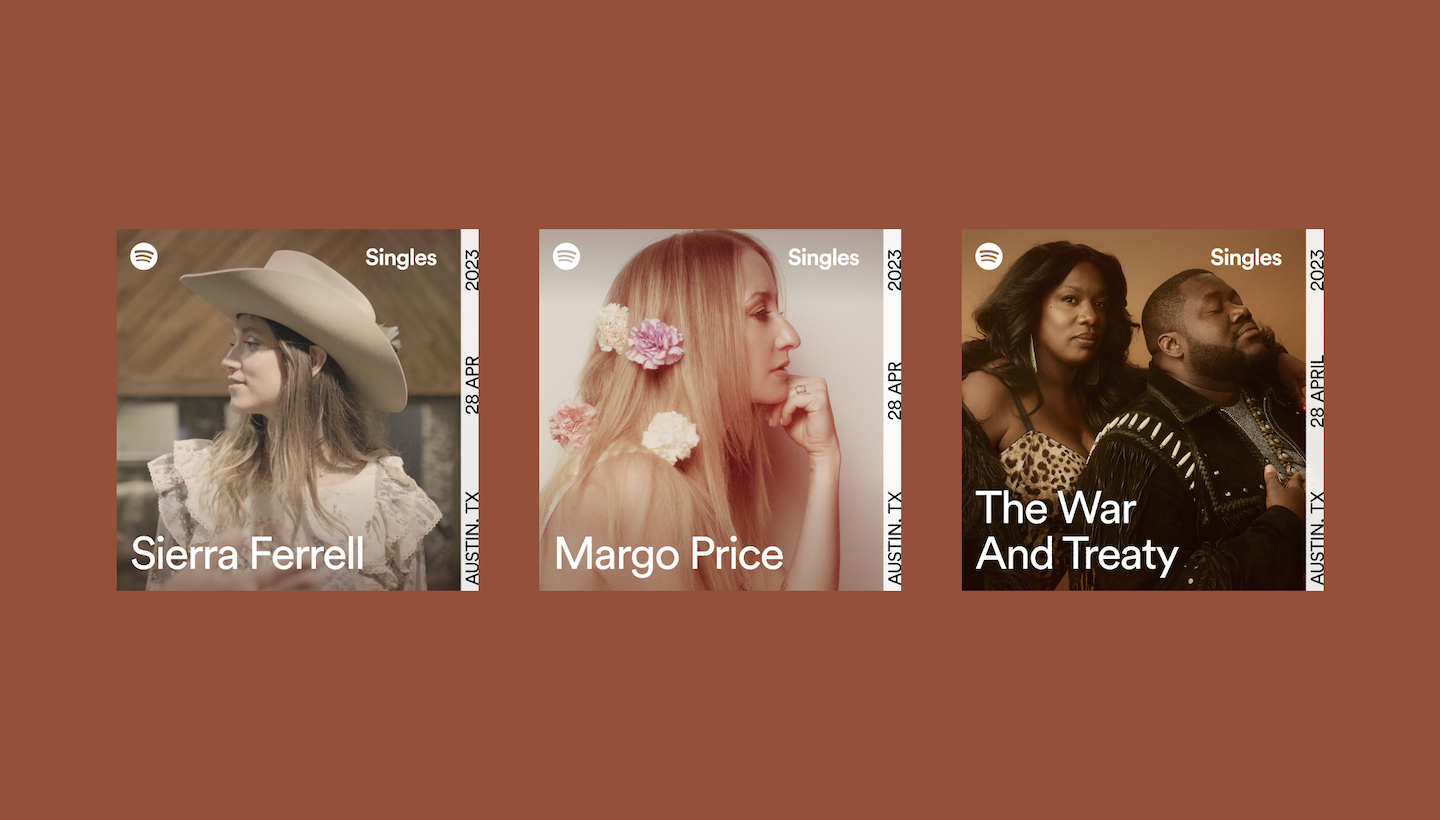
cover art for the three artists participating in the willie nelson spotify singles

Often spotted with a bandana on his head and a guitar in his hands, Willie Nelson remains one of the most recognized and respected country musicians. Since the 1960s, the Texan has been active, performing hits like “On the Road Again,” appearing on the silver screen in films like The Dukes of Hazzard, and advocating for the causes most important to him. 

April 29 marks the renowned star’s 90th birthday, and our Spotify Singles program is celebrating the milestone occasion. In partnership with Luck Reunion, a group of artists visited Nelson’s iconic home studio—Pedernales Recording Studio—to cover one of their favorite hits from the legend.

“Luck Presents is honored to have collaborated with and to have hosted the Spotify Singles team to capture these amazing Luck family artists paying homage to our landlord and godfather for his 90th birthday,” said Matt Bizer, CEO, Luck Reunion. “From Margo’s ballad rendition of ‘Hands on the Wheel’ and Sierra’s incredible take on ‘Seven Spanish Angels,’ to the powerful, soulful, and fun new gospel take on ‘Whiskey River’ by The War And Treaty—they are all a treat to hear. We hope this can become a new tradition.” 

For the Record caught up with the artists to learn more about their experiences creating these new tracks.

Margo Price covers “Hands on the Wheel”

Grammy Best New Artist nominee Margo Price uses her music to weigh in on a range of societal topics, from the gender wage gap to the plight of the American farmer and substance abuse. The singer-songwriter has seen critical acclaim for her work, which includes four studio albums since 2016.

What was it like recording at the Pedernales Recording Studio?

It’s one of my favorite studios to record in. This was my second time recording there, and there’s just a magic about the studio and the beautiful hillside country that surrounds it.

Why did you choose “Hands on the Wheel”?

Hands on the Wheel” has always been one of my favorite songs, and Red Headed Stranger is one of the best albums ever conceived. The opening lyrics seem so relevant for today’s times. 

What do you hope Willie’s reaction will be? 

I hope he digs it! I tried to preserve the rooted feeling and keep it simple and stripped down so the focus on the poetry and lyrics wouldn’t be lost. 

How did you reimagine the track?

Honestly, I didn’t do much, because if it’s not broken, why fix it? I changed the key and moved it up into my register, but I kept it acoustic and open with lots of space for the words and instruments to breathe. My husband, Jeremy, played guitar, and I enlisted two of Willie Nelson’s bandmates for the session. His longtime harmonica player, Mickey Raphael, added his magic touch, and Willie’s son, Micah Nelson, aka Particle Kid, added an acoustic guitar lead and a beautiful harmony. 

What was it like collaborating with Micah? Did the experience bring out a different side to your music or creativity?

Micah is a genius—and I truly mean that. I have always loved singing, touring, and recording with him. His vocals added so much, and so did his acoustic playing! He has his father’s touch but a sound all his own.

If you could pick another artist to cover one of your tracks, who would it be? Is there a song you’d have in mind?

Great question! I really love the band The Linda Lindas. I would love to hear them cover my song “Been to The Mountain.”


The War And Treaty cover “Whiskey River”

Michael Trotter Jr. and Tanya Trotter are the husband-and-wife duo behind The War And Treaty. Their musical style of soul, gospel, and country helped them nab a nomination for Duo of the Year at this year’s Academy of Country Music Awards.

What was it like recording at Luck Reunion/Pedernales Studio?

Historic. 

Why did you choose “Whiskey River”?

We loved the original version and the clever lyrics Johnny Bush wrote.

What do you hope Willie’s reaction will be?

We hope he doesn’t say, “Who messed up my song?” Ha!

How did you reimagine the original?

We thought that we could add to it by putting a rock kind of swamp country energy to the song. Our sound is a mixture of gospel, country, and soul and we wanted the listener to feel that.

What does this version give fans that perhaps the original didn’t?

A little more energy and two voices on lead.

If you could pick another artist to cover one of your tracks, who would it be? Is there a song you’d have in mind?

Jennifer Hudson singing “Have You A Heart” would be epic.


In addition to the tracks from Margo and The War And Treaty, Sierra Ferrell, a singer-songwriter from West Virginia, also brought her signature fusion of country, gypsy, and folk to Nelson’s track “Seven Spanish Angels.” You can check that out below.


For more tracks from the country music legend, check out our Happy 90th Willie Nelson playlist.

Spotify Hosts Summits in Germany To Bring Creators and Industry Professionals Together

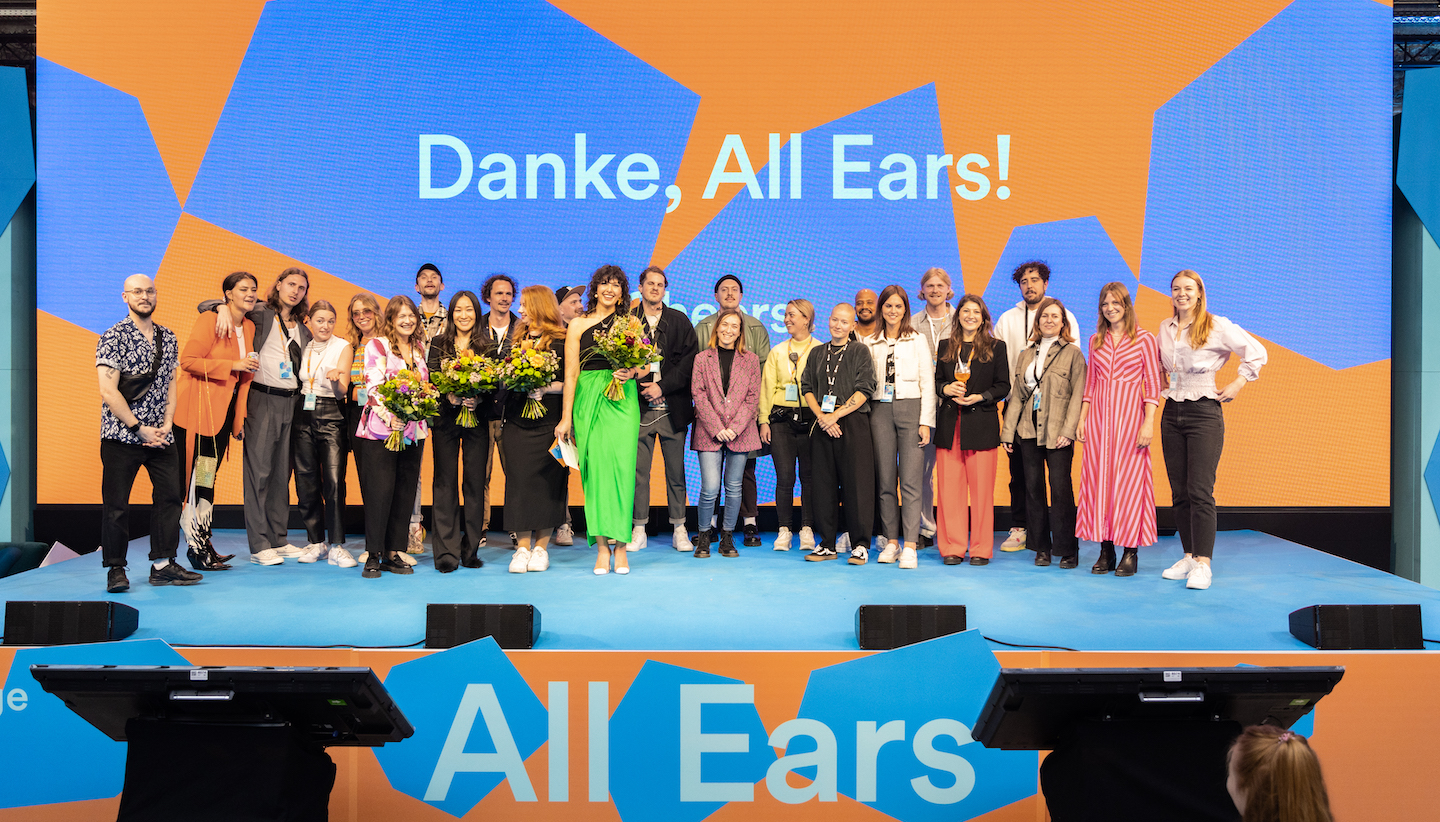
a group of participants standing on stage at the all ears summit

Last week, hundreds of artists, publishers, creators, and individuals working in the audio industry met up in Germany for Spotify’s All Ears Podcast Summit and All Music Friday Summit. The events offered a chance for attendees to hear from experts in their fields and gain insights on reaching larger audiences across podcasting and music.

Welcoming the podcast industry to Wilhelm Hallen

The 2023 All Ears Podcast Summit made history as the largest-ever podcast event in Germany. Experts from production, marketing, publishing, and advertising presented, shared advice, and connected. The conference, which spanned five stages at the Wilhelm Hallen conference center, included panels, interviews, workshops, and live podcast recordings.  

For the Record had the chance to talk to Saruul Krause-Jentsch, Spotify’s Head of Podcast in Germany, who shared more about the summit. 

“Podcasts are an important audio entertainment medium in Germany, about which, in which, and with which there is a lot of discussion,” she noted. “We generally take great pleasure in exchanging ideas with all our partners, creators, and competitors. Spotify is the most important podcast pioneer in Germany, not only because of our great content, but also because of the technology and tools we have available for creators. This event helps guide the conversation of the future of podcasting while also sharing more about our creator-focused mission with Spotify for Podcasters.” 

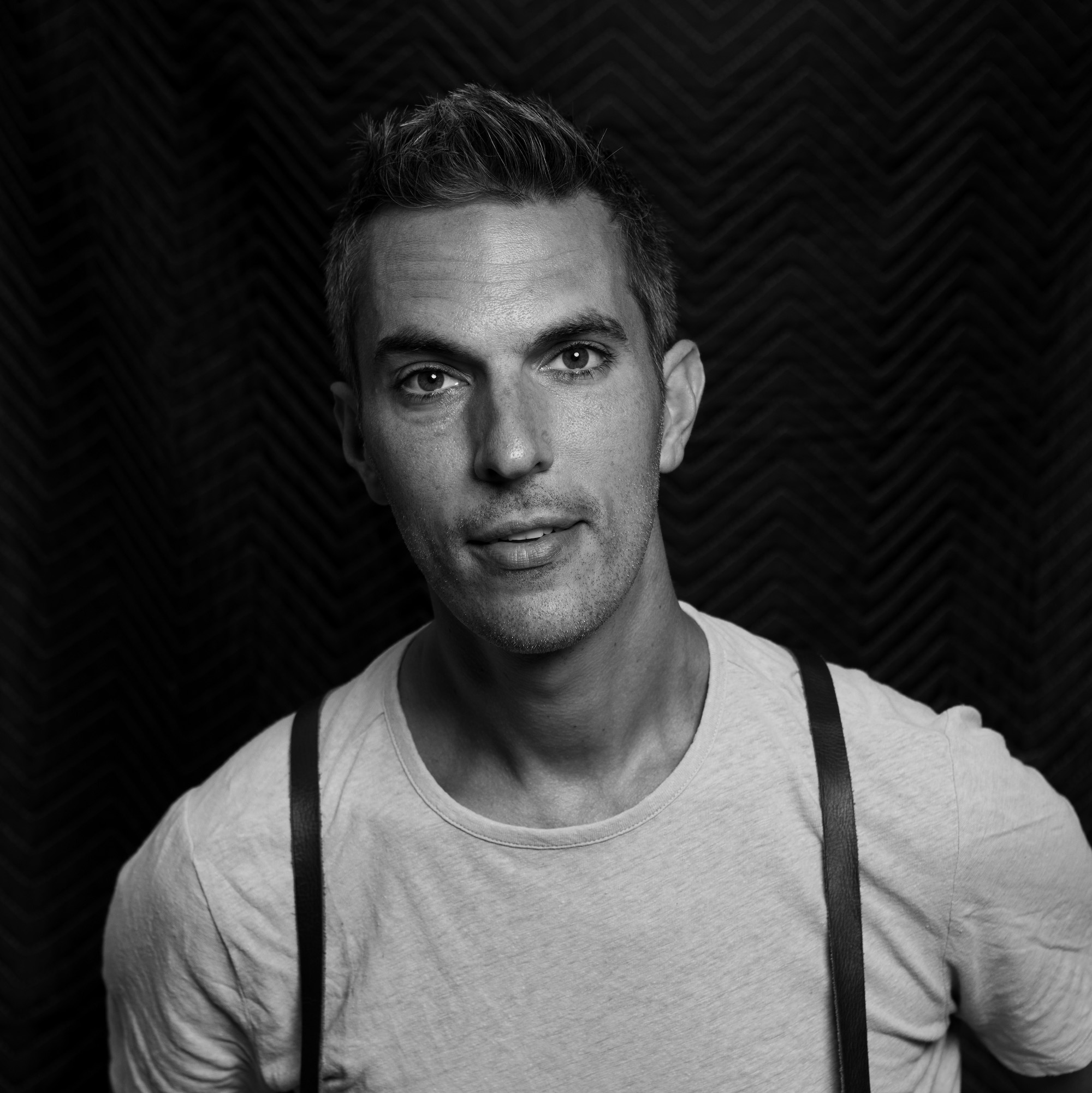
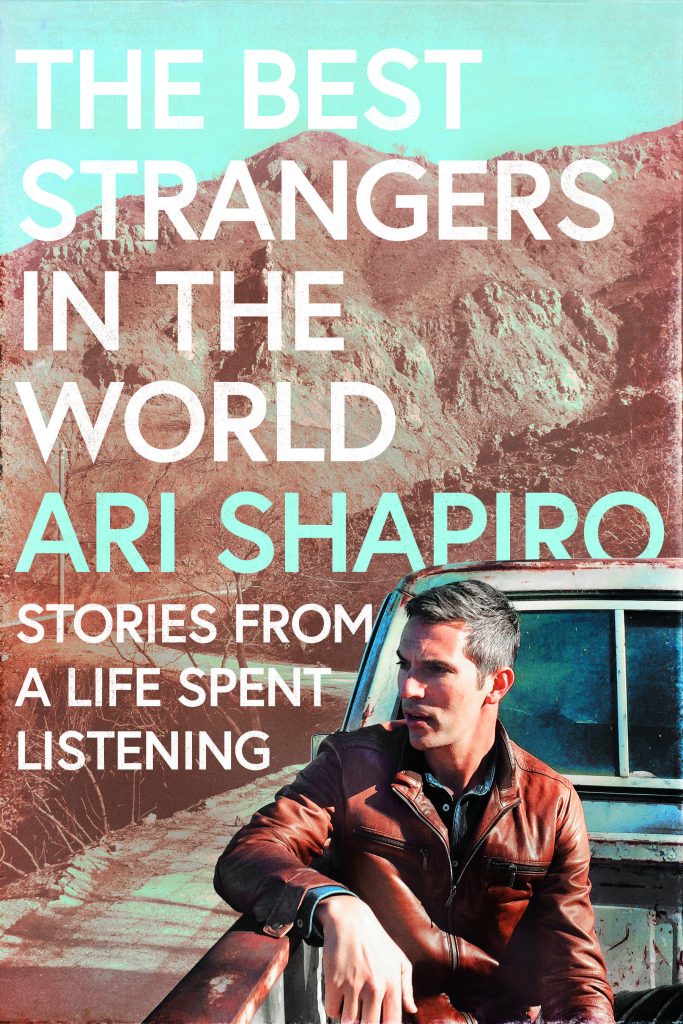
NPR Host Ari Shapiro Goes Beyond the Airwaves With His Memoir, ‘The Best Strangers in the World: Stories From a Life Spent Listening’

photo credit: Victor Jeffreys

As one of the hosts of NPR’s flagship program, All Things Considered, Ari Shapiro has a voice that’s instantly recognizable to many radio listeners in the United States. Since 2015, Ari has shared heartwarming and heart-wrenching stories on the show, which is one of the most listened-to news programs in the country. In 2020, the format expanded with Consider This, a 15-minute, six-times-weekly podcast—also hosted by Ari.

But journalism is just his day job.

Ari is also a singer, performer, and speaker. He moonlights as a vocalist with the band Pink Martini, and joined forces with actor Alan Cumming for a stage show called Och & Oy! A Considered Cabaret. Now, the award-winning reporter and former White House correspondent is adding author to his resume.
The North Dakota native’s memoir, The Best Strangers in the World: Stories From a Life Spent Listening, hits shelves this week. In the book, Ari not only details his experiences reporting stories around the world, but also reflects on his upbringing in Portland, Oregon.

Ari created a playlist exclusively for Spotify that’s the perfect accompaniment to his memoir. From The B-52’s to the New York Philharmonic, the curation is as varied as the tales that come to life on his pages. We caught up with the host-performer-author to learn more about the inspiration for his book, and the ideas behind the playlist.

What made you decide to write a memoir? 

Covering the news every day sometimes feels like sprinting on a treadmill, where if you pause to look at the hot guy walking by, you will fall on the floor. And so, I’ve never been a person who nostalgically looks back at my favorite conversations and stories I’ve told. But I realized that after more than 20 years as a journalist, some of those stories, and some of those people, have sort of snagged on me as they flew by in the current, and changed the person I am—not just as a journalist, not just a storyteller, but as a human. 

In a way, this book is a memoir told through the stories of others. It covers a really wide range, from going on Air Force One with the president to being in warzones to singing with a band at the Hollywood Bowl. But, ultimately, I think of the book as kind of an answer to a question that I get from friends a lot, which is “How do you stay optimistic in the face of everything?” And the answer is the stories that are in these chapters.

How did your experience as a journalist impact your story?

Being a journalist has certainly attuned me to the finer details, so I feel like I can take someone along and tell a story that hopefully transports them and sticks with them. But the thing that made it really challenging is—as a journalist—stories are not supposed to be about me. I’m never supposed to be the focus.

So switching gears and telling stories that are fundamentally about me was unfamiliar and scary and foreign and definitely a learning curve. And as I look back at the drafts of these chapters and the way they evolved, that’s the biggest change that I see: learning how to write about myself in a way that doesn’t feel like a betrayal to who I am as a journalist.

Can you share a story from your book?

I have to tell you about the first time I ever sang with a band. For my debut performance, I was a singer with a band called Pink Martini, a little orchestra from Portland, Oregon, with more than a dozen members. In 2009, they asked if I would record a song for an album they were working on. After, the band leader, Thomas Lauderdale, said, “Well we need to find a time for you to perform this live with us. So why don’t you come to the Hollywood Bowl?” 

Now, the Hollywood Bowl seats 18,000 people. But what made it the most terrifying was not the size of the audience. It’s that backstage, before you walk out in front of those thousands of cheering people, you see all these huge, framed, black-and-white photos of the legends who have performed there over the decades. There’s Aretha Franklin; there’s The Beatles; there’s Judy Garland—all pictured on the stage you are about to stand on. And then the time comes, and you walk out in the footsteps of those giants and the spotlight follows your path. 

It is so exhilarating because as a radio reporter, it doesn’t matter how many millions of people might be listening to any given story I do. It’s a very intimate conversation between me and the one person who happens to be hearing it. But with a live performance, everybody is sharing that experience collectively, at the same time. There is something so electric about live music because it only ever happens once in that particular way. And so, to be a part of that is a thrill unlike anything I’ve ever experienced in journalism.

What was the experience like reading your story aloud for your audiobook?

First of all, I loved recording my audiobook because my comfort zone is telling stories. That’s what I do every day, and so, in some ways, recording the audiobook felt much more easy, comfortable, and familiar than writing the book. But it’s exhausting to speak aloud for hours on end. Even though I host a two-hour daily news program, I’m not talking for most of it. I read an introduction to a reporter’s piece and then I sit quietly for four minutes. Or if I’m doing an interview, I ask someone a question and then sit quietly while they answer. By the end of the day of audiobook recording, I could barely talk to my husband. I have so much admiration for people who do this professionally.

You created a musical playlist for your memoir. How did you pick the songs?

Above all, I wanted the playlist to feel optimistic and joyful because that’s what I want people to walk away from the book feeling. Even though the book takes you to warzones and refugee crises, the book is full of people who give me hope. It’s also global because the book is global. So there’s a track from the South African trumpet player Hugh Masekela, and a track from the Japanese singer Saori Yuki.

The playlist begins with a song that I hope sets the tone for everything else, which is Roam” by The B-52’s. I think that’s the best road trip song ever written. And I want to give people the feeling that we’re going somewhere exciting. It’s gonna be fun, and it’s gonna be an adventure.

There is also a healthy dose of Queer camp because that is part of who I am, and there are songs that take me back to specific moments. It includes an obscure ’90s cover of “Total Eclipse Of The Heart” by Nicki French. The summer I came out of the closet, that was the track that was playing in the gay club every single weekend. I also included the overture to Candide, which was the song that my husband and I walked down the aisle to at our wedding.

What do you think continues to attract listeners to talk formats like a radio show or podcast?

One of NPR’s founding mothers, Susan Stamberg, has a quote I love, which is “The pictures are better on the radio.” There is something about the human voice that is so personal and intimate. It engages the brain and bypasses the preconceived notions we might have about the person who’s talking, and allows us to have an experience that feels more personal than printed words on the page or talking heads on a TV broadcast. 

How have the people you’ve met over the years and the experiences you’ve had influenced you?

Musically, I have been so lucky to collaborate with people who are curious and omnivorous. Pink Martini records in dozens of languages, with collaborators ranging from the great Mexican ranchera singer Chavela Vargas to the great grandchildren of Maria and Captain von Trapp. So being able to travel with Pink Martini to Morocco and Hungary and Lebanon and France and sing in all these different languages helps me appreciate something that my parents taught me from a very young age: The more you know about the world, the more interesting life becomes. And there’s something very subtle and powerful about music. 

With everything that I do—whether it’s journalism, singing with Pink Martini, writing this book, or performing with Alan Cumming—my goal is to help people see the world through the eyes of someone else. My goal is to help people break out of their bubbles and build empathy and increase understanding. Music is one of the most powerful tools I know that can do that.

The chapters in this book that are not about music still contain a piece of that. I hope they increase curiosity and empathy, and allow readers to experience all these different people and places, and see the similarities and connections we all share.


If you’re interested in hearing Ari tell his stories in person, check out the details of his book tour here. In the meantime, listen to the playlist Ari made to complement his memoir, below.


New Spotify for Podcasters Brings the Best of Spotify to All Creators

Spotify for Podcasters

Empowering creators is central to everything we do at Spotify. We’ve long been building the tools that podcasters need to tell their stories and grow their audiences, but until now, they’ve been split across multiple, separate platforms, including Anchor and Spotify for Podcasters. For creators who just want a simple way to take advantage of everything Spotify has to offer, it’s been too complicated. That ends now.

Today at Stream On, we announced that we’re combining our tools into a single, convenient, one-stop shop: Spotify for Podcasters

This makes for a significantly easier experience for every podcaster already on Spotify, and further, it opens up the opportunity for even more creators to find success—no matter how they choose to manage their podcast.

Making features available to all podcasters

Previously, our most innovative features were limited to Anchor users exclusively. But we’re building the new Spotify for Podcasters in a way that offers more open access to innovation. As a result, all Spotify for Podcasters users—including those not hosting their content with us—will find access to Q&A and Poll functionality in their dashboards.

And stay tuned for even more features to become available for non-hosted users in the future: We’re starting to open up access to video podcasts for more creators. You can sign up for more information at spotify.com/video.

New Spotify for Podcasters capabilities

Starting today, when all creators sign up or log in to Spotify for Podcasters, they’ll find a dashboard with everything they need to make, manage, and level up their show, including:

  • The ability to upload and publish episodes (for users hosting their show with Spotify for Podcasters)
  • Interactive features like Q&A and Polls
  • Advanced analytics to track a show’s growth, including streaming numbers and audience demographic data

Additionally, Spotify for Podcasters offers free hosting. And for those users whose podcast is hosted on Spotify for Podcasters, they also have access to recording and editing tools, video uploading, and monetization features.

Brand-new Spotify features for podcasts

Today, we also unveiled a number of new Spotify features that will help listeners better discover and engage with creators’ work. Look out for: 

  • Podcast previews, which enable listeners to sample a show right in their Home feed.
  • Creators can now add Podcast Chapters to their episodes by including time stamps in their episode descriptions. These allow listeners to browse through an episode by topic or section.
  • Creators can apply to participate in Spotify Labs, a global series of workshops that will provide opportunities to create in our world-class production studios, learn from Spotify experts, and connect with fellow podcasters and artists. 
  • Plus, we’re launching a new space for educational podcasting content—complete with growth tips, comprehensive how-to guides, advice from fellow creators, and more. 

Imagine Anchor’s powerful, all-in-one podcasting tools combined with Spotify for Podcasters’ advanced insights and analytics, all available with interactive features. And imagine it’s free and in every market where Spotify is live. 

Now stop imagining. That’s the new Spotify for Podcasters.

Find out more at Spotify for Podcasters