
Tag: q&a

Spotify’s Bridget Evans on How Brands Can (and Should) Tap Into the Fan Experience

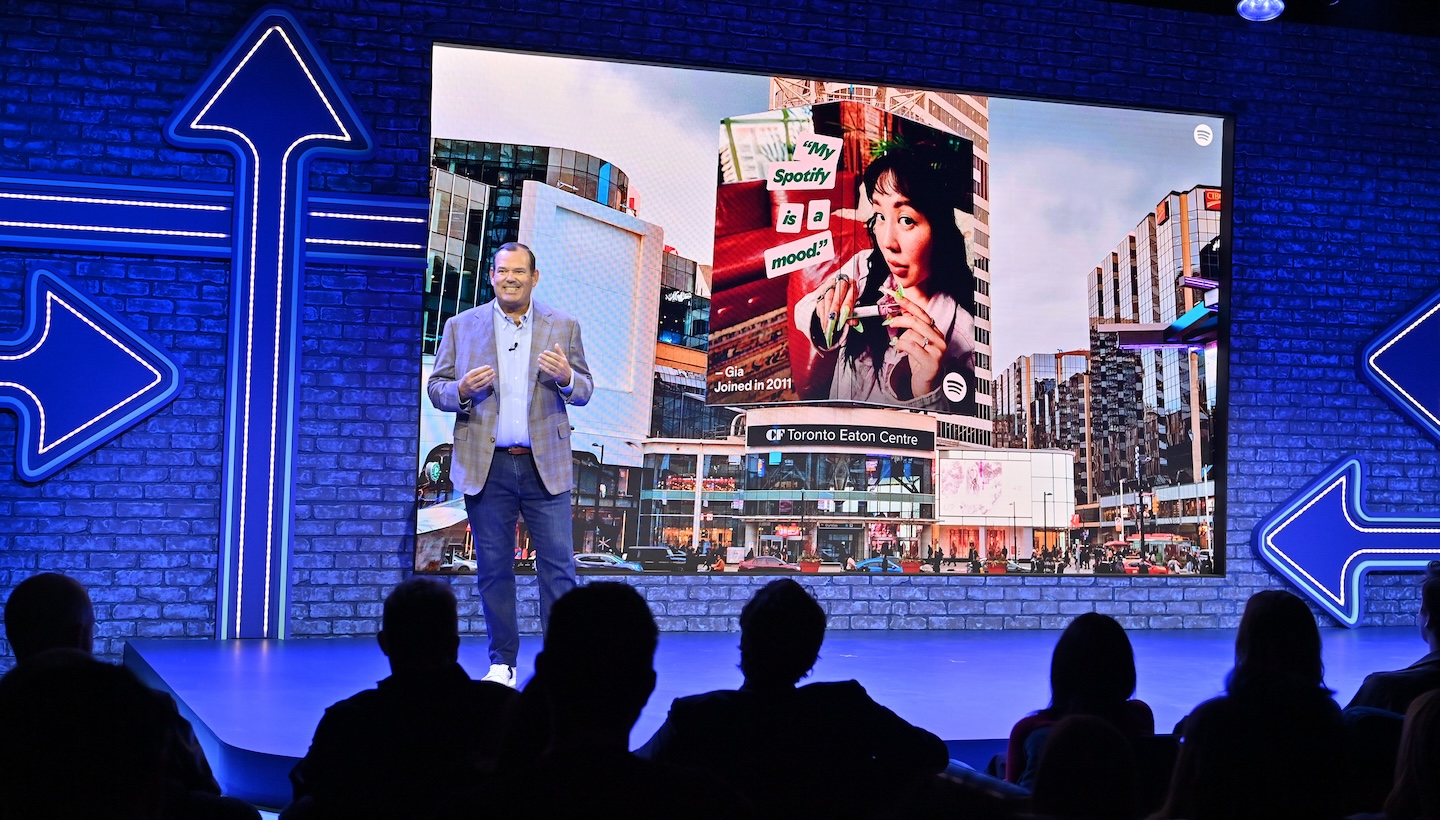
Troye Sivan, Bridget Evans, Global Head of Advertising Business Marketing, Spotify and Joon Silverstein speak on stage at the Spotify Beach Panel "Building What Money Can't Buy: New Rules Of Brand Loyalty With Troye Sivan, Coach and Bridget Evans" during Cannes Lions on June 22, 2026 in Cannes, France.

Last week at the Cannes Lions International Festival of Creativity, Spotify Beach brought fans, creators, and brands together for three days of conversation focused on culture and fandom.

Our daytime sessions kicked off with Building What Money Can’t Buy: New Rules of Brand Loyalty, a conversation featuring Coach CMO Joon Silverstein, artist Troye Sivan, Cosmopolitan and Seventeen Editor-in-Chief Willa Bennett, and Spotify’s Global Head of Business Marketing, Bridget Evans. Together, they explored how fashion, music, and identity intertwine to spark cultural connection.

During the session, Joon revealed that this fall, Spotify and Coach will be teaming up for an exciting new global cultural partnership. 

“This is much more than a traditional brand collaboration,” said Joon. “It’s a cultural partnership built around self-expression, connection, and community. One of the biggest things we’ve learned about Gen Z is that what they wear, what they listen to, and the communities they belong to are all part of the same personal story. That’s what makes this partnership feel so natural. At Coach, self-expression lives in style. At Spotify, it lives in music. And what we’re building together goes beyond both.” 

For the Record sat down with Bridget after the festival to talk about the new partnership, how brands can tap into fandom, and the secret to connecting with Gen Z.

Spotify Beach has become a destination during Cannes. What is the team trying to create there?

We want it to feel like Spotify in real life. People come to the platform with intention, they discover things that surprise them, they connect with artists and ideas they didn’t know they needed, and they feel something. We want Spotify Beach to do the same thing.  

What made Coach the right partner for this moment, and what does this partnership say about the kind of relationships Spotify wants to build with brands?

Gen Z is craving connection, and both of our brands have earned a place in their lives. Coach does that through how consumers express themselves and how the brand shapes their identity. On the Spotify side, we’re an essential daily companion. Music is a catalyst for real connection, on and offline. 

So when we looked at what Joon and her team have built, it just made sense. We’re excited to bring our flavors of fashion and music together in a way that feels real. That’s the kind of partnership we want to build more of. It’s not a media buy or a logo placement. Instead, both brands actually have something to contribute to the fan. 

From your perspective, what’s changed the most in how brands need to show up now?

There was a time when showing up with a big enough activation meant something. Now, you can’t buy your way into culture. People see through that pretty quickly, and it’s become more competitive than ever. And brands that haven’t caught up to that reality show up at Cannes and wonder why their message isn’t landing, whereas the ones who’ve figured it out are building real relationships. 

You’ve made a distinction between sponsoring culture and participating in it. What’s the difference, and why does that matter?

Traditional sponsorship is transactional. You pay to be there, you get your logo placement, and then it’s over. Participation is something different. It means you actually have something to contribute to the experience. The fans know when a brand is just renting space versus when it’s really adding something. Gen Z especially. 

When we talk to partners about what’s possible on Spotify, we’re really asking is: What do you actually have to offer fans? Not just, What do you want to say to them? The work that comes out of that question is almost always more interesting, and it tends to drive better results, too.  

You’ve described Spotify as the soundtrack to people’s lives, both in big moments and ordinary ones. Why is that so powerful for brands trying to connect with Gen Z?

Because the ordinary moments are actually where identity gets formed. Your commute, the late night wind-down, a workout—those are times when you’re alone with what you love, and Spotify is there for all of it. For Gen Z especially, that depth of relationship builds real affinity. Our research is pretty clear that they feel like Spotify gets them. That kind of trust is rare. 

AUX, Spotify’s in-house music consultancy for brands, seems to signal a new model for brand partnerships. How would you describe it to someone who hasn’t followed the evolution of the work?

We draw on over a decade of editorial expertise, data, and artist relationships to help brands figure out how music can be incorporated into their marketing strategy. And it goes well beyond placement. It’s about connecting brands with artists and fans inside cultural moments that already have real energy. 

Think of NBC Peacock around NBA All-Star with RapCaviar, or Hilton sponsoring Spotify’s annual Best New Artists celebration. LinkedIn and John Summit threw a surprise corporate rave to celebrate his sophomore album. At CMA Fest, Mountain Dew brought Fresh Finds Country to life with a live rooftop show featuring emerging artists.

Each of those is a brand showing up as a participant rather than a sponsor. The Coach partnership we announced at Cannes is the most ambitious version of that yet.

If a brand wants to build “fandom,” what does success look like beyond standard media metrics?

Loyalty at scale isn’t measured in impressions—it’s visible in action. When fans are truly loyal, they want to consume and create. On Spotify, fandom means building something around the things they love.

Over the past month, we’ve seen a 235% global increase in playlist creation on Spotify related to a certain football tournament. That’s over 1.6 billion playlists! Fans aren’t just watching the matches, they’re extending that moment with Spotify as their constant companion. 

Of course, we’re finding ways to be a part of the conversation in ways that make sense. To celebrate the opening day kickoff, we teamed up with Celsius energy drinks to host a pregame party at Academy LA. With DJ performances, interactive activations, and custom merch, it brought together music and sports in a way only Spotify could, connecting the world’s biggest football stage to the artists and sounds fueling fan excitement.

When a brand earns its place inside one of those moments, that’s where you build loyalty. That’s what you’re looking for. And you’ll feel it before it shows up in a campaign report.

What’s one thing you think too many brands still misunderstand about culture and connection today? 

That speed is the same as relevance. There’s this pressure to react to every trend the moment it surfaces, to always be in the conversation, to never miss a moment. And what I see is brands moving so fast that they never actually have anything to say. Real connection takes some patience. It takes actually understanding who your audience is and what they care about before you try to show up for them. The brands I admire most right now are the ones that have been consistent enough that when they do show up in a cultural moment, people believe it. That consistency is really hard to shortcut.

Check out our full Spotify Beach 2026 recap to learn more about our daytime panels and evening performances.

Spotify and Netflix Partner With Jay Shetty to Bring ‘On Purpose’ to Video Across Both Platforms

A close-up shot of Jay Shetty looking at the camera

On Purpose is one of the most popular podcasts in the world, known for conversations with influential voices across culture, wellness, and personal growth. Now, Spotify, Netflix, and host Jay Shetty are teaming up to bring the show to video across both platforms beginning July 13.

On Purpose has built one of the most engaged podcast audiences in the world, and we’re excited to expand our partnership with Netflix and Jay by bringing video episodes to Spotify,” said Roman Wasenmüller, VP, Global Head of Podcasts, Spotify. “Spotify is already where millions of fans come to listen to the show, and this next chapter builds on that momentum by giving audiences an even more immersive way to experience it. This partnership also reflects our continued investment in video and our commitment to helping creators grow global franchises on Spotify.”

The partnership reflects growing demand for video podcast experiences and Spotify’s continued focus on helping creators deepen connections with their fans. 

“Jay Shetty has an extraordinary ability to spark deep, meaningful connections that resonate with millions,” said Lauren Smith, Netflix VP of Content Licensing and Programming Strategy. “By joining forces with Spotify, we’re giving On Purpose an expansive new canvas, bringing these visually captivating interviews to our members’ screens.”

Spotify will now also serve as the global sales representative for the show and offer fans the flexibility to seamlessly watch or listen within a single app.

Ahead of the launch, For the Record caught up with Jay to talk about the evolution of On Purpose and what audiences can expect from this next chapter. 

You called this a “historic moment” for podcasting. How do you think Spotify has helped push the medium forward and open up new possibilities for creators?

Spotify has played a pivotal role in transforming podcasting from an audio format into a global medium for storytelling and conversation. They’ve invested in creators, discovery, video, and global reach in a way that’s expanded what’s possible for podcasts. It’s created more opportunities for creators to build meaningful communities and connect with audiences in deeper, more personal ways.

What excites you most about bringing On Purpose video episodes to Spotify fans around the world?

What excites me most is creating a more immersive experience for our audience on the platform. So much of human connection happens through expression, energy, and emotion, and video allows us to bring people even closer into those conversations. We’ve always wanted On Purpose to feel like you’re sitting in the room with us, and this is another step toward that.

You’ve interviewed so many incredible people over the years—anyone you’re hoping to speak to next?

I’m always interested in speaking to people who are shaping culture in meaningful ways, whether through entertainment, science, sports, wellness, or business. I’d say Taylor Swift, Beyoncé, and Rihanna are at the top of my list. What draws me most to conversations is creating a space where people feel comfortable sharing stories they have never opened up about before, in a way that feels authentic to who they are. Through those conversations, both the guests and the audience can feel seen, heard, and understood.

What podcasts are you listening to right now?

I’m listening to The Rest Is History hosted by Tom Holland and Dominic Sandbrook. I’ve always been fascinated by historical figures and the moments that shape how we think and live. Recently, I really enjoyed their episode on the mystery of the Mona Lisa and the unexpected story behind how it became the most famous painting in the world.

If you had to predict your Spotify Wrapped for 2026, who would be your top artist, top podcast, and top audiobook?

My top artist would be Justin Bieber—I am such a Belieber. My top podcast would be The Rest Is History. And my top audiobook would be The Wisdom of Insecurity: A Message for an Age of Anxiety by Alan Watts, or really anything by him.

Listen to audio episodes of On Purpose with Jay Shetty on Spotify now. Video episodes begin dropping July 13 and will also be available to Netflix subscribers worldwide.

Spotify Brings Fashion and Podcasting Together With Mina Le and Mia Calabrese

Mina Le and Mia Calabrese

Last week, guests gathered in New York City for On Air, In Style: An Evening with Spotify—a night of conversation, culture, and connection celebrating the intersection of fashion and podcasting. On Spotify, that intersection is thriving. Fashion podcast audiences grew 23% year‑over‑year in 2025, while streams jumped 68%, and searches for “fashion week” were up 93%.

Hosted by fashion and culture creator Mina Le, the event centered on a fireside chat between Mina and breakout pop-culture star Mia Calabrese. Together, they explored fashion inspirations and traced Mia’s style evolution, while offering a candid look at how personal perspective shapes creative expression. 

Mina also revealed that this summer, she’ll be bringing video episodes to her podcast, High Brow.

The Look Behind the Sound

Past Spotify mobile design on different phones

Over the past 20 years, Spotify’s look and feel has evolved with the way people use our platform, while ensuring we preserve an intuitive, personal, and familiar experience for anyone who presses play. Every change, big or small, has been shaped by how users, artists, podcasters, and authors discover, share, and connect on Spotify.

For the Record caught up with Spotify’s Nicole Burrow, VP of Product Design, and Lauren Solomon, Senior Director of Global Brand, to explore the elements that have defined Spotify’s brand and visual identity on and off platform, and the things that make it feel unmistakably Spotify today.

Where does the name “Spotify” and its iconic green come from? 

Lauren: It’s funny, because something as iconic and identifiable as the name “Spotify” didn’t actually start from this big, strategic decision. According to stories from those who were in the room where it happened, it was misheard in a brainstorm. Our co-founders Daniel [Ek] and Martin [Lorentzon] were throwing around ideas, and one of them landed as “Spotify”—but it was essentially an accident.

Nicole: What I love about that is the meaning came later—and it was our users who conveyed that meaning. The lore has become that it’s a blend of “spot” and “identify,” which, when you think about it, is exactly what our platform helps users do. You hear something, you recognize it, you make it yours. But that wasn’t engineered from the start. It grew into its meaning, the same way our platform grows to respond to our users.

Lauren: The green was the opposite. That was a very intentional choice. At the time, everything in tech felt so safe. A lot of blues, a lot of neutrals, a lot of… meh. Choosing this really bold, bright green was about standing apart immediately. It had energy. It felt alive. It matched the spirit of disruption and innovation that came with the founding of Spotify.

Nicole: The exact shade of green has evolved, but the idea hasn’t. It still needs to feel vibrant, a little unexpected, and very much its own thing. That’s kind of the thread across both the name and the color—we weren’t about following an existing formula. In the same way we weren’t following a formula in the creation of the company. We were about creating something that felt different from day one.

Spotify logos through the years

In your opinion, what makes Spotify’s design instantly recognizable?

Nicole: Alongside the Spotify green, we were also an early dark mode app, long before dark mode became as popular and pervasive as it is now.

Spotify 2013 mobile view

Lauren: There’s our unique typeface, Spotify Mix, designed to be truly distinct to us. It’s dynamic, so it can be used across a range of expressions, and be responsive to where it sits.

There are also so many things you don’t instantly see, but you feel. We understand that what you listen to is deeply personal, and that many use Spotify as a home for their creativity. Our brand reflects that. We have brand elements that remain consistent but also allow room and flexibility to shift with culture, content, creators, and our community.

Nicole: And our personality comes through in how our app “talks” to you—playful and culture-obsessed. We “talk” the way fans talk, because we’re fans ourselves. That’s one of the ways we underline how well Spotify knows you.

Then, of course, there’s Spotify Wrapped—which set a standard in the industry. It inspired many copycats, but Wrapped helped define the format and created a truly shared moment for fans around the world.

Wrapped does feel unique to Spotify. When you think back to our platform in its earliest days, what else stands out to you?

Nicole: We were the first app to prioritize playlists. Early versions were built around playlists as the main user experience. Today, playlists continue to be one of our strengths and one of the key ways fans can express who they are and what they love. Playlists are where much of our innovation happens. 

When you look at our recent innovations like Prompted Playlist and mixed playlists, they build on what’s been true since our earliest days—playlists are at the heart of the Spotify experience and one of the main ways listeners express who they are. What’s changed is that playlists are no longer static. There has been a real shift from playlists you make or follow to playlists that actively respond to you. It’s a more dynamic, adaptive experience, and it’s a big part of how we continue to push personalized listening forward.

How has Spotify’s design adapted as listening behavior has changed over time?

Nicole: A good example is users listening more often in group settings with friends—turning listening into something shared. We’ve made sure listening together is just as easy through features like Request to Jam and Wrapped Party.

And we’re already revolutionizing how people can listen to audiobooks. We’ve introduced industry-leading features like Recaps and Page Match, which were born from the idea of giving listeners the flexibility to enjoy stories in the way that works for them in any given moment. That idea of personalized listening is really at the heart of everything we do.

Lauren: The Spotify brand people know today was built from celebrating the behavior of our users. We pioneered helping people understand their listening through data storytelling, making it a true reflection of the community on our platform.

We know our users are really creative and feel that their listening is a deep reflection of who they are, so we’ve created experiences and tools that give them new ways to express themselves, like the playlist cover art tool and mixing tools.

As podcasts, audiobooks, and videos have joined the platform, how has the design evolved to support them?

Nicole: We believe in the “one experience” approach. One that feels coherent while adapting to context. Every major shift starts with how fans want to listen. We give users more control, more context, and more meaningful engagement with what they hear. Over the years, we’ve continuously evolved our UX and interface to respond to what a user is listening to, shaping the experience to feel relevant in each moment. This has meant designing with flexibility at the core. 

Spotify desktop view over the years

How have outside design trends influenced Spotify’s look?

Lauren: We’re fans ourselves, so that’s where our heads naturally go: music, creators, content, culture. That’s the stuff that moves people, and it’s what we draw from. This is what makes our work feel expressive, honest, and timely. It doesn’t look like everyone else because it didn’t come from the same place as everyone else. 

Wrapped is a great example of this. Every year the design is created specifically for that moment. It’s something people look forward to.

Spotify Wrapped designs over the years

What’s one small Spotify design detail that might go unnoticed but is intentional?

Nicole: Easter eggs have a long-standing tradition at Spotify. When Stranger Things Season 4, Volume 1 was released, we transformed the Now Playing view into an upside-down experience, which sparked a shared, viral moment among fans. We’ve also created Easter eggs to celebrate Spotify’s most-streamed artists of the year: Taylor Swift in 2024, and Bad Bunny in 2025. Keep an eye out for new Easter eggs—more are on the way!

Another small detail that not everyone has noticed yet is the “Eat This Playlist” game featured in some playlists. This was an internal hack project that has garnered a lot of love from users over the years. If you haven’t seen it before, just open a playlist, tap the three dots menu, then select “Eat This Playlist” at the bottom to play!

Lauren: At key moments, we adapt our logo bug and let it become an expression of culture. A great example of this is the past two years on Wrapped. Before launch, we released a set of logos adapted to reference some of the top artists, tracks, and albums of the year, teasing what’s to come.


View this post on Instagram


A post shared by Spotify (@spotify)

Last question: How do you balance staying fresh and relevant while remaining true to our brand’s core look and feel?

Nicole: We lean away from chasing trends while making sure we’re always culturally fluent—meaning our voice evolves naturally as culture moves. Our playful, bold, opinionated heart never changes, but our language reflects the way our listeners speak and express themselves. That has changed plenty over the last 20 years, and will continue to evolve with them over the next 20.

To explore more from the anniversary celebration, visit our Spotify 20 hub.

From Audio to IRL: How ‘Let’s Get Haunted’ Is Building Community With Spotify RADAR

As podcasting continues to evolve, growth increasingly means building beyond audio. Creators are expanding into video, merch, and live events, finding new ways to deepen listener relationships and bring audiences together. One clear example is the paranormal-comedy podcast Let’s Get Haunted.

Hosted by best friends Alyssa Terry and Natalia Strawn, the show has built a devoted fanbase—affectionately known as the “Haunties”—around a shared love of the spooky and the absurd. Last year, the podcast joined Spotify’s 2025 RADAR creators class, our global program designed to help emerging creators reach new audiences.

That support helped pave the way for a new milestone: the show’s first-ever live taping, recently recorded in front of about 120 fans at Spotify Studios in Los Angeles. The episode is now streaming on Spotify, offering a snapshot of the community they’ve built.

To mark the occasion, For the Record caught up with Nat and Aly for a joint Q&A about the show’s evolution, their live debut, and what’s next.

For anyone hearing about Let’s Get Haunted for the first time, how would you describe the show?

It started as a tongue-in-cheek response to the horrors of everyday life. We take turns deep diving into paranormal topics—ghost encounters, alien abductions, cursed objects—with the assumption that each story is true. Our goal is to give the audience a chance to suspend their disbelief and tap into a sense of childlike wonder.

We also have a broad definition of “haunted.” Did you get three flat tires in a month, hunt down the person who stole your credit card instead of calling your bank like a normal person, or rescue a possum on the side of the highway and crowdfund its femur surgery? Congrats, you’re haunted! (These are all things that have really happened to us.) We try to match the chaos of the hauntings in our personal lives with the tales we select for the storytelling portion of the show.

How has the podcast changed since you first launched it? And how have your listeners helped shape where it’s gone?

Our podcast has always been very community-based. We use listener surveys to get feedback at the end of every season, then have a meeting where we go over that feedback and figure out which suggestions are feasible for us to incorporate.

When we first started the pod, we were living on opposite ends of Los Angeles and would scramble to find places to record that were roughly in the middle. We’ve recorded in bathrooms, cars, empty office buildings, and anywhere we could find. 

In 2023, thanks to the generosity of our audience, we were finally able to sublease an office space. Having a stable place to record was a total game changer: It allowed us to increase the number of episodes we were putting out, create vlogs, produce and store merch, and organize fan meet-ups. We literally would not exist without the support of our listeners.

Your first live taping was a big milestone. What did that moment feel like for you?

It was absolutely surreal! We were so nervous going into it, but as soon as we parked at the venue we immediately ran into two Haunties who had arrived three hours early to be first in line. Knowing we were walking into something brand new with the support of the people who’ve been with us since the beginning made us feel so much more at ease.

K-Pop Artist ENHYPEN Host ‘The Blood Diary,’ a New Video Podcast Series From HYBE

Like the immortal lives of vampires, some stories never really end. That’s the vibe K-Pop boyband ENHYPEN brings to The Blood Diary, a new video podcast series that explores mysterious events from around the globe, where members of the group take turns blurring the line between fact and fiction.

Throughout each episode, members of ENHYPEN take turns recounting stories while attempting to uncover the hidden “liar.” Fans (aka ENGENE) are encouraged to follow along, piecing together clues and deciding for themselves which story isn’t what it seems.

Created by HYBE MEDIA STUDIO and brought to fans in partnership with Spotify, The Blood Diary is the first from STAN:A, a new video podcast show that brings fans closer to artists they love through candid conversations and original storytelling. 

The first episode of The Blood Diary is out now on Spotify, and new episodes will drop biweekly every Friday at 8PM KST. 


To step further inside the mystery, For the Record spoke with the first hosts of The Blood DiaryENHYPEN’s JUNGWON, JAY, JAKE, and SUNOOabout what it was like to work on the series, the stories they chose to tell, and what fans can expect as the series pulls them into its thrall.

The Blood Diary features you all as immortal vampires sharing mysterious records on the night of a full moon. What was it like stepping into these roles? 

JUNGWON: It was cool and fun how each member came ready with a story and shared it. When I was telling my story, I got so immersed that it became a little scary. I hope this vibe comes across well to ENGENE and that they really enjoy it. 

JAY: It was a new concept that we had never tried before, but I found myself completely immersed in the story, maybe thanks to the atmosphere on set. Telling a story as a vampire was already fun, but the best part was watching the members suspect each other and trying to find the Blood Liar. 

JAKE: I was so happy that we were able to show a new side of ourselves to ENGENE. This vampire concept is something only ENHYPEN can pull off, don’t you think? Combining a concept that only we can handle with storytelling is really going to make for an even more fun video podcast. 

SUNOO: Telling stories as a vampire was fun, but it was even more exciting to watch and listen to the other members share theirs. I actually think I got more nervous listening to the other members’ stories than when I was telling my own. I found myself completely absorbed the whole time.

The tagline of the show is “The Mystery Records of Immortal Vampires.” Without giving too much away, what kind of “bizarre events” can fans expect to hear about in your diaries?

JAY: Stories from the past that feel even more fantastical than fantasy, and strange incidents hidden behind everyday life. We’ll be sharing scary stories that are even harder to believe because they actually happened in real life.

A highlight of each episode is the “Blood Liar” game, where one member weaves fiction into their story to deceive the others. Before you went into production, did you already have suspicions on who the best “Blood Liar” would be? 

JUNGWON: JAY is pretty good at lying. So if he’s the “Blood Liar,” I think he’ll be very good at deceiving the rest of the members.

JAY: When it comes to “liar,” you’ve got to think of JAKE! He once made plans to meet me, but then totally flaked. That’s when I realized that he really is a liar. 

JAKE: We’d never done a concept that involved deceiving each other before, so it was hard to predict. But somehow… I thought that JAY might be the best “Blood Liar.”

SUNOO: Before the shoot, I was trying to guess who it might be… and I had a feeling it would probably be JAY! 

Every day on Spotify, we see how audio has the power to move and resonate with people in a deeply personal way. How did the specific sound design and atmosphere of The Blood Diary help you get into character and bring these mysteries to life?

SUNOO: Watching the final edit of the video podcast with all the sound effects, I was completely drawn in by how realistic it felt. Thanks to the sound design, I think ENGENE will experience thrills and feel curious in ways they normally wouldn’t while watching the podcast. I highly recommend that everyone fully dive into The Blood Diary.

What are your biggest hopes for The Blood Diary

JUNGWON: Until now, we’ve mostly appeared on lighthearted, fun variety shows, but with The Blood Diary, we’re looking forward to showing a heavier, more serious side of ENHYPEN that fans haven’t seen before.

Anything else to add about the making of the podcast or reflections you have now that the first episode is out?

JAKE: I filmed a lot with JAY, and I got a huge kick out of seeing him get scared while listening to the stories. It was also really fun preparing a new story for each episode and sharing it directly with the members. I’m also really looking forward to all the different stories the other members will bring in future episodes. I hope ENGENE enjoys it as much as we did.

JAY: Spotify is an essential part of my daily life, so I’m thrilled to be a host for this video podcast! The Blood Diary covers a variety of real-life incidents, so I think viewers will get to experience a more authentic thrill. It’s definitely worth looking forward to.

JUNGWON: I use Spotify all the time, so I’m really happy to be a host for a Spotify video podcast. I hope ENGENE will see many different sides of us through The Blood Diary. Please look forward to it. 

SUNOO: When I was filming the episode where I was the “Blood Liar,” I had to deceive the other members, constantly insisting, “It’s true! I’m not lying!” which was really tough. But as I watched the others gradually fall for my story, I started to enjoy it. I’m not sure when the episode where I play the “Blood Liar” will be released, but I hope you all look forward to it! 

Check out the first episode of The Blood Diary on Spotify now.

‘The Big Picture’ Co-Host Sean Fennessey on Spielberg and the Art of the Interview

Few filmmakers have shaped popular cinema as profoundly as Steven Spielberg. So when Sean Fennessey, co-host of The Big Picture from Spotify’s The Ringer, sat down with the director at SXSW earlier this month, it made for a conversation movie fans won’t want to miss.

Now streaming on Spotify, the interview spans from his filmmaking process to his career and the communal experience of going to the theater. But what does it take to prepare for a conversation with a figure like Spielberg? For the Record caught up with Sean to hear about his research process, his interviewing philosophy, and what helps a conversation feel both thoughtful and natural.

After having a little time to reflect, what has stayed with you most since your sit-down with Spielberg?

Well, aside from his confession that he believes we are not alone on this planet, I was struck by Spielberg’s balance between certitude and vulnerability. More than six decades into his legendary career, he’s as comfortable talking about being completely out of his depth while making Jaws as he is holding court on the communal nature of moviegoing.

It’s rare that such a godfather figure—someone who really knows everything about his field—retains that sensitivity, playfulness, and lack of cynicism. It was inspiring to find that he’s still the same guy who was excitedly putting his dreams on the big screen in the ’70s.

You’ve interviewed many filmmakers over the years. Do you prepare differently depending on who you’re speaking to, or is there a core approach you always come back to?

I always rewatch the work. Always. For directors whose films I already know well, I go hunting for themes and look for ways those ideas connect to their personal history. I’m an inveterate researcher, and I like to start with interview compendiums and contemporaneous magazine profiles. For this sit-down, I read a great collection of Spielberg interviews from The University of Mississippi Press. Spielberg is arguably the most famous film director in world history, so there’s no shortage of material, but he doesn’t often do State-of-the-Union-style conversations. That meant there was still a lot of ground we could cover together.

For other filmmakers, I look to biographies, criticism that connects their filmographies, and especially, director commentaries on physical media, where you can find subjects in a surprisingly revealing state talking about how and why they made certain creative and practical decisions.

These Music Trends Took 2025 in Surprising New Directions

Spotify Wrapped is back, and as always, it’s powered by the billions of streams that fans around the world delivered throughout the year. From the artists who dominated the charts to the unexpected tracks that found a home in playlists everywhere, Wrapped is shaped entirely by how our listeners hit play.

In 2025, music fans made bold choices. They pushed familiar names to new heights, championed emerging voices, and turned niche sounds into global movements. Pop, K-Pop, and country surged; cross-genre collaborations flourished; and a booming live landscape with a touch of social momentum shaped what broke through. What rose to the top wasn’t just a reflection of popularity, it was a reflection of passion.

To explore the biggest shifts in sound and the global fandoms behind them, we sat down with Ronny Ho, Head of Dance & Electronic Development, and James Foley, Lead of Global Editorial Strategy, both of whom are on Spotify’s music editorial team, for a look inside the data and trends that defined 2025.

Let’s start with a surprise. Which 2025 music trend caught you off guard the most this year?

Ronny: It’s not necessarily a 2025 trend, but I’m pleasantly surprised by the globalization of K-Pop this year. We couldn’t ignore the impact of K-Pop Demon Hunters, putting groups like HUNTR/X and Saja Boys at the forefront of pop music culture. Although fictional, they’re represented by real artists from around the world, including South Korea and the U.S. In addition to the aforementioned K-Pop Demon Hunters, KATSEYE, another group that became popular from a TV show, skyrocketed to stardom in 2025 and recently kicked off their headline tour. 

James: The continued growth of Afrobeats isn’t surprising, but perhaps the ways in which it now permeates global music has caught many unawares. This year has seen it morph further out of its West African roots into a staple of mainstream culture—the sonics are being adopted by other genres and places, further accelerating its reach. It’s now firmly part of mainstream pop and rap in North America and Europe. Notably especially is the cross-pollination happening with Latin artists such Kapo and Beéle, who interpret Afrobeats through their own lens while collaborating with some of the mainstays of the genre.To that end, our ever-growing Afro-Ritmo playlist spotlights Latin-African fusions, and Global Afrobeats gives you a true sense of this amazing global cultural shift.

We saw several new genres and microscenes pick up steam in 2025. Which ones stood out, and why do you think they resonated with listeners?

James: There’s something very gratifying to witness in the remarkable rise of Copenhagen’s alternative pop scene. It’s a perfect storm of a generation of super-talented independent artistsErika De Casier, Smerz, and Astrid Sonne to name a fewthe real life spaces and institutions in the city which have nurtured and supported musical innovation and collaboration, and a supportive industry infrastructure. Why has it resonated? The music is this fearless blend of trippy, left-field, sometimes experimental textures while retaining an accessible edge. On paper it’s incongruous, but in your ears, it’s just incredible. Hear for yourself on our Cph+ playlist.

Ronny: Rock is continuing to have its moment, especially influencing country music. This new wave of country rock is about the return of rock bands to the mainstream country sound, with groups like Treaty Oak Revival and Ole 60 growing massive fan bases in just a few short years. This is the next step in the expansion of the country genre, growing from the acoustic homegrown-y Zach Bryan arm of the genre but incorporating heavier production. Think big guitar and drum sounds over more mainstream country lyrics and imagery. You can get a taste of it on our newly launched GRAVEL playlist.

I’ve been noticing a wave of heart-on-sleeve pop taking over Spotify lately—the kind that feels pulled straight from a rom-com’s big montage moment. Artists like Olivia Dean, who has seven songs on the Global Chart, Role Model, Alex Warren, and Sombr are leading the way with songs that are emotionally direct and impossible not to feel. It’s romantic pop at its purest: earnest, catchy, a little self-aware, and perfect for anyone who wants life to sound a bit like falling in love on-screen.

On a personal note, what was your favorite music trend of the year? You know, the one you couldn’t stop listening to?

Ronny: I love that U.K. garage has properly crossed over in the U.S. this year! Speed garage was amongst the fastest-growing subgenres in music this year, and that’s thanks, in part, to the internet. Artists such as Sammy Virji and Girls Don’t Sync have added a modern touch to garage while paying homage to the classic sound. When I’m not out raving, I love listening to the emerging R&B artists coming from the U.K. If you’re not on the kwn train yet, it’s time to get on!

James: The surge and increasing international resonance of talent out of Ireland has been my favorite trend. There’s been a lot on repeat—the heartbreaking and hilarious CMAT on her album EURO-COUNTRY; KNEECAP’s bilingual rap, which is laced with humor and political intention; and hard-hitting, sophisticated bangers from KETTAMA. Irish artists in all their diversity are on a roll. Their music is connecting in ever more corners of the world and personally I couldn’t be happier about it!

We know social media is a discovery engine. In 2025, how did social platforms shape music trends?

Ronny: Social platforms continue to blur the lines of what it means to be regional. Artists are finding fans all around the world and genres are crossing borders faster than ever. As James mentioned, sub-Saharan Africa continues to showcase its cultural impact, with Afrobeats merging with Latin sounds and Afro house instrumentation weaved into pop and dance production. 

We also saw the revival of trip-hop as nostalgia continues to play a massive part in culture today. Trip-hop was the soundtrack of the mid-’90s, built on smoky vocals and hip-hop–leaning beats from icons like Portishead and Sneaker Pimps. Today, we’re hearing it everywhere, from the lush, atmospheric textures of FKA twigs and PinkPantheress to the glossy downtempo R&B of Oklou. Even Addison Rae’s brand of moody pop traces back to the genre. I recommend exploring our Deep Dive: Trip-Hop Revival playlist.

Looking ahead, are there any early signs or shifts that could hint at what’s coming in 2026? Any bold predictions?

James: Connecting the dots on what our editors are seeing and hearing around the world, it’s clear that artists have many more exciting moments ahead. This momentum is driven by a new generation of truly borderless listeners who don’t care about long-held boundaries of language or location. Specifically, I think we’ll see more Asian artists breaking through globally across a broader mix of styles and sounds. You can already see hints of this in the international reception for artists like Japanese rapper Yuki Chiba and Indonesian indie soul band Thee Marloes.

Ronny: Every year, we see harder, more aggressive sounds gain popularity and I predict that in 2026, it will infiltrate the mainstream. Whether it’s gabber, rage rap, country rock, Latin trap, or punk, we’re seeing communities galvanize online as much as they are in real life. 

Explore your personalized 2025 Wrapped and learn more about this year’s campaign and experience on our 2025 Wrapped hub.

A Conversation With Spotify’s New Chief HR Officer, Anna Lundström

At Spotify, we believe that our incredible bandmates (that’s what we call our team) are the driving force behind our success. Longtime Spotifier Anna Lundström, recently named our Chief HR Officer, aims to build upon a strong legacy of employee experience.

Anna oversees all aspects of Spotify’s human resources, guiding the people strategy that supports more than 7,000 bandmates representing the more than 180 markets we serve. She’s been with Spotify since 2016 and has worn a few different HR hats, most recently heading up HR for our business teams. Before joining Spotify, she held HR roles at Nasdaq and Teracom.

For the Record sat down with Anna to learn more about what makes her tick—everything from building a workplace that’s all about new ideas and being kind to each other to her favorite running tunes.

You’ve been with Spotify for nearly a decade. How has the company evolved? What’s always remained true at our core?

Spotify is always changing and improving, and that, together with all our talented people, is a big part of what keeps me here. It’s true that change really is the only constant. We have evolved from being a great product to now proving we are a great business as well, but we’re just getting started. Our team reflects the growth and changes of our company and bandmates, the industries and countries we operate in, and the creators we support. And we are playing to win!

Creativity is infused into everything we do, and that applies to how we approach our employee experience. It’s what has led to our global benefits offering and our Work From Anywhere initiative, how we embed AI into our product and our workplace, and the introduction of Core Weeks, to name a few.

While a lot of things look different today than 10 years ago, at our core, we remain rooted in hard work, pushing for greatness by always being better than yesterday, and creating an environment where people stay passionate about our journey—and have a lot of fun along the way.

What are some of your goals and top priorities in your new role?

We pride ourselves on having some of the most creative minds in the business, and my top priority is to continue nurturing this. We have to keep evolving the band experience, reflecting not only where we are as a company but where we aspire to go. This means setting bandmates up for success by opening new doors to explore creativity and deliver tangible impact, whatever your role.

To me, aligning our people strategy with product and business goals is key for a sustainable and genuine people experience. That’s why ensuring AI is a key focus across the organization is also a top priority. AI and machine learning have been part of our platform for years, and now we’re focused on embedding that more deeply in our daily work across our entire organization—from engineers to marketers to HR business partners.

Finally, enabling benefits for a sustainable workforce by championing initiatives focused on health and well-being is also a priority for me and my team.

How would you describe Spotify’s company culture? 

Culture is something that’s always evolving. I see it like this: Our culture is built on giving our bandmates runway to exercise good judgment and move fast wherever they sit, whatever their title. We have a fun—and dare I say unique—creative environment where we empower and inspire people to do the best work of their careers. And it’s a place where you can untangle tiny knots to solve big problems.

What piece of advice do you always share with new bandmates?

I say to new bandmates what I say to my children and what I live by: Be kind and treat others how you want to be treated. 

I also encourage all bandmates, not just newcomers, to focus on the job at hand. Spotify is a fast-paced and ever-changing company, and you need to be relentlessly focused and not get lost in the millions of other exciting things happening at the same time. Then, once you have delivered on that task, say yes to new challenges and to solving new problems that come your way, regardless of how complex or difficult they may seem.

It’s easy to fall into the trap of the “gravity of mediocrity” in our day-to-day work and let comfort and routine inhibit creativity. Spotify is what it is because of our relentless commitment to innovation and best-in-class work across the company. So fighting against that routine and challenging the norm is invaluable to our mission, no matter what team someone is on or what their title is.

What’s on your playlist at the moment?

Right now, I’m inspired by legendary songwriter Diane Warren, who recently joined us for one of our exclusive Listening Lounge fireside chats for bandmates in New York City. Diane is tied for the most No. 1 songs written by a sole songwriter in Billboard history, so we were beyond honored to welcome her for this special event.

I’m also an avid runner and love Spotify’s Running Club playlist for my 6K [3.7 miles] run on the weekends.

Spotify Tunes Up Platform To Make It Easy for Advertisers To Buy, Create, and Measure

Spotify Advertising hit a new high note today as we unveiled how we’re making it easier than ever for advertisers to buy, create, and measure on and for our platform.

We’ve been hard at work investing in our ad platform, modernizing our ad tech, and solidifying industry partnerships to become a platform that delivers results for advertisers of all sizes. During our first Spotify Advance event in New York City, we showcased a suite of new ad solutions that will unlock the full power of Spotify.

This next stage of Spotify Advertising was ushered in with news of the launch of Spotify Ad Exchange. We call it SAX for short. For the first time, advertisers will be able to access Spotify’s engaged and logged-in users via real-time auction, with full addressability and measurement capabilities. Today, advertisers can plug into SAX via The Trade Desk and Google Display & Video 360, with Magnite, Adform, and Yahoo DSP coming soon.

We also shared how we’re making our self-serve Spotify Ads Manager work harder for advertisers with new tools and solutions to help them meet their objectives, including enhanced targeting and measurement capabilities.

To complement our automated buying solutions, we introduced new ways for advertisers to create with Spotify: our in-house agencies, Creative Lab and AUX, and our new Spotify Gen AI Ads.

We’re also making our platform more addressable to help advertisers better measure the impact of their Spotify campaigns with our Spotify Brand Lift solution and new App Installs objective, alongside industry-leading tools from our third-party partners.

For the Record sat down with Spotify’s Global Head of Advertising Lee Brown to unpack these developments and hear more about how Spotify is revolutionizing advertising for brands of all sizes.

This is such an exciting new chapter for Spotify! Why is it so critical to assemble these global CMOs, agencies, creators, and key influencers now, and share these updates?

Thanks! I’m really proud of our team for getting us to this point—we’re happy to finally be able to share what we’ve been busy working on. Spotify Advance marks a pivotal moment for our company as our advertising business enters a new stage. We’ve been investing to become a platform that can deliver results for advertisers, whatever their goal, whatever their size. 

Whether you’re a CMO, a media agency buyer, a podcast publisher, a seasoned creative director, or a creator looking to grow your brand, we’ve got you covered. We invited this cross-sectional group to learn about our new solutions firsthand and hear from our team directly on why Spotify should play a bigger role in their marketing strategy.

What are the biggest benefits that our ad products offer businesses? 

Spotify Free users tune in to Spotify for two hours each day, making it an essential daily companion that gives brands the unique opportunity to connect with super-engaged fans in our positive environment. People feel good when they’re on Spotify. This is good for advertisers looking to build new connections or go deeper with their audience. In fact, Spotify’s 2024 Culture Next report found that 71% of Gen Zs see Spotify as the ultimate antidote to doomscrolling.

Now it’s easier than ever to reach these users thanks to solutions like the Spotify Ad Exchange and Spotify Ads Manager, and to create audio ads made for Spotify with our intuitive Gen AI Ads. Advertisers in the U.S. and Canada can now leverage generative AI in Spotify Ads Manager to produce scripts and voiceovers at no additional cost, making it easy to create high-quality, scalable audio ads. We’ll be launching Gen AI Ads in the U.K. next.

And because we all know that if you can’t measure it, it really doesn’t matter, we’re also bringing more measurement solutions to our platform. We want to ensure advertisers can more easily understand the impact of their campaigns with tools like an enhanced Spotify Pixel and new partnerships with leading third-party players, including DoubleVerify, IAS, AppsFlyer, and Kochava.

How is Spotify Advertising unlocking innovative ways for brands to connect with artists, creators, and fans?

We’re on the cutting edge of culture and creativity—and we know that’s one of the reasons advertisers turn to Spotify. So just as we’re making it easier to buy on Spotify, we’re making it even easier for advertisers to create for Spotify and in collaboration with us. That’s where our in-house agencies, Creative Lab and AUX, come in.

Creative Lab is our dedicated team of creative minds that works collaboratively with brands and agencies to inspire and scale creativity to build unique and effective campaigns made just for the Spotify platform.

Our in-house music consulting agency AUX leverages our expertise in music, culture, creators, and fandom to elevate brands as only Spotify can. Today, we welcomed Visa and Kona Big Wave to the AUX family and announced the expansion of our partnership with Coke Studio.

How should advertisers approach younger audiences like Gen Z, assuming their habits are different from older generations?

More than 251 million Gen Zers turn to Spotify as their daily companion, so we know this audience well. We’ve built an intimate, engaging, and uplifting space for them, and they also use us to soundtrack moments throughout their day—not just when they’re sitting in front of a screen. For brands, that’s a really exciting opportunity to engage this young audience at key moments throughout their day. Now it’s easier than ever to do that on Spotify. 

Check out more coverage from Spotify Advance and visit Spotify Advertising for more about our advertising program and tools.

The Hottest Artists, Trends, and Sounds Coming out of Sweden in 2025

Sweden has always had great success showcasing its musical talent globally, especially in the dance and pop spheres. But 2025 is shaping up to be a special year for Swedish music at large, especially when it comes to the artists who are experimenting with genre-defying sounds.

At the start of the year, we put a spotlight on this scene with our list of Swedish Artists To Watch in 2025 featuring some of the country’s most promising indie acts, as well as hip-hop stars who are pushing their styles into new melodic territories. The list exemplifies the global appeal of Sweden’s music scene. 

Next month, the 42nd edition of Sweden’s Grammis awards show returns to recognize the nation’s best and brightest musical talents. As a proud sponsor of this annual celebration, Spotify recently had the honor of announcing the nominees for the Best New Artist category, which include: Becky and the Birds, Hannes Aitman, ORKID, Sunnan, and Y4ska.

Tune In, Tune Up: Five Creators Share Tips To Guide Your 2025 Wellness Goals

The new year is a time for fresh starts and a renewed focus on our well-being, and there is a wealth of podcasts you can stream on Spotify to find inspiration and motivation. To help you kick off 2025 feeling your best, we’ve consulted five luminaries in the wellness space to share their insights.

The Subtle Art of Not Giving a F*ck Podcast

Building on Mark Manson’s bestselling self-help book of the same name, The Subtle Art of Not Giving a F*ck Podcast tackles relationships, careers, health, wealth, and happiness with refreshing honesty. Featuring a mix of guest appearances, burning reader questions, and solo shows with Mark, the show explores all the uncomfortable questions that might just change your life.

Mark Manson

How it started: “It happened by accident. I started blogging my own personal growth journey, had a distinct style and some unique takes, and developed an audience relatively early on. They started asking me for advice, so I went and researched the answers. From there, it just kind of snowballed.”

How it’s going: “Spotify has been the primary home for my podcast audience almost since we launched. It seems like we grow the most organically there, and our listeners are more engaged.”

Mark’s wellness tip: “I know big, ambitious goals are sexy, but you’re far more likely to succeed if you break them down into a series of small, relatively attainable goals and take them down one after the other. It’s not as sexy or exciting but it’s what actually works. If you’re relying on willpower, you’re doing it wrong.”

Stream the latest episode of The Subtle Art of Not Giving a F*ck Podcast on Spotify.

The Liz Moody Podcast

Hosted by bestselling author and longtime journalist Liz Moody, The Liz Moody Podcast offers research-backed wellness advice. Liz sits down with some of the world’s leading experts to answer some of the biggest health and wellness questions, from what to eat to fight disease to how to take control of your finances.

Liz Moody

How it started: “After experiencing a mental health crisis, I turned to the skill set I’d honed over the years: researching and asking questions. I reached out to people I had absolutely no business talking to (neuroscientists at Stanford, nutrition researchers at Harvard) to try to uncover what was happening in my brain, and how I could potentially feel better. Many of them didn’t write back, but a few did, and with that information I began to cobble together a plan for myself. Slowly—very slowly!—I started to feel better, and I became passionate about helping others feel better, too.”

How it’s going: “People are already listening to their favorite music on Spotify, so it’s easy for them to integrate podcasts—I love making any wellness habits as simple as possible, so meeting people where they already are is huge for that. It’s also so fun to have comments on episodes, and be able to continue the discussions raised and get feedback on what people are loving.”

Liz’s wellness tip: “The world’s largest study on gut health found that the single most important thing to feed our microbes was how much diversity was in our diet. Specifically, the study found that 30 plants per week was the ideal number for optimal microbiome benefits. So start counting your plants—and anything that grows in the ground counts as a plant—and try to add more plants to every meal. Can you hit that 30 a week number? It becomes a fun game, but it also has huge health benefits.”

Stream the latest episode of The Liz Moody Podcast on Spotify.

GrownKid

Following the success of Teenager Therapy, Gael Aitor and Kayla Suarez returned last summer with a brand-new podcast, GrownKid, focused on young adulthood. Bringing diverse perspectives from experts and leading voices across generations, GrownKid offers meaningful conversations around critical topics for Gen Z, like building a career without a college degree or overcoming rejection.

Kayla Suarez and Gael Aitor

How it started: “We started a podcast documenting our coming-of-age when we were 15 years old, and so began our journey into advocating for the importance of vulnerability, mental health, and wellness.”

How it’s going: “Not only has Spotify given us the ability to talk with our audience directly, but it’s also allowed us to get a sense of what’s important to our listeners by helping us track the better-performing episodes and topics we do.”

Gael’s wellness tip: “When you feel yourself getting brain fog, go outside and walk in nature. If that’s not possible, walk inside your house!”

Kayla’s wellness tip: “Dance, dance, dance! I feel like dancing as an act of wellness is underrated. Even just setting aside 10 minutes to play your favorite songs and dance has made such a difference for me.”

Stream the latest episode of GrownKid on Spotify.

Self Obsessed

A renowned self-love and development expert, Tam Kaur is dedicated to helping women become the best versions of themselves. On Self Obsessed, she provides advice on topics like building confidence, embracing authenticity, setting boundaries, cultivating healthy relationships, and pursuing your passions.

How it started: “I’ve always been obsessed with self-development. Along the way, I definitely made mistakes, but the lessons I learned inspired me to share them so that other women could progress on their journeys faster.”

Tam Kaur

How it’s going: “Spotify has allowed me another avenue to provide value to my audience, from my curated wellness playlists filled with uplifting songs to my audiobook, Buy Yourself the Damn Flowers. With my podcast, it’s allowed me to share my story more in depth, connect with my listeners, and create even more content for my audience members who are always on the go!”

Tam’s wellness tip: “Meditate. It’s something I value more strongly now than ever. It’s easy to do and doesn’t have to take more than two minutes, and yet the benefits are endless. You gain peace, clarity, and presence. Not to mention it’s a powerful manifestation tool when you visualize your dream reality at the same time. It has the power to rewire your subconscious so that you can develop a more positive self-concept.”

Stream the latest episode of Self Obsessed on Spotify.

Let’s Talk About Mental Health with Jeremy Godwin

On Let’s Talk About Mental Health, writer, counselor, and mental health advocate Jeremy Godwin breaks down complex mental health topics into simple, actionable steps. With practical, research-backed advice and insights from his expertise and personal experience, he seeks to help you build healthier habits, foster resilience, and create lasting positive change.

Jeremy Godwin

How it started: “After going through a breakdown in late 2011, followed by several years of severe depression and anxiety, I wanted to find a way to help others who were dealing with what I went through. Over a decade later, I’ve found a space to help people that also makes me feel incredibly fulfilled!”

How it’s going: “Being able to engage directly with my listeners through comments and polls on Spotify helps me understand what resonates with them, and have real conversations (instead of just talking at them each week in my show!).”

Jeremy’s wellness tip: “Focus on what you can directly control. It’s so easy to become overwhelmed by the weight of the world and all the stuff we need to deal with in our lives…but when you remember that you can only ever control your own words and actions, it frees you from a lot of stress.”

Stream the latest episode of Let’s Talk About Mental Health with Jeremy Godwin on Spotify.