Tag: Music

Five Things to Know About Spotify HiFi

Artists and fans have told us that sound quality is important to them. We agree, and that’s why today at Stream On we announced Spotify HiFi

Beginning later this year, Premium subscribers in select markets will be able to upgrade their sound quality to Spotify HiFi and listen to their favorite songs the way artists intended. 

Read on for five things you need to know about our new high-quality music experience:

  1. High-quality music streaming is consistently one of the most requested new features by our users.
  2. Spotify HiFi will deliver music in CD-quality, lossless audio format to your device and Spotify Connect-enabled speakers, which means fans will be able to experience more depth and clarity while enjoying their favorite tracks.
  3. Ubiquity is at the core of everything we do at Spotify, and we’re working with some of the world’s biggest speaker manufacturers to make Spotify HiFi accessible to as many fans as possible through Spotify Connect
  4. HiFi will be coupled with Spotify’s seamless user experience, building on our commitment to make sure users can listen to the music they love in the way they want to enjoy it. 
  5. Spotify HiFi will begin rolling out in select markets later this year, and we will have more details to share soon.  

Spotify’s Anchor Innovations Are Bringing the Future of Audio to the Present

Over the past few years, our team at Spotify has unveiled several listening experiences that take you beyond the standard formats of playlists and podcasts. Your Daily Drive and The Get Up, for example, incorporate both music and the spoken word in dynamic settings, tailored to your day. But to truly unlock an ecosystem of new ways of listening, we knew we needed to enable the creation of new audio formats. So when we began testing Music+Talk shows last fall, we rolled out the listening experience alongside the ability to create this content—giving everyone the ability to curate music tracks directly into their storytelling. 

Platforms like Anchor and Spotify for Podcasters have enabled access to easier creation of podcasts. (In fact, Anchor accounted for 80% of the new shows on Spotify in 2020—that’s more than 1 million new shows.) And to truly build the future of audio, we want to give everyone the ability to take their creativity further, even beyond the existing concept of a podcast: to make audio experiences that have never before been possible. We think of these possibilities as the “future formats” of audio—and we believe that the best way to build an ecosystem of audio content is to enable its creation, by everyone. 

We began this journey with the rollout of Music+Talk shows and their corresponding creation tools in Anchor. But that was only the beginning. Today at Stream On, we shared several new and upcoming capabilities to enable the creation of future formats of audio. Read on to learn more.

Let your written words travel further with the Anchor + WordPress partnership

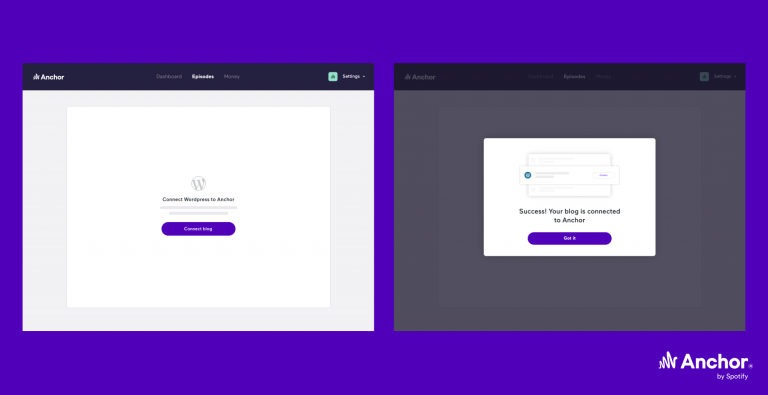
Today, we announced a new partnership between Anchor and WordPress to power opportunities for content creators to evolve their work and reach new audiences through the power of audio. With this new tool, available now, bloggers can publish their written content as a podcast with just a few clicks—and podcasters can create a website for their podcast just as easily. This offers a whole new group of creators—those who have historically focused on the written word—to access an entirely new audience via audio and share their voices on Spotify. Check out Anchor’s and WordPress’s blogs to learn more.

Cultivate direct connections with listeners via new interactivity features

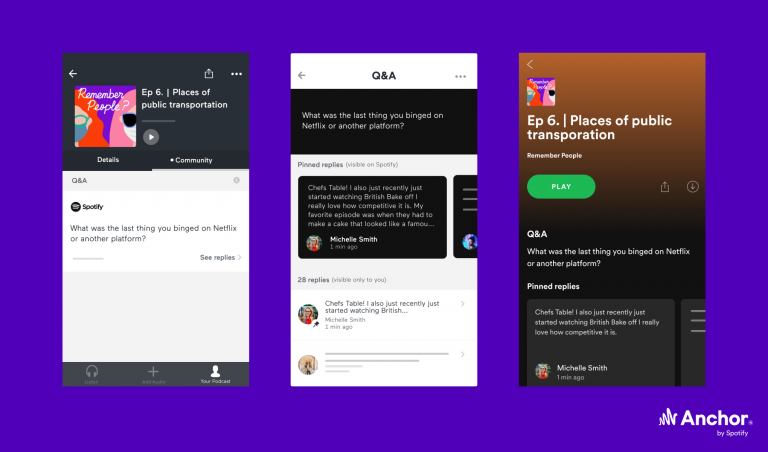
Historically, podcasting has been a one-way street—from creator to listeners—with little opportunity for direct feedback. But with Spotify and Anchor, the creation and listening technology is brought together in the same ecosystem, allowing for a back-and-forth. This has enabled us to build interactivity features like Polls and Q&A, which we’ve been testing in partnership with a small beta group of creators. We will be widening that group to more users in the coming months, and creators can sign up here to express interest in participating in future tests of interactivity features.

Combine audio and visual storytelling with video podcasts

In the coming months, we’ll begin testing the ability for creators to add video to their podcasts when they publish via Anchor—meaning these creators will have the power to complement their audio with visual. We first began testing video podcasts on Spotify in July of last year and have since been iterating on the offering. Later this year, more creators can expect to access this feature as we expand the test via tooling that will live in Anchor.

New models for monetizing your work on Spotify

Going forward, we’ll also begin testing a capability for podcasters to explore new revenue streams through paid subscriptions supported by their listeners. Recently, some podcasters have started earning revenue by offering bonus content exclusively for paid subscribers—and soon they’ll be able to do the same on Spotify, where their content can easily be discovered by fans around the world. Creators can sign up here to learn more and express interest in this feature.

We’re excited about what’s to come, and to see creators take advantage of these new tools as they’re released over the coming months. Ready to experiment with your own future format now? Try out Music+Talk, a show format that allows creators to incorporate songs from Spotify’s music catalog directly into their storytelling. Find novel Music+Talk shows—including Maggie Rogers’ Notes from the Archive, Maluma’s Una Semana en Jamaica, and Hulu’s The Ultimate Playlist of Noise—in the Music + Talk hub on Spotify, and make your own show on Anchor.

Creators and Storytellers Shine Bright at Spotify Stream On

At Stream On, Spotify founder and CEO Daniel Ek was joined by artists, podcasters, and other notable storytellers. We’d like to thank these guests—from all over the world, both established and emerging—for participating in our virtual event earlier today. 

Visit here for more on our commitment to empowering creators—the new, the rising, and the icons—around the world using our unparalleled data, insights, and powerful platform.

How to Share Your Favorite Songs with Your Child Through Shared Playlists on the Spotify Kids App

Since we first unveiled the Spotfy Kids app in October 2019 for Spotify Premium Family subscribers, young listeners have been able to explore a playground of sound and begin a lifelong love of music through a standalone app designed just for them. We’ve also been listening to parents during this time and have been committed to providing increased customization within the app. We started by giving parents the ability to block individual songs or audio stories in the app as well as giving them access to their kids’ “Listening History.” Now, we’re making it possible for parents to share the music they love—from the songs they grew up playing to the family’s dance party playlist—and further curate their child’s audio experience with Shared Playlists on Spotify Kids.

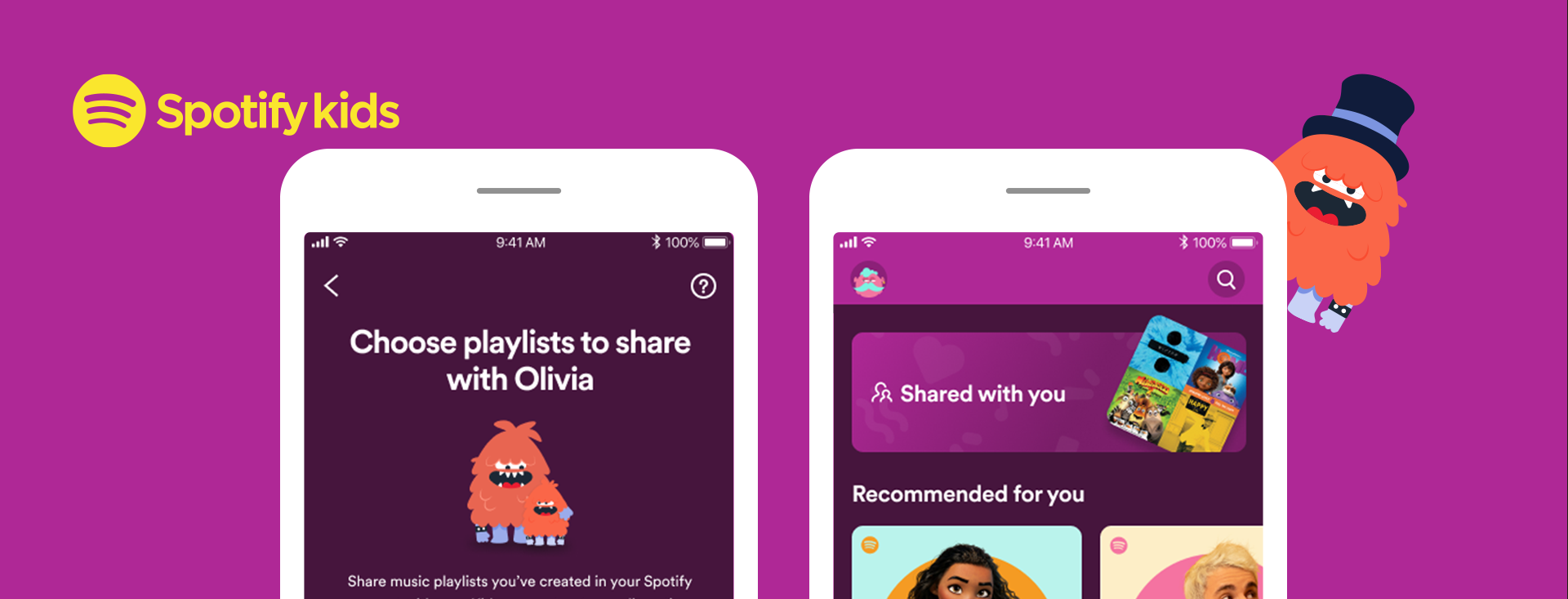
Being able to share your love of music with your children may feel as essential as teaching them to ride a bike. Shared Playlists—a highly-requested and pin-protected parental settings feature—lets parents share music playlists they’ve created in their Spotify account directly with their child in Spotify Kids, allowing them to further curate their child’s listening experience.  

We know that parents often have their own views on which content is and is not appropriate for their kids. The Shared Playlists feature gives parents more control, supplementing the growing library of more than 300,000 kid-friendly tracks and 1,300 playlists on Spotify Kids—all handpicked by our experienced team of editors.

Here’s how to share playlists with your little one using the Spotify Kids app:

  1. Create a playlist of your family’s favorite tunes on the Spotify app (or choose one you made in the past). Make sure to review the lyrics, album cover artwork, and any possible explicit tracks (which will be marked with an ‘E’).
  2. If there are individual songs within the playlist you don’t want to share with your kid, remove them from your playlist in the Spotify app. 
  3. Next, head to the parental settings section of the Spotify Kids app and enter your four-digit pin. 
  4. Tap the “Shared Playlists” section in your kids’ profile. Then, you’ll be able to see your Spotify playlists and select the ones you want to share with each child.
  5. The first time you do this, a pop-up screen will appear to confirm that you want to share the playlist. After, the child can access the playlist on their homepage from a new “Shared with You” section.

Note that if you update the playlist in the Spotify app, the playlist in Spotify Kids will be automatically updated too. Plus, you can revisit the PIN-protected parental settings on Spotify Kids at any time to remove a playlist, access your child’s listening history, and block or unblock tracks.


Not sure where to begin? Check out some of the top-shared songs in family playlists on Spotify: 

Ready to jump into Spotify Kids? Sign up for Spotify Premium Family and then download the app here.

Lucy Hale, Jacob Elordi, Mindy Kaling, and Vanessa Hudgens Share Their ‘My Forever Favorites’ Music and Podcasts

Is there a song that, the moment you hear it, you’re taken back to a special time in your life? Perhaps it reminds you of your first crush, a bedroom dance party, or that unforgettable beach vacation. It’s possible you might say the same for a podcast—whether it’s one you simply can’t start your day without, or a show that makes you laugh out loud. These are the songs and podcasts you want to share with everyone, and today Spotify is making it easy to do just that with My Forever Favorites.

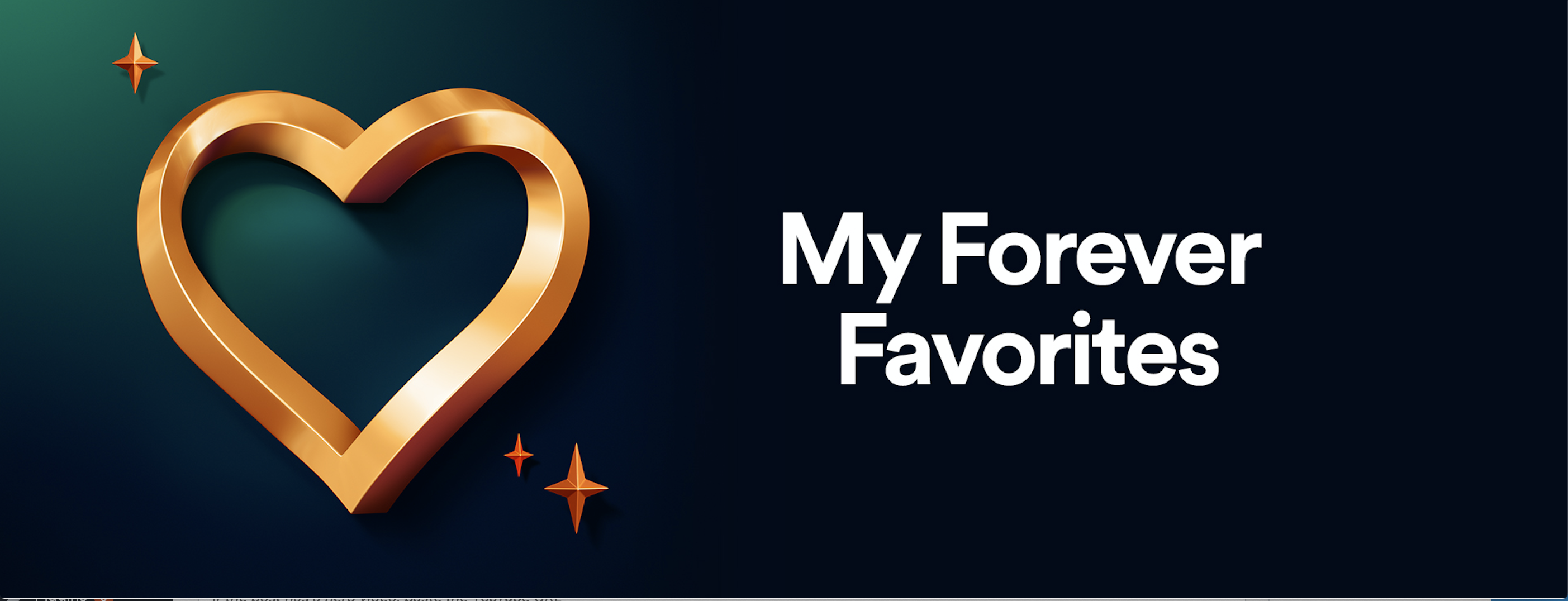
To celebrate our Music, Meet Podcasts campaign, we’re unveiling My Forever Favorites, a new in-app feature that gives Spotify Free and Premium users around the world the opportunity to share the music and podcasts they love most. Through the app, listeners can create a playlist with their five most meaningful songs and/or podcast episodes and easily post it on their social channels for everyone to see—and bask in the memories. 

Who doesn’t love a bit of nostalgia? We asked actors Lucy Hale, Jacob Elordi, Mindy Kaling, and Vanessa Hudgens to share their My Forever Favorites and tell us a little about the stories behind the songs and podcasts they picked.

NASA Astronaut Christina Koch Shares How Music and Podcasts Made Groundbreaking Trip Extra-Stellar

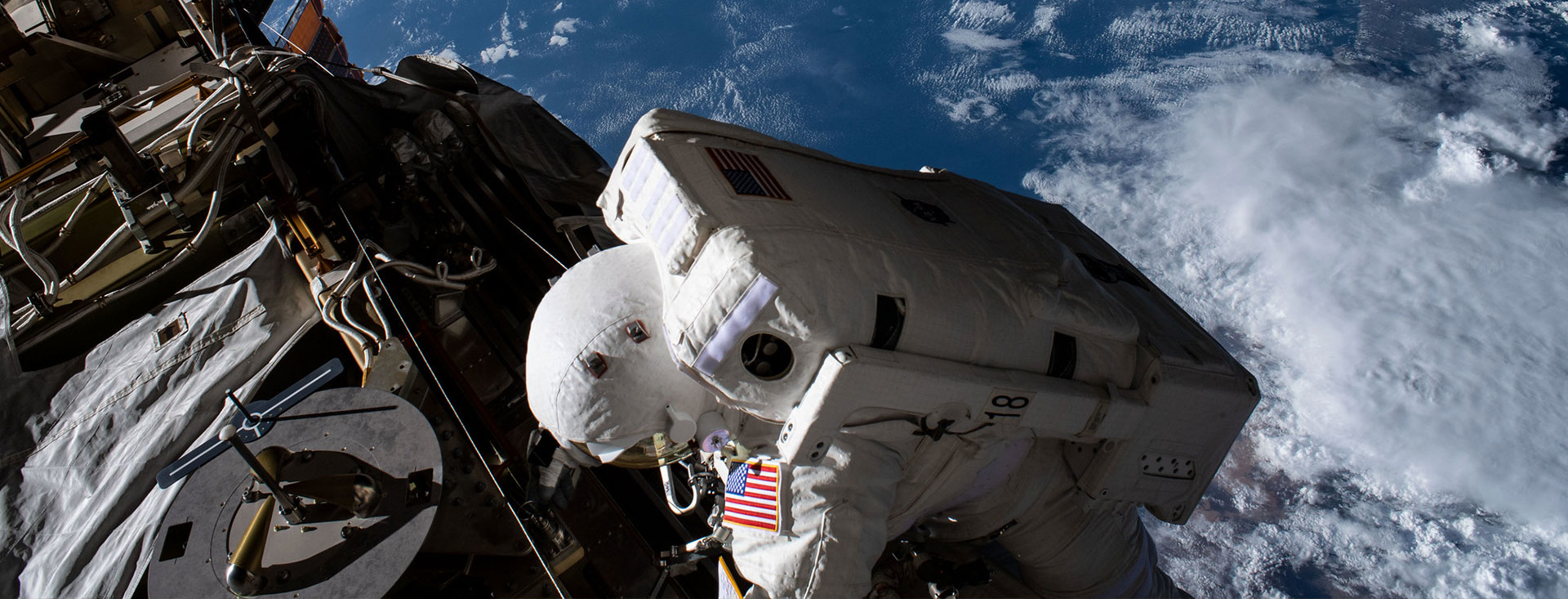
NASA astronaut Christina Koch may have spent 328 consecutive days floating in space (the longest-ever single spaceflight for a woman), but her love for all things audio kept her firmly grounded throughout the journey. 

As part of celebrating Women’s History Month, For the Record recently spoke with Christina to talk about the role of podcasts and music for her and the crew, as well as her friends and family back on Earth. Read on to hear from Christina how Spotify was noSpace Oddity” on board and to check out some amazing photos from outer space. 


From BTS to BLACKPINK, the Power of K-Pop Has No Bounds

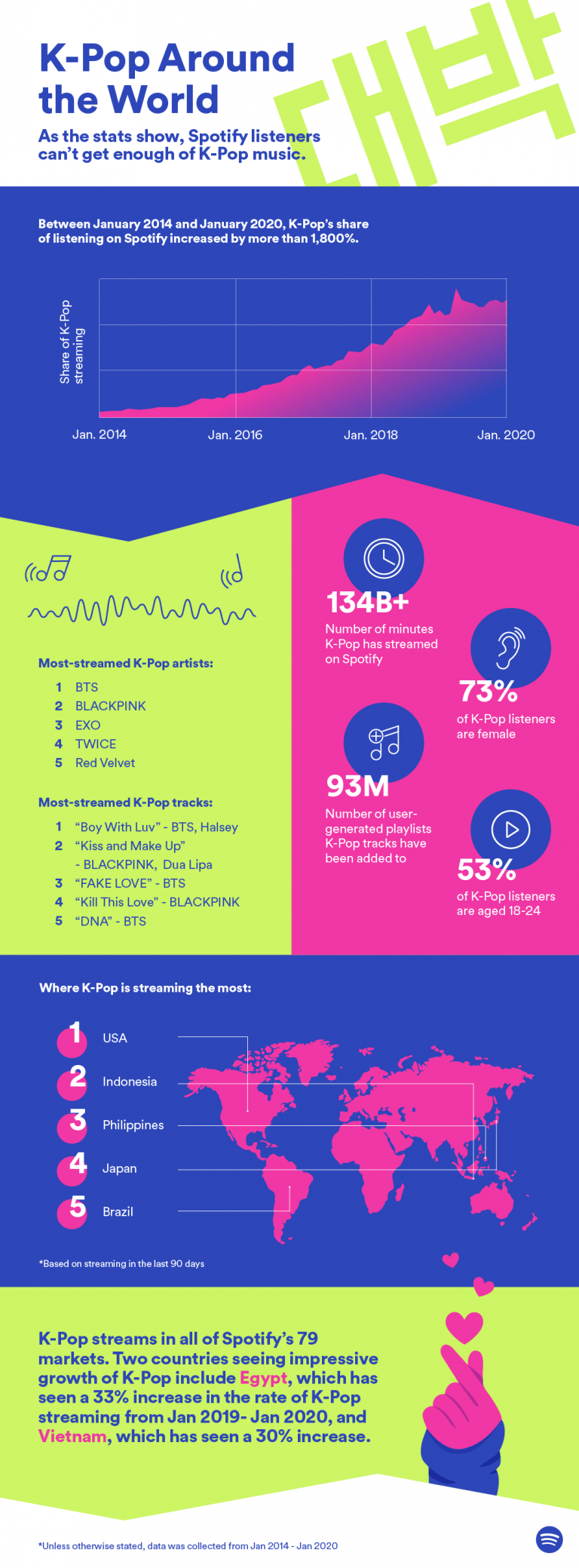
K-Pop is beloved by fans around the world, so we took to the data to see just how popular the music is globally. The genre, which originated in South Korea, has since taken on a life of its own. Thanks to East-meets-West collaborations from BTS and U.S. singer-songwriter Halsey, whose “Boy With Luv” track has over 380 million streams, the reach continues to grow as more and more fans in countries like Egypt and Colombia connect with the music.

Since Spotify released its first K-Pop flagship playlist, K-Pop Daebak, in 2014 (and then a massive hub dedicated to the genre in 2015), there have been more than 41 billion K-Pop streams on Spotify. From rising artists to international collaborations, there’s something for both new and old K-Pop lovers on the platform.

Top-streamed K-Pop artists on Spotify include BTS, BLACKPINK, EXO, TWICE, and Red Velvet. In 2019, BTS was the first group from Asia to surpass 5 billion streams on Spotify. And, as of February 2020, the boy band reached a new milestone: more than 8 billion streams (8 billion streams!) on the platform.

No “FAKE LOVE” here, folks. See how much Spotify listeners love the genre.

Download the infographic here.

Check out the K-Pop Daebak playlist and stream BTS’ MAP OF THE SOUL : 7 The Enhanced Album, which is exclusively available on Spotify.

Spotify Amplifies Year-round Celebration of Black History with ‘Phenomenal Black Music’ Campaign

Black History is American History. Black History is World History. Black History is Now.

In 2018, Spotify launched Black History Is Now to recognize and celebrate Black creators and culture all year long—not just in February. Over the past two years, the program has seen collaborations with artists Janelle Monáe and Pharrell Williams, as well as distinguished designers Joy Miessi and Brandan “BMike” Odums. In 2020, we’re elevating and evolving Spotify’s mission to focus on the cultural impact that people of color have always played—all through the lens of music.

This year, Black History Is Now presents Phenomenal Black Music—a celebration of the songs and women that have shaped the way music is made, experienced, and replicated across the world. Spotify is inspiring people to discover and celebrate Black music and artists who have defined and continue to define global culture.

Through a series of activations and experiences, we’re looking at Phenomenal Black Music through two lenses: songs that define culture and Black women who have shaped music. As much as there is to applaud regarding the strides Black female artists have made in a traditionally male-dominated industry, there’s still plenty of room for progress.

Here’s how you can celebrate with us this month and all year long:

1. Listen to Spotify’s Black History Is Now hub with curated Phenomenal Black Music playlists. Check out Black History Salute, Black Girl Magic, Black Love Mixtape, and more. 

https://open.spotify.com/playlist/37i9dQZF1DX4ezQVslkJiT?si=qhb2GZNXRaCL16XoScpG7g

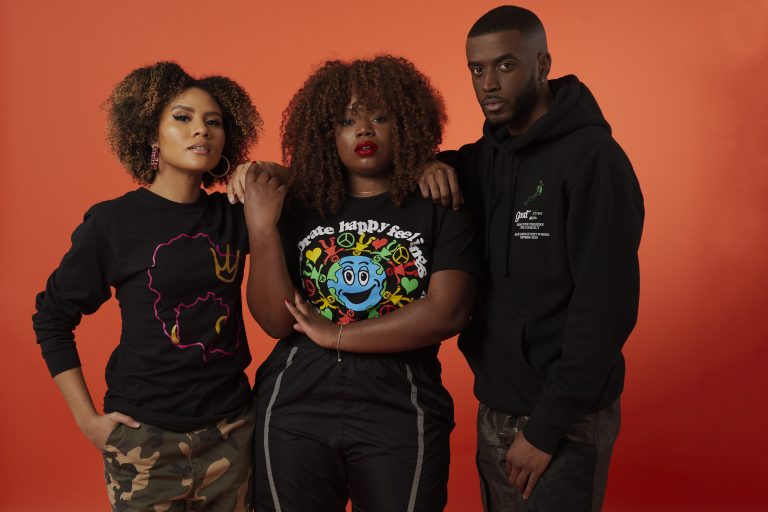
2. Wear merch that brings the feelings of Phenomenal Black Music to life from prominent designers Joe Freshgoods—the fashion designer known for his “Don’t Be Mad” clothing line (whose biggest fans include Malia Obama, Chance the Rapper, and SZA)—and Jamilla Okubo, a mixed-media artist whose work has consistent themes that explore the intricacy of belonging to an American, Kenyan, and Trinidadian identity.

Credit: Mark Clennon

3. At the end of February, the Phenomenal Black Music campaign will culminate in a two-day immersive exhibit-style pop-up in New York City celebrating 32 exceptional songs and women. These artists span genres and generations, from Bob Marley and Mary J. Blige to Lil Nas X and Lizzo. The exhibit will feature a look into the music and musicians, with stories curated by music journalist Jewel Wicker, interactive elements curated by Spotify, surprise merch drops, and performances and panels throughout the weekend. As part of the experience, Spotify partnered with Levi’s® to bring product customization to the two-day event. Guests will have a chance to personalize a Levi’s® Trucker jacket, and all visitors will have access to exclusive patches from Joe Freshgoods and Jamilla Okubo. You can find more details here.

Explore the Black History Is Now hub here, and follow the celebration on @Spotify and @SpotifyNews.

Spotify Has the Pawfect Playlist for You And Your Pet

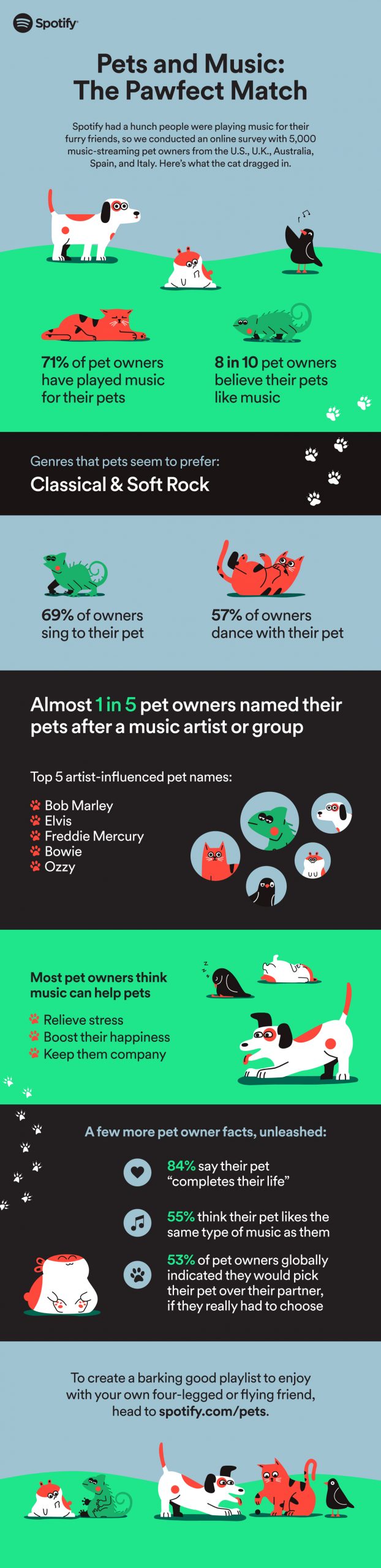
There is something uniquely special about the relationship we humans have with our pets—it’s one filled with unconditional love, licks, snuggles, and cuddles. It’s hard to put into words the emotion these animals give us—other than pure happiness. So it’s only natural that we want to make them feel good, too, and many pet owners believe they do exactly that with music. 

We dug our paws into the subject and conducted a study on how pet owners use music with their pets. We found that 71% of pet owners surveyed play music for their pets, and that’s not all. Check out the rest of the furry (read: fun) facts we unearthed from pet owners in five countries across the globe.

Caribou’s Dan Snaith on New Music, Discovery, and Spotify’s Altar Playlist

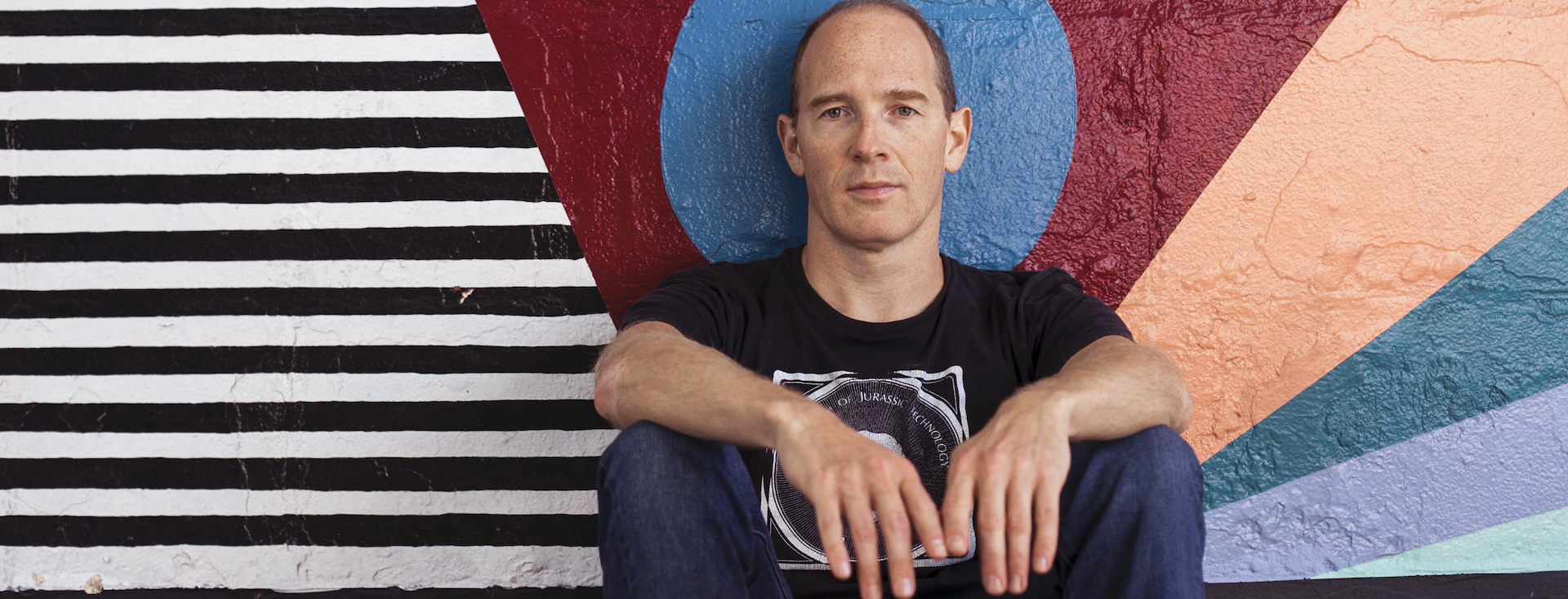
Many electronic producers double as DJs, and most DJs also produce, but Dan Snaith is more versatile than most. Since 2001, the music he makes as Caribou has set a high standard for melodic, propulsive, sonically adventurous indie dance. Then there’s Caribou the live act, which expands Snaith’s studio material for a full band—not just interpreting the songs, but radically transforming them. Finally, Snaith moonlights as Daphni, turning out sleek funk and disco edits for his famously wide-ranging DJ sets.

The sweep of Snaith’s output, spanning home-listening faves and underground club heaters alike, makes him a fitting figure to spotlight as Spotify relaunches its Altar playlist. Dedicated to alternative electronic music and club culture —spanning house, bass, techno, downtempo, and just about every conceivable permutation thereof—Altar reflects the kinds of sounds that Snaith spent nearly 20 years pioneering.

This February, Snaith will release Suddenly, the first new Caribou album in more than five years. The first single, “Home,” dropped in October, and the second single, “You and I,” earlier this month. When For the Record reached Dan Snaith at his studio in London, he was working on preparations for the band’s upcoming tour. “It’s all starting to become real,” he said. “It’s been so long that I’m just so excited to get it going again.”

We spoke with Snaith about his creative process, his upcoming album, and the state of electronic music right now.

“Home,” the first single from the forthcoming Caribou album, almost sounds like it could be a Daphni song. How do those two projects inform each other?

There are definitely some Caribou tracks that almost could have been Daphni tracks, like “Bowls” on Swim or “Mars” on Our Love. It’s kind of magnetic: Sometimes there’s an attraction; sometimes it’s the opposite. After the Daphni album in 2017 was when I really started making this new Caribou record in earnest. It was like, okay, now I can have more all-encompassing tracks that explore harmony or lyrics, whereas Daphni is specifically about making music that’s club-focused. “Home” kind of sits apart from a lot of the other stuff on the record, actually. There are things that are reminiscent of Daphni, but I think there’s a lot that’s quite far away from that world as well. 

With Caribou, are you gathering pieces of songs before you actually sit down to make the album in earnest, or are you starting from scratch?

I’m gathering pieces all the time. I’ll have a verse for a year and then eventually I come up with a chorus, or some switch gets flipped and another piece of the song comes together. There are some loops on the new record that existed even before Our Love was finished. I sit down in the studio every day and I make four or five 30-second-long loops, little ideas. So if you think about how long I’ve been making this record, now I’ve got a playlist with 900 ideas in it. Then it’s this editing process, funneling things down over a long period of time, to get minutes of music out of hours and hours and hours of stuff. Which sounds torturous, and sometimes it is, but that’s the thing that I most enjoy, starting from nothing and making some kind of idea. 

Let’s talk about the state of electronic music. What sounds are you particularly excited about right now?

When I started in the early 2000s, the idea of somebody in experimental electronic music working on a Timbaland or a Neptunes record seemed totally absurd. Currently, there’s a much closer connection between experimental electronic music and the mainstream. It’s kind of hard to draw a boundary anymore. Now everything is electronic music, in a technical sense. Everybody’s recording on the same tools, whether you’re making a Taylor Swift record or a Skee Mask record.

That said, there have been times when I felt like I understood where the momentum in the electronic music world was. In 2008, 2009, living in London, meeting people like Floating Points, Joy Orbison, the Hessle Audio guys, it was like, wow, there’s something really exciting and focused happening. It was easy to feed off that energy. Now, it doesn’t feel like there’s a central narrative, but what’s exciting about what’s happening is that there are many more diverse voices in electronic music than there used to be 10 or 15 years ago. 

It’s been a while since any significant new genres have emerged. Do you sense anything new on the horizon?

When I was in high school, I heard jungle for the first time, and I couldn’t even wrap my head around it. I haven’t had that shock-of-the-new feeling for a long time. I hear individual producers with new ideas, but not something so completely new as a genre that it allows for a whole world to jump out of it. Presumably that will happen again. 

It sometimes seems like there’s so much electronic music out there now that there isn’t the chance for consensus to build.

I feel like people are waiting for it. Everybody is talking about what a big tune that Overmono track “Le Tigre” is. Now that the Caribou album is done, I’m excited to get out there and be playing, but I’m also sneakily going to start thinking about making club music again, because I’ll be out there doing shows, maybe I’ll play at the occasional after-party. It’s moments like that that get me geared up like, “Okay, I gotta make something that, like, bangs in a club.”

You’ve been around since the days of actual physical crate-digging in record stores, and a lot of the music you make as Daphni is rooted in sampling rarities. How has streaming changed the way you discover music?

I think I’ve learned about more new and exciting music digitally than I did when I was mostly digging through dusty piles of records, although I think there’s still room for both things. As a music fan, how can it not be wonderful that the entire history of recorded music is available to everybody at all times? As somebody who grew up in small-town Canada finding it difficult to get my hands on records, I’ve met young people over the past decade or so that have a remarkably eclectic and encyclopedic knowledge of music and music history. If they want to learn it, it’s all available to them. 

You know, I’ve got this 1,000-plus-song playlist called “The Longest Mixtape.” Apart from my own music, the one thing that I have to share with people is that I’ve spent my whole life digging, finding obscure and popular music that for me has something special about it, some magic. And I thought, if I could put all those things in one place for people to listen to, this is something that’s possible now and was never possible before.

Are you a fan of Altar? 

Yeah! With a playlist like Altar, you go there knowing it represents a certain type of music that you’re interested in and discover things you don’t know. I also like the fact that it’s occasionally curated by other people. You look at it and see, oh, Peggy Gou or somebody has picked a bunch of stuff that she’s into at the moment. That idea of having guest curators seems like a really interesting way of sharing people’s personal tastes within a palette where you know roughly what to expect.

Is there anything that you want to say about your album?

I’m just so excited for people to hear this album in full. People have heard the first two singles, but I feel like it’s a real album album. There’s so much diverse stuff sitting there together that I hope coheres in a kind of narrative throughout. It’s something I’ve lived with for so long. Actually, the other day, a friend of mine came over, and I’ve listened to it a zillion times, obviously, but he was like, “Can I just listen to it the whole way through?” I was like, Okay, here goes, I gotta listen to this one more time. And it was the first time that I heard it as a listener. You know, you get so wrapped up in the details, like, the minutiae of mixing and mastering. I hadn’t listened to it for a month or so. And I sat down and listened to it with him, and it was reassuring. I thought, this is something that I can be proud of.

Check out Caribou’s latest single, “You and I,” on Altar.

‘National Lampoon Radio Hour: The Podcast’ Comes to Spotify Ahead of 50th Anniversary

Are you a National Lampoon fan? Then we’ve got news for you: National Lampoon Radio Hour: The Podcast, will be released on Spotify December 19—and starting with the third episode on December 26, Spotify users will have exclusive access to new episodes of the show —just in time for the 50th anniversary of National Lampoon magazine.

The comedy radio show, which started in 1973 and ran for over a year, now has the opportunity to entertain a new generation of listeners through its rebirth as a podcast. New and old fans alike can get excited for the revival of the program, which kicked off the careers of comedic greats including John Belushi, Bill Murray, Gilda Radner, and Harold Ramis, among others.

National Lampoon Radio Hour: The Podcast brings brand-new programming featuring comedic talent such as Cole Escola, Jo Firestone, and Brett Davis. Spotify listeners will also get exclusive access to original content from the 1970’s radio show from stand-up legends. 

So, to all the Debbie Downers out there: we’ve got something to cheer you up. Tune into the twisted “National Lampoon’s Christmas Podcast” episode with a special guest (the one and only Debbie Downer herself, Rachel Dratch) and get ready for the National Lampoon revival you didn’t know you needed with an amalgam of hilarious sketches, characters, tunes, and more.

Listen to the trailer below, and check back in for the launch on December 19.