

Tag: q&a

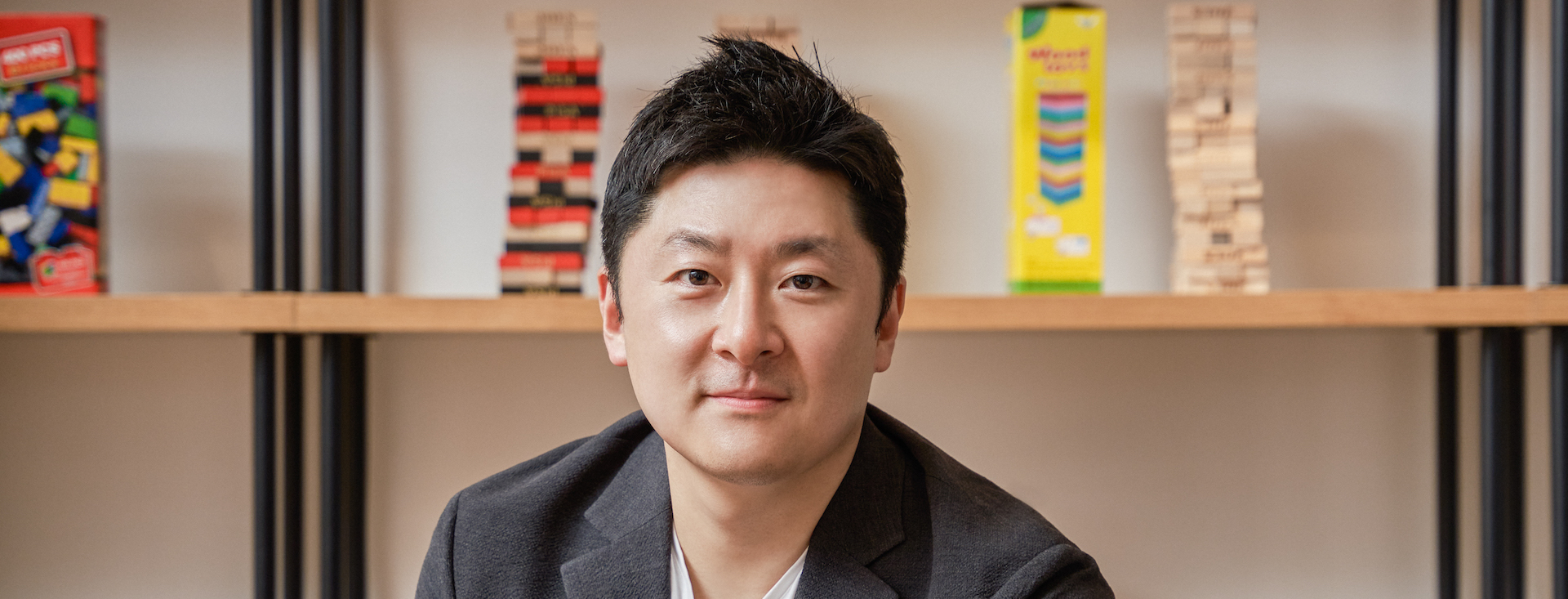
5 Questions (and Answers) with David Sang Wook Park, Spotify Korea Managing Director

In 2014, Spotify debuted our first K-Pop playlist, K-Pop Daebak, on the platform. From that day on, we’ve served as a global stage and partner for Korean artists and helped them introduce their music to the world. We doubled down on that commitment in 2015 with the launch of our K-Pop hub, enabling us to further introduce Korean music—including K-Pop, hip-hop, indie, OST, and R&B—to fans globally. 

Then, this February, Spotify launched in South Korea, creating an opportunity to amplify Korean musicians and spread their music to listeners like never before. And that opportunity expanded even more when, just 50 days later, Spotify became available across 80+ more markets for a total of 178.

For the Record caught up with David Park, Spotify Korea Managing Director, to talk more about why now was the right time to launch in South Korea, his own background supporting content creators, and Spotify’s mission to connect artists to fans in Korea and across the world. 

It’s been 50 days since Spotify launched in South Korea. What are some initial reactions you can share?

We’re taking into account feedback both from listeners and artists, constantly working to improve and innovate our service. From the artist community, we have generally received a warm welcome and positive feedback that our launch has activated the local music streaming market. We’re hoping that more listeners will be able to connect with a more diverse range of artists and music genres, both in Korea and around the world. Our team on the ground is deeply committed to this. 

From listeners, we continue to get extremely positive feedback on our unmatched personalization and discovery technologies. They’re seeing a very high level of music-related editorial input, powered by data and the depth of our algorithmic machine learning. We already see how listeners are discovering new artists and music, expanding their listening range and experience.  We believe in Spotify as more than a listening platform, but as a tool that brings the world of audio to you.

Tell us about your professional background prior to Spotify. How did that prepare you for your current role?

I’ve worked in the intersection of content media and IT/tech throughout my career, most recently founding a startup and setting up a business in Korea for a global company. One of the highlights during my career was definitely fostering and nurturing the video creator community and ecosystem in the APAC region. Helping Korean creators boost their presence not just in Korea but around the world—through the support of tools and data—was one of the key experiences that helped set me up for this role. There was one fact prevalent throughout the different roles I had taken: that content is king.

Spotify has been avid in serving as K-Pop’s bridge to the world years before launch. Can you talk about the timing of this launch? Why was now the right time?

While Spotify’s been very active in serving Korea’s music streaming market, it is a highly mature, unique, and complex one. With that, we had to invest an immense amount of time, resources, and research years before the launch. In every country we enter, we have to take market specificities into consideration and align with the local industry. 

All in all, building up a strong foundation to our long-term vision in Korea took some time, and we’re taking a step-by-step, hyper-sophisticated approach by considering market specificities and all relevant stakeholders. Our focus is on democratizing audio and music in the long run, and helping to accelerate the growth of Korea’s entire music streaming ecosystem, benefitting creators, labels, distributors, and fans. It’s a marathon, not a sprint. 

How will Spotify support Korean artists, both through launch and going forward?

We’re now hoping to take Korean music and artists’ global popularity to another level. Just recently we saw a variety of different artists, such as ROSÉ, DPR IAN, SHINee, Epik High, CHUNG HA, and more landing in the top 10 of the global Spotify debut charts. Korea’s music industry has been the epicenter of new cultural trends and music for many years, and it’s important for us to embed even further into this unique market, forging closer relationships with even more artists and labels and connecting them with fans across the globe. An example is our Spotify for Artists master classes, which we’ve proactively held for labels and artists so that they can better leverage our data and tools alongside our music team’s guidance and support. We want to empower them to connect with even larger audiences—both local and global.

What’s Spotify’s ultimate vision and goal in Korea?

Our ultimate goal is to provide the best audio experience to our listeners in Korea, and to continue to connect artists and fans on a scale that has never before existed. For listeners, we are committed to creating an environment in which they can enjoy a personalized experience tailored for their lifestyle, as well as diverse new content from all over the world. 

We see ourselves as a catalyst for additional growth in the market, with discovery of new artists and music being a key strength. We’re proud of that and are actively refining our algorithms to enable even more fan discoveries of new artists each month. We’re also confident that there is ample room for Korea’s music market to grow further as listeners’ audio and music consumption habits transform gradually. The shift has already begun. It’s only a matter of time and we’re working hard to speed things up. As our CEO, Daniel Ek, mentioned at Stream On, “It’s just the beginning.”

Ready to discover music and playlists for yourself? Check out David’s top working playlists—Lo-Fi Beats, Lo-Fi Cafe, and Lo-Fi House—or one of his new favorite playlists, In The K-Indie. “Recently, youra is a new gem I discovered through it. There’s just so much musical talent like youra in Korea that needs to be heard both in Korea and globally.”
런칭 50일 기념 박상욱 스포티파이 코리아 매니징 디렉터와의 5문 5답

스포티파이는 2014년 선보인 최초의 K팝 플레이리스트 ‘K팝 대박(K-Pop Daebak)’을 기점으로 한국의  아티스트 및 음악을 전 세계 청취자에게 소개하는 글로벌 무대 및 파트너의 역할을 해왔습니다. 2015년부터는 한국 음악 플레이리스트들을 총망라한 K팝 허브(K-Pop Hub)를 런칭, K팝, 힙합, 인디, OST, R&B 등 다양한 한국의 음악장르와 아티스트를 전 세계에 적극 소개해왔습니다. 

그리고 올 해 2월, 스포티파이가 드디어 한국에 런칭했습니다. 런칭 당시 93번째 국가였는데, 그로부터 겨우 50일이 지난 지금, 178개 나라에서 스포티파이를 만나볼 수 있게 되었습니다. 한국의 아티스트와 음악이 전 세계 178개 국가의 청취자 그리고 수십억명의 잠재적 신규 청취자들과 연결될 수 있게 된 것입니다. 

스포티파이 뉴스룸 ‘포더레코드(For the Record)’에서는 국내 론칭 50일을 기념해 박상욱 스포티파이 코리아 매니징 디렉터와 5문 5답 인터뷰를 진행했습니다.

한국에 스포티파이가 진출한지 겨우 50일이 되었습니다. 이제 막 발을 디디기 시작했는데, 초기 반응은 어떤가요?

수 많은 피드백을 항상 경청하고 서비스를 혁신해 나갈 수 있도록 집중하고 있습니다. 스포티파이의 런칭이 국내 음원 스트리밍 시장에 활력을 불어넣어준다는 긍정적인 피드백과 함께, 아티스트 커뮤니티로부터 따뜻한 환영을 받았습니다. 스포티파이를 통해 보다 다양한 아티스트와 음악이 조명 받을 수 있기를 기대하며, 더 많은 한국의 아티스트와 폭넓은 음악이 한국을 포함한 전 세계 청취자와 이어질 수 있도록 팀에서 최선을 다할 계획입니다.

청취자로부터는 저희의 독보적인 개인화(personalization)와 발견(discovery) 기술에 대해 ‘역시나’ 라는 호평이 많았습니다. 음악팀의 에디토리얼 전문성과 스포티파이의 독보적인 데이터, 알고리즘·머신 러닝 기술의 결합으로 이뤄진 결과물인 만큼, 전례 없는 서비스임을 저희 모두 자신합니다. 개인의 취향에 따라 새로운 아티스트와 음악을 발견하는 즐거움 외에도 듣는 음악의 스펙트럼을 넓혀준다는 피드백도 있었습니다. 분명한 것은 스포티파이는 단순 음원 플랫폼이 아닌, 전 세계의 오디오·음악 생태계를 청취자에게 선보이는 기술 서비스라는 것입니다. 

스포티파이 이전의 이력에 대해 말씀해 주세요. 이전의 경력이 지금의 역할에 어떻게 도움이 되었나요?

컨텐츠 미디어와 IT기술이 교차하는 분야에서 주로 경력을 쌓아왔고, 가장 최근엔 스타트업이나 글로벌 기업의 한국 지사 설립을 총괄한 경험이 있습니다. 아태지역 비디오 크리에이터 커뮤니티가 하나의 생태계로 자리 잡을 수 있도록 기여했던 경험도 중요하게 생각합니다. 당시 한국의 크리에이터들이 각종 기술, 툴과 데이터를 기반으로 한국 뿐만 아니라 전세계에서 존재감을 드러낼 수 있도록 지원했었는데, 그러한 경험이 스포티파이에서의 제 역할과 관련해 핵심요소 중 하나로 작용할거라 예상합니다. 

스포티파이는 한국 론칭에 앞서 이미 수년 전부터 K팝을 전세계와 잇는 교두보의 역할을 해왔습니다. 한국에서의 서비스 런칭은 왜 지금이 적기라고 판단했나요?

한국의 음원 스트리밍 시장은 특수하고 복잡한 편이며, 시장 자체의 성숙도도 매우 높습니다. 스포티파이는 수년간의 시장조사를 포함해 방대한 리소스와 시간을 투자하여 한국의 음원 스트리밍 시장을 연구해왔습니다. 더불어 어느 나라든, 해당 시장이 지닌 특수성을 고려해 서비스를 런칭해야 하는 것도 중요한 부분입니다. 

우리는 오디오·음악 산업의 수평화(democratizing audio and music)라는 장기적 목표이자 거시적 비전에 집중하는 기업입니다. 이 같은 비전을 한국에서도 이행하기 위해 오랜 시간 준비한 만큼, 앞으로도 다양한 이해관계자, 한국시장만의 특수성 등을 고려해 전진할 것입니다. 단계별로 정교하게 접근해 나감으로써 한국 음원 스트리밍 생태계의 동반성장에 함께할 수 있도록 최선을 다할 것입니다. 단거리 경주가 아닌 장거리 마라톤입니다. 

스포티파이는 한국에서의 런칭을 통해 앞으로 어떤 방식으로 한국 아티스트를 지원할 예정인가요?

더 다양한 한국의 음악과 아티스트들이 글로벌 인지도를 높일 수 있도록 기여하고 싶습니다. 얼마 전 로제, DPR IAN, 샤이니, 에픽하이, 청하 등 다양한 아티스트들이 스포티파이의 각종 글로벌 차트 탑10 안에 들었던 사례가 방증하듯, 한국의 음악은 전 세계와 통한다고 생각합니다. 한국의 음악 산업은 다년간 새로운 문화 트렌드와 음악의 중심지 역할을 해왔습니다. 한국이라는 특별한 나라에 스포티파이가 더욱 깊이 정착하고, 더 많은 아티스트·레이블과 협업하여 이들을 전 세계 청취자에게 소개하고자 합니다. 아티스트·레이블을 대상으로 진행해온 스포티파이 포 아티스트 (Spotify for Artists) 마스터 클래스 역시 다양한 노력의 일환입니다. 실제로 국내 런칭 후 더 많은 이들이 스포티파이의 아티스트 전용 플랫폼인 Spotify for Artists의 데이터와 각종 툴을 적극 활용하기 시작했습니다. 앞으로 많은 국내 아티스트들이 스포티파이의 기술을 통해 한국을 포함한 전 세계 178개 국가의 글로벌 청취자, 그리고 음악팬들과 연결될 수 있도록 하고 싶습니다.

한국에서 스포티파이의 궁극적인 비전과 목표는 무엇인가요?

궁극적으로는 한국의 청취자에게 최상의 오디오 경험을 제공하고, 계속해서 전례 없는 규모로 아티스트와 팬을 연결해 주는 것입니다. 청취자에게는 개인의 라이프스타일에 맞춰진 개인화(personalization) 경험과 전 세계의 다양한 신규 음원을 마음껏 즐길 수 있는 환경을 제공할 수 있도록 매진할 것입니다. 그리고 오디오·음악 산업의 수평화라는 장기적 목표이자 거시적 비전의 실현에 집중할 것입니다. 

한국에서 스포티파이는 ‘새로운 아티스트와 음악의 발견’을 강점으로 삼아 음원 시장 전체의 성장을 도모하는 촉매제의 역할(catalyst)을 하고자 합니다. 청취자의 오디오·음악 소비 패턴도 점진적으로 변화함에 따라 한국의 음악 시장 역시 더욱 성장할 것입니다. 변화는 이미 시작되었고 가시화는 시간의 문제이며, 스포티파이는 이러한 패러다임의 변화를 가속화하도록 전념할 것입니다. 최근 스트림 온(Stream On)에서 CEO 다니엘 엑(Daniel Ek)이 강조했듯, 스포티파이는 이제 겨우 시작점에 섰다고 할 수 있습니다 (“It’s just the beginning”). 

다양한 음악과 플레이리스트를 경험하고 싶은가요? 박상욱 매니징 디렉터가 업무 중 즐겨 듣는 Lo-Fi Beats, Lo-Fi Cafe, Lo-Fi House, 그리고 요즘 가장 좋아하는 In The K-Indie 플레이리스트를 확인해보세요. 유라(youra)처럼 원석 같은 아티스트들을 In The K-Indie를 통해 발견했다고 합니다. 박상욱 매니징 디렉터는 “한국에는 국내외 청취자와 전 세계 팬들에게 소개되어야 할, 유라와 같은 재능 넘치는 아티스트들이 너무나 많다”고 강조했습니다. 

New Spotify Original Podcast From Sound Up Alum Kacie Willis Pushes the Bounds of Creativity and Anonymity

It’s rare for two people to approach the creative process in the same manner. In the new podcast You Heard Me Write, listeners get a peek behind the curtain to hear how different sound designers bring to life the words of writers in an entirely unique way. The show, hosted by Sound Up 2019 participant Kacie Willis, is the latest podcast to come out of Spotify’s Sound Up program, which aims to empower the next generation of podcasters from underrepresented backgrounds through education, workshops, and support.

The first season of You Heard Me Write explores 30 original pieces of prose, music, and sound design. Each episode features artists collaborating on a multimedia group project without having any knowledge about the identities of their counterparts. Only after the project is done are the artists introduced to one another: in a roundtable discussion where they explore the roles of creativity, anonymity, and the power of connection between people from different walks of life. 

For the Record sat down with Kacie to learn more about the podcast.

‘Dissect’ Podcast Explores the Reclamation of Black Culture in Beyoncé’s ‘Black is King’

In April 2020, Cole Cuchna and Dr. Titi Shodiya (Dope Labs) came together to examine Beyoncé’s 2016 masterpiece Lemonade as the hosts of the Spotify Exclusive podcast Dissect. This week, the pair returns to the podcast for a surprise seven-episode miniseries that celebrates Beyoncé and commemorates her prolific summer 2020 project, Black Is King

In this series, Cole and Titi dive into an in-depth academic exploration of the lyrical metaphors, historical anecdotes, and nods to African spirituality embedded all throughout the project—as well as the verbal and visual commentary on the reclamation of Black culture in Black Is King. For the Record spoke to Dissect host Cole Cuchna on the creation and impact of the surprise series.

Why did you want to dissect Black Is King?

Having learned so much from our analysis of Beyoncé’s Lemonade for Season 6, I think we were all very eager to unpack Black Is King for that same reason: education. Through the many symbols, themes, and lyrics of the film, you really get a substantial history lesson paired with a practical life philosophy. We originally planned to do just one bonus episode, but it ended up being seven episodes, just because there was SO much to discover in the film. It really is a work of art.

Given the landscape of 2020, can you elaborate on Black Is King’s impact?

For me, it provides important historical context to issues still affecting the world today and puts them into a narrative form that has incredible emotional impact. Stories and music are two of the most transformative forms to communicate and to inspire human beings to act. In an ugly time in our history, Black Is King was a refreshing presentation of the beauty, glory, and rich history of Africa—the place every human being can trace their lineage back to. It’s that sense of global and humanitarian unity that is desperately needed right now.

How long did it take to create this season, from listening to dissecting the lyrics to writing the script and recording?

We began working on the series the moment Black Is King was released on July 31, 2020, and we worked on it all the way up until the week of releasing our series. So almost six months. We had a great team on this, including writers Maggie Lacy and Femi Olutade. We were also able to speak directly to the film’s creatives, including co-director Kwasi Fordjour, stylist Zerina Akers, and music director Derek Dixie. That’s a first for Dissect, and they were able to lend incredible insight to the themes and process behind making the film.

What were some of the images, scenes, or songs that resonated with you most that you were excited to dissect?

For me, it’s the entire last act of the film, because that’s when many of the symbols and images from the beginning of the film show up again, creating this full-circle effect and tying directly into the “circle of life” theme that centers the film. Just the thought and execution of that kind of structuring shows how much attention to detail was given to this project, where seemingly everything we see and hear has an intended meaning, message, or purpose.

What was something you learned through dissecting Black Is King that surprised you or gave you an ah-ha! moment?

I think the biggest ah-ha moment comes when we see the basket floating down the Nile river in the song “Otherside.” It falls down a waterfall, and then the film cuts to adult Simba falling underwater. It’s there, underwater, that we see Simba grab the king chess piece that he lost earlier in the film as a child—symbolizing that he has rediscovered the kingship inside him from birth. That fact that this occurs underwater implies that this is a kind of baptism, a rebirth, which is the first thing that we saw in the film’s opening scene. So it comes full circle. It’s also during this moment that Beyoncé says the word “Bigger,” which is the first song we heard in the film, too. The layers! The connections! Ah!!

Black Is King is similar to Lemonade with the visual component. Did this have an impact on breaking down the music?

Yeah, I would say we actually spend more time dissecting the visuals in this series than the music. It’s really brilliant the way the music and visuals interact to tell the story. That’s what we tried to focus on most: how Beyoncé and her team were really creating a new storytelling medium where we see this unique interaction between not only the music and visuals, but also the ensembles, dances, set pieces, and colors. Everything contributes to the storytelling and theme. It’s really spectacular.

Stream the Dissect special series Black Is King below. 

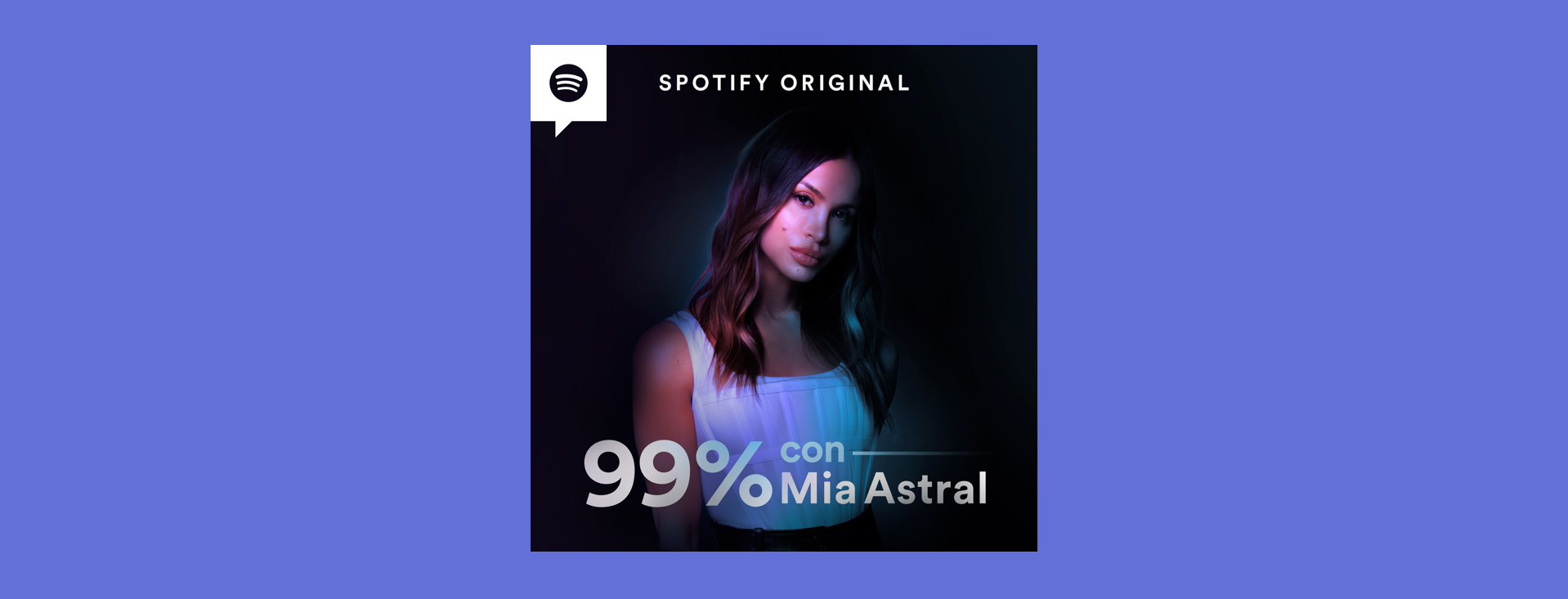
Conoce un Nuevo Lado de Mia Astral en el Podcast Original de Spotify, 99%

María Pineda, también conocida como Mia Astral por sus millones de seguidores en redes sociales, es astróloga, cabalista y life coach. Su visión práctica e integral del crecimiento personal la ha convertido en un referente y una voz femenina influyente para América Latina. Ahora, María muestra un nuevo lado de sí misma en el podcast original de Spotify: 99% con Mia Astral.

El podcast permitirá a los fans conocer a María de forma íntima. En el show comparte sus reflexiones más personales y muestra cómo conectarse con tu Yo interior.

¿Alguna vez te has preguntado por qué aceptas hacer algo que realmente no quieres hacer? O tal vez te has sentido inseguro ante la adversidad. María te invita a ahondar en estas preguntas y te enseña a reflexionar para que puedas dar un salto de conciencia, dejar atrás los viejos condicionamientos y conectar con tu potencial personal.

For the Record se sentó con María para discutir lo que los oyentes pueden descubrir en su nuevo show.

¿De dónde viene el título del podcast del 99%?

El 99% es de donde emana toda la energía que vemos manifestada en el 1%, que es solo la punta del iceberg. Se siente real porque es tangible, pero es pesado y está cargado de conductas y condicionamientos aprendidos. Este es un podcast de reflexiones claras, concisas y al punto de temas que parecen clichés o que escuchamos todo el tiempo, pero de una manera más profunda. Y creo que se trata mucho de mirar hacia adentro para dejar de mirar hacia afuera.

Tus seguidores te conocen mejor como astróloga. ¿Por qué decidiste presentarte ahora de una manera diferente?

Más que un astróloga, soy un ser humano. Todo lo demás son títulos, fases que uno tiene y formas en que uno ha aprendido a ayudar a otros. Si no cometiera errores o no sintiera tanto como lo hago, nunca habría estudiado ninguna de estas cosas y no sabría cómo ayudar a otros a encontrar su propio camino.

En mis clases y conferencias siempre hablo de mis experiencias y de lo que he aprendido de la astrología. Lo que pasó con “99%” fue que comencé a compartir, públicamente, reflexiones que también eran un poco más cortas y al grano, sin referirme a las alineaciones de los astros.

¿Qué pueden encontrar tus seguidores en este podcast?

Creo que en el mundo de hoy nos enfrentamos a una mentalidad de “ver para creer”. Todo lo que nos ha enseñado que lo que ves es lo que existe, lo que ves es lo que hay, es la mayor limitación del ser humano, que no sabe utilizar su gran potencial para crear. Y, con estos episodios, mi objetivo es que entiendas un poco más sobre cómo funciona el potencial humano.

2020 fue un año complicado. ¿Qué te dejó como aprendizaje?

Me parece que la pandemia del COVID-19 nos obligó a mirar hacia adentro. Personalmente, me obligó a lidiar con muchas cosas con las que no había lidiado durante años; es como la cita con el dentista que pospones durante meses. Y me ocupé de todo durante esos 12 meses, y me parece que ha sido uno de los mejores años de mi vida. Entiendo que ha sido un año muy difícil para muchas personas, pero para mí fue un año para cerrar muchas cosas que estaban pendientes y estoy muy satisfecha con eso.

Tanto como astróloga como personalmente, ¿qué crees que podemos esperar a partir de 2021?

No me parece que nadie pueda predecir exactamente cómo tomará el curso una alineación de las estrellas. Entonces, de esa manera, la única “predicción” que se puede hacer es que 2021 es un año marcado por el caos. Pero un desorden que nos lleva a ordenar posteriormente las piezas de forma más consciente. Entonces lo que necesitamos es, en lugar de prepararnos para algo que se avecina, prepararnos bien internamente, conocernos mejor y no dudar de nosotros.

¿Listo para aprender más? Escucha el podcast, 99% con Mia Astral, a continuación.

Meet Flo Milli, the Alabama Rapper Speaking to Gen Z—and Spotify’s Fourth U.S. RADAR Artist

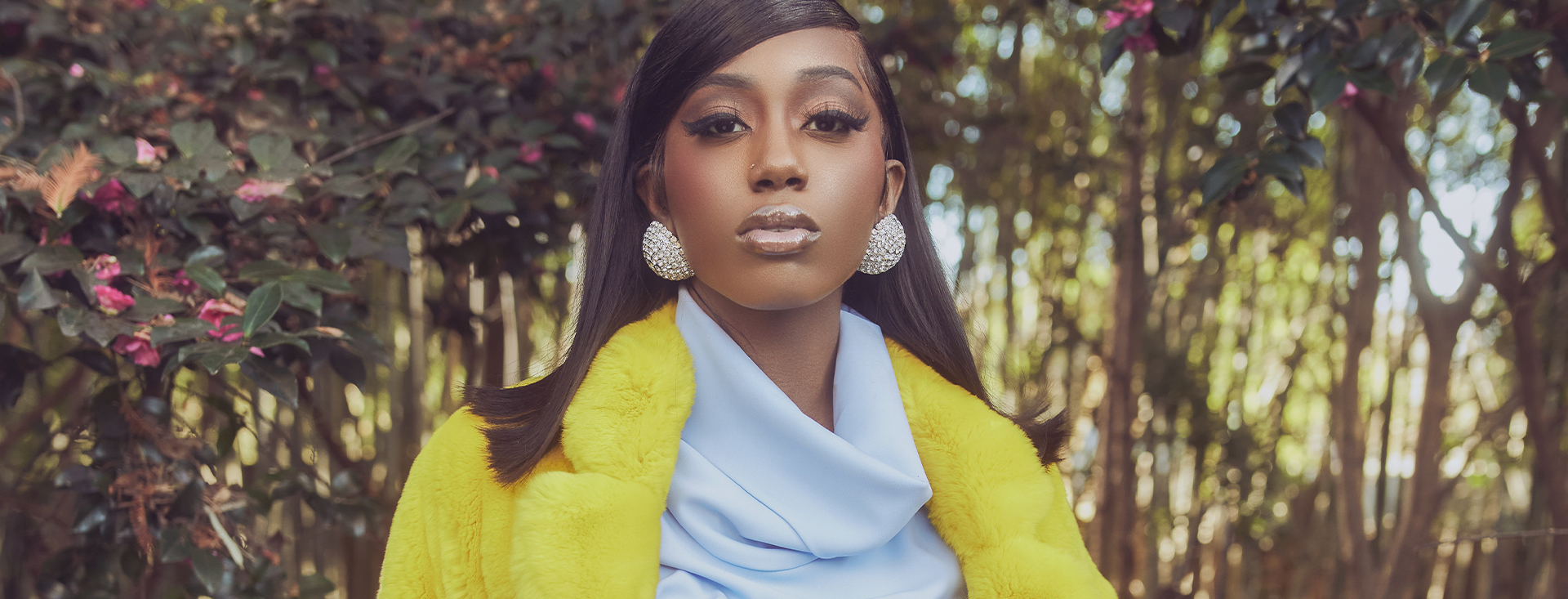
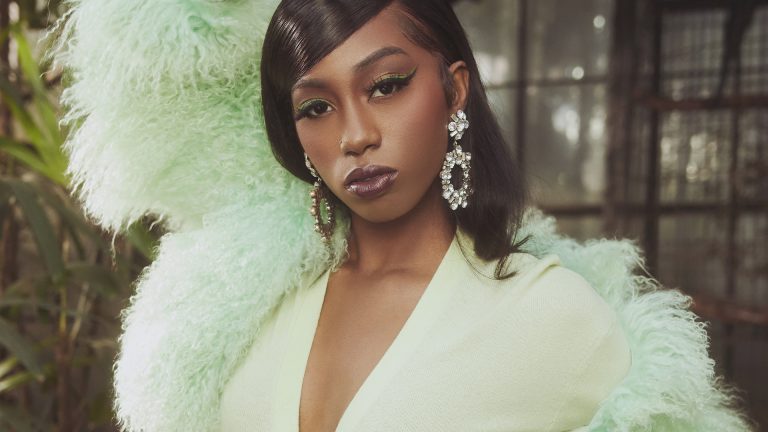
Stream rapper Flo Milli’s mixtape and you’ll hear simultaneously bubbly and assertive tracks covering the 21-year-old’s take on money, men, self-empowerment, and jealousy. The Atlanta-based Alabama native, who grew up singing in her church choir, has been using her voice for some time. “It was mandatory for me to be in the choir,” Flo told For the Record. “My mom used to sing all the time, so did my sister. I guess I was the only one who wanted to rap, though.”

Today Flo was named Spotify’s newest U.S. RADAR artist. Spotify created RADAR to help artists across all stages of their careers use the strength of our platform to deepen connections to their audiences. Now listeners can stream the 175 RADAR-affiliated emerging artists around the world in one palace on the RADAR Global Hub

As the latest RADAR artist, Flo will be featured in the RADAR playlist and create a Spotify Singles recording. She’ll also receive promotional support for her upcoming releases, a full suite of marketing, and social promotion. Flo Milli’s campaign will furthermore include a forthcoming mini-documentary to premiere later this year. Also out today is Flo’s glamorous new single “Roaring 20s,” which shows off the star power of the RADAR artist.

Flo’s long-standing musical aspirations were fueled by R&B TV show 106 & Park and the work of Nicki Minaj. These propelled Flo to record her own tracks as a high schooler. Her first two, “Beef FloMix” and “In the Party,” went viral among Gen Zers on social media and enabled Flo to release her first mixtape, Ho, why is you here? in 2020. It has now seen over 192 million streams on Spotify.

“Since the release of ‘Beef FloMix’ on Spotify in 2019, we’ve watched Flo Milli’s exponential growth with excitement,” says Ned Monahan, Spotify’s Head of Global Hits. “Her magnetism is indisputable, and she’s one of the most exciting new rappers in the game right now. We are beyond thrilled to partner with Flo as our next RADAR artist and can’t wait to see what’s next.”

For the Record chatted with Flo about her inspirations, accomplishments, and recommendations to young women looking to do what they love. 

Both your music and fashion have been compared to that of ’90s rappers. What about that decade excites or inspires you?

I think it’s interesting. As I’ve been going in my career, I’ve started to discover how times were back then. I didn’t, of course, grow up around that time. But I see clips all the time of the ’90s and how the music industry was just different. And I do admire it because I think it’s cool to see how everything has changed and how social media plays a big part into today’s music industry. But I wouldn’t have minded coming up in that era either. 

In the past two years, female artists have sung shamelessly about money or wealth in their songs, examples including Cardi B, Arianna Grande, and you. Why do you think it’s important to bring this topic into conversation?

I believe that whatever you put out into the universe, that’s what you’re going to get. So if you’re speaking about these things, you’re conjuring them up. Who doesn’t want to live a lavish lifestyle, especially when you come from nothing? 

Those things are power, and I think it’s important to make it a habit to speak the things that we want and let everybody know, especially young girls, that they can have those things. You can reach your goals and you can be great. You can get anything you want if you put your mind to it. 

Tell us a little bit about your creative process. 

It took me a long time to really learn my best process for making music. It was hard trying to find my niche. So I like to have fun. I just need to be in a space where I’m alone and I’ve got a variety of beats. I like to be myself and free and have my own space. That’s how I create. 

Your single “Beef FloMix” had success on social media before hitting the number two spot on Spotify’s Viral 50 in April 2019. What changes did you observe after being featured on the playlist?

I think my streams went up even more, of course. I got more fans and just a lot of added traction towards my music and videos, everything. So I think it helped a lot. It’s dope to be put on those playlists, because a lot of like youth of course have Spotify and they listen on the app, and those playlists influence them. 

What would you say to aspiring young female rappers who aren’t sure where to begin?

I would encourage them to always follow what they feel strongly about. Don’t let anybody come in between your opinions about your craft and what you create and build. Stick to what you think is cool, because only you know what’s good. Surround yourself with people who have your best interests and never give up.

It’s a unique time for everyone. How have you stayed positive in spite of everything the year has thrown at us?

I just started to learn how food can affect you and your mood. I’ve also been going to sleep saying positive affirmations. There’s hella videos where you could just play them while you’re going to sleep. And like all those affirmations go into your subconscious mind. And before you know it, you’re going to have all these affirmations in your head. I would just encourage everybody to do that with everything going on in the world. 

What are you looking forward to as Spotify’s current U.S. RADAR artist?

I’m looking forward to just my hard work being highlighted. My goal is to get the messages of the songs across in the best way and to keep the ball rolling the entire year. 

Stream Flo Milli’s mixtape, Ho, why is you here? below. 

Meet DORA, the RADAR Teen Rewriting What It Means to Be a Global Pop Star

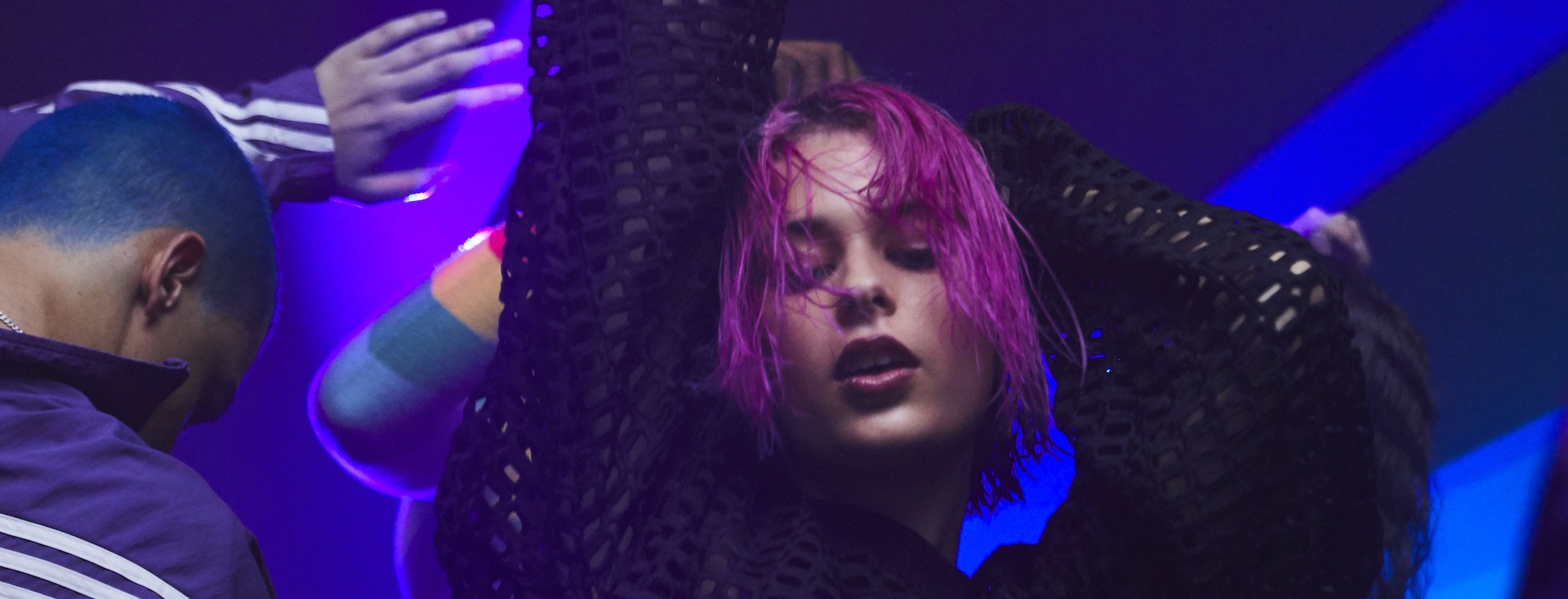
Spanish singer-songwriter DORA has had a busy year—and that’s putting it lightly. At just 16, she’s already graced the cover of Vogue España and appeared on the soundtrack for Élite, a popular Netflix show. Now the Madrid-based artist can add another item to the list: she’s a part of Spotify’s global emerging-artist program, RADAR.

Launched in March 2020, the program features artists from over 50 markets worldwide and helps performers at early stages of their careers broaden their fan bases through Spotify’s social channels, curated playlists, and tailored marketing initiatives.

DORA is the sole author behind many of her genre-bending tracks. She shifts between English and Spanish with ease, singing over tracks influenced in equal measure by 2000s bubblegum pop, moody indie rock, and pulsing EDM. Since the launch of RADAR, DORA has released three singles, some of which were even recorded in her school uniform: the twinkly discoteca-ready “Oxena,” acoustic-driven “Hoy,” and infectious English-language “Stay.” 

We sat down with the RADAR artist to learn more about how she got here—and where she’s planning on going next.

You’ve had a pretty meteoric rise in the past year. What’s it been like to see your career take off?

It’s a blessing to see my music reach a wider audience throughout the years, and seeing the different people that follow me into this journey is amazing. For me, it’s like watching my newborn baby getting older—I accompany my music’s steps. I put work into it, and my music gives me a lot of other beautiful things in exchange.

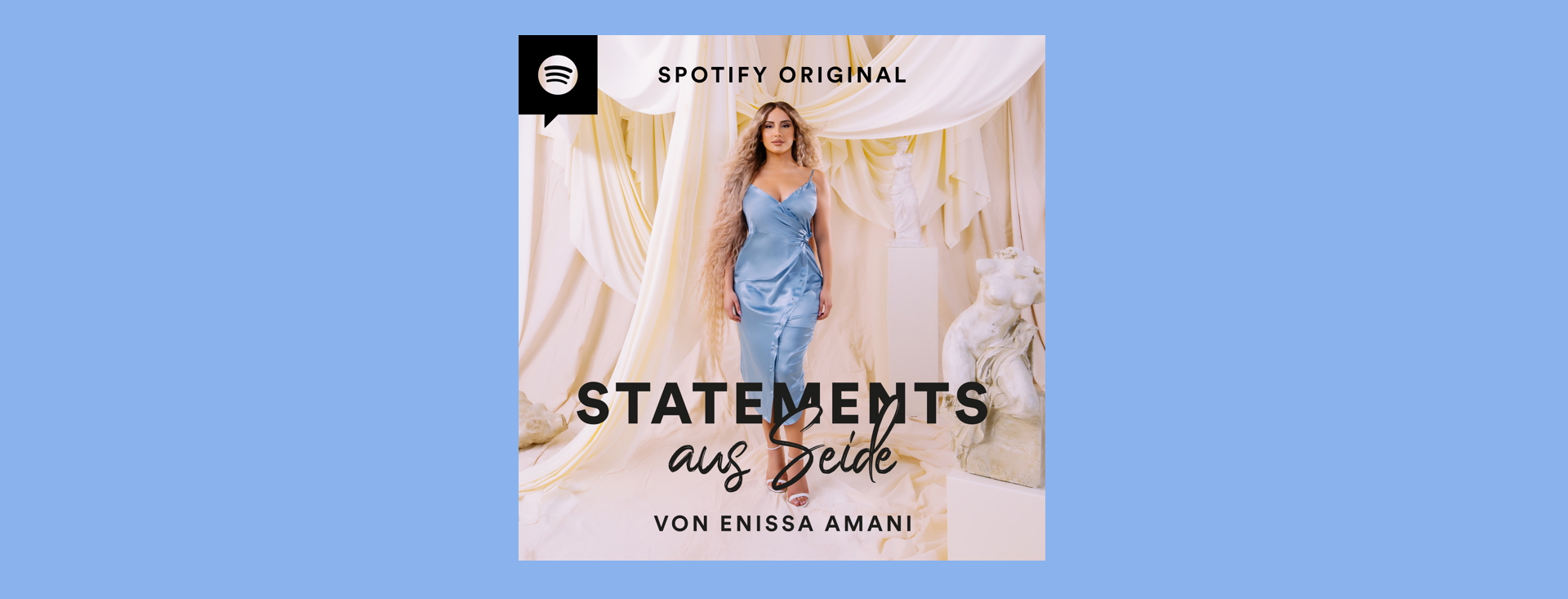
Enissa Amani Explores Culture and Comedy in Her New Spotify Original Podcast

Enissa Amani is a chameleon onstage. The Iranian-born German comedian prides herself on the ability to bend and transform her material for any audience based on location, language, and culture. Now she’s also working this flexibility into a new medium for her debut German-language Spotify Original Podcast, Statements aus Seide (“Statements Made of Silk”). Like her on-stage comedy, Enissa’s new show will cover a range of topics from feminism to fashion. “I want to share the moments which all mankind has in common: the pain, the fears, the desires,” says Enissa.

As the first German comedian with a stand-up special on Netflix, she’s honed her craft—expect plenty of laughs. But in Statements aus Seide, Enissa will also share thoughtful deliberations on her life growing up as an Iranian refugee in Germany, her work as a social justice advocate, and whatever else is on her mind—all in 30- to 60-minute episodes.

Enissa spoke with For the Record about performing in different languages, her activism work, and creating her own podcast.

What can fans of your comedy stand-up expect from the podcast?

In my podcast I’ll touch upon all the issues I have not yet touched upon onstage. I’ve told my stories a few times when I was a guest on other podcasts, and the feedback was tremendous. People who hadn’t even followed my work told me that my point of view was extremely helpful to them.

Over the years, I wrote down every story of my family, my friends, and book quotes which inspired me. Those words can offer people a real way out of hopeless moments. This will be a funny podcast—an honest hour to let you begin or end your day with a smile. 

How has your background as an Iranian immigrant informed your comedy?

Being an Iranian refugee child and being trilingual helps me to approach people on different cultural levels. And every time I perform, I am a different kind of Enissa. The Berlin Show Enissa is a much rougher comic than the LA, Hollywood, Laugh Factory Enissa, who is more into the German-Persian Background Stories. The New York Enissa is much cooler than the Farsi show in Vienna, where Iranians are just starting to get into stand-up.

I get to taste all these different moments of laughter and try very different stand-up materials. 

As refugees, or “first-generation Germans,” we are torn apart between identities, but every kind of conflict always helps with comedy. 

What’s your life been like since your Netflix special premiered?

My specials changed my work. I started playing shows in three languages. I had the honor to have stage time at the Laugh Factory in LA, and the Improv, the Gotham, and the Comedy Cellar in New York. All stages I had never dreamed I’d be able to perform in a language which is not my first. I also play Farsi shows in Germany, Austria, and the UK. 

You’re not afraid to share your opinions on issues like racism and inequality. How did comedy become an outlet for you to share these thoughts? 

I’m really surprised that my activism for human rights and against racism here in Germany kind of got bigger than my work as a comedian. In the beginning, everybody told me to “stick with comedy” whenever I was outspoken about problems in our society. Now all my statements go viral with 12,000 comments sometimes, and everybody asks me to seriously get into politics. There is this running gag of my followers calling me “the chancellor.”

I love the fact that everything that your heart tells you to do—if you have the courage to follow that voice—becomes your real vocation or even destiny. 

What would you like people to take away from your podcast? 

I’m going to share my most intimate stories, experiences, and inspirations on my podcast because I know it will help through dark times. Every smile you can inspire is a smile you‘ll create for the world.

Ready to get to know a new Enissa? Check out the first of 13 episodes of ‘Statements aus Seide’ below.

Head of Songwriter and Publishing Relations Jules Parker Explains How Spotify Is Bringing Behind-the-Scenes Creators Into the Spotlight

Recently, we announced the release of a beta version of songwriter pages and “Written By” playlists, which helps fans, collaborators, and industry partners dive deeper into some of the creators behind their favorite songs. For songwriters, it serves as a new way to share the songs they’ve written on Spotify and get discovered by potential collaborators and fans. As part of that beta, today, we’re unveiling additional pages and playlists from a wide array of incredible songwriters. 

Jules Parker, Spotify’s Head of Songwriter and Publishing Relations, is heading up a new team across Los Angeles, New York, Atlanta, and London focused on expanding our support of songwriters and publishers all over the world. A former songwriter as well as the owner of a songwriter and artist management company, Jules not only understands the tools used in music creation, but he also appreciates the difficulty of the job—and why it’s so important to recognize the work put in behind the scenes. 

We spoke to Jules about his team’s work. Read on to learn more about the world of music publishing and how Spotify’s new songwriter pages are helping connect songwriters, publishers, artists, and fans.

Say you’re a songwriter who’s penned a tune and needs someone to sing it. What’s the process for approaching an artist or getting one to find you, and how does Spotify play into that?

There’s a long-standing perception of a solo songwriter pitching their songs to other people. This can happen—and of course, many artists write and record their own songs—but the reality today is that you generally get in a room with an artist and write a song together, then and there. (Or alternatively, you’ll swap tracks and toplines over email and write the song virtually—all too common these days). So it’s all about networking and collaborating—and that’s where publishers come in. A publisher looks to connect artists with songwriters and other creative opportunities. Plus, these days there are even more opportunities for songwriters to transition to also be successful recording artists—like Julia Michaels, Benny Blanco, and more.

At Spotify, we’re now giving publishers and writers more ways to help unlock opportunities via analytic and songwriter tools. These will, long term, help support both up-and-coming and established writers because they’ll have more information, leading to better connections and networks. Through our Publishing Analytics, publishers and teams can access next-day song and writer stats based on accurate data, and through our songwriting camps and free-to-use studio spaces, writers and artists can pair up to create something new.

Can you tell us a little more about the tools and opportunities Spotify has for songwriters and publishers?

First, we created a home for songwriters with the songwriter page on Spotify. It’s a pilot program—just the start of how we can help songwriters further build their identity and showcase what they’ve done. We’ve also created Written By playlists, which are featured on these pages. We’re working on rolling them out to more and more writers—and just unveiled some new ones today—but they’re a great way for fans to get to know the work of a specific songwriter.

We’ve also been hosting songwriting camps for artists around playlists, genres, or specific artist projects. We’ve done ones around Who We Be, The Most Beautiful Songs in the World, and Butter. Through these camps, we’re providing the opportunity for collaboration in creating great songs that may appear on our flagship playlists or perhaps earn a Grammy nomination. (Here’s looking at Grammy-winning “a lot” by 21 Savage, which was created at a Spotify songwriting camp run by our Atlanta-based Head of Songwriter Relations Paris Kirk).

Finally, we have writing studios that songwriters or publishers can book in Los Angeles, Atlanta, Nashville, Toronto, and London free of charge. We invite songwriters to use these as a place to collaborate and create songs. We’re constantly evolving this project and expanding access to it, and we hope to set up new locations in the future. 

Why is Spotify investing in these projects and tools? 

Supporting songwriters and publishers helps them be able to do what they do best: create and promote the music you love. Your favorite songs begin with songwriters, so the more opportunities we can provide, the better we can help them create that next hit, and the more reasons you have to stream their music. 

Songwriters and publishers are vital parts of the music industry, though what they do is less publicly known, so they often don’t have the visibility they deserve. But we can help with that, because Spotify has a unique ability to drive discovery. Since we began publicly displaying song credits on Spotify in 2018, we’ve seen a 60% increase in how often labels and distributors credit songwriters on their new releases, allowing artists and fans to dig deeper and recognize the work behind the scenes. Now, with the addition of more detail from publishers, we’ve been able to go further in recognizing those behind the songs. 

With the expansion of songwriter pages we’re continuing to evolve how music is discovered, appreciated, and enjoyed by the world. Supporting publishers and songwriters goes hand in hand with artist discovery. People know who an artist is. They don’t know who the writers are, necessarily. If we can help make those connections, we help people discover new music and open up potential career opportunities for the songwriter. It all ties back to our mission of helping creators live off their work.

I was actually just listening to Mark Ronson’s Written By playlist and I discovered new tracks that I didn’t know he had written. I then discovered new artists because of a songwriter I love. It goes both ways. We’re exposing those connections that are not always visible but so important.

These new features enable fans to discover new things about the music they love. What are one or two of your favorite songwriting fun facts?

I think that a lot of people know that Prince wrote “Nothing Compares 2 U,” but loads of people don’t know that he also wrote “Manic Monday.”

There’s also a great Revisionist History podcast episode around the song “Hallelujah.” It was written by Leonard Cohen but only became the standard for ballads more recently, after people like Jeff Buckley started recording it in different ways. Now everyone knows it—thanks to the covers—which shows how the versions of it can take it in completely different directions.

Discover songwriters for yourself starting with Shungudzo Kuyimba’s Written By playlist

6 Questions (and Answers) with Claudius Boller, Managing Director, Spotify Middle East and Africa

How do we build the future of the music industry in the Middle East and Africa? A few years ago, that was the question Claudius Boller was asking himself. He had moved to Dubai from Germany in 2007 on behalf of Arvato-Bertelsmann to begin to build up the first digital music services in the region.

Later, Claudius joined Universal Music to set up their operation in the Middle East and North Africa and started digging into the puzzle of digital music. Along the way, he gleaned the expertise needed to promote and advance artists in the unique and vibrant region. From there, he joined Spotify, and for the past two and a half years he has served as Spotify’s Managing Director for MEA, covering the Middle East, North Africa and South Africa. 

Now a year into Spotify’s launch in 13 new markets in the region, Claudius is continuing to build the Middle Eastern and African market. And he’s as excited as ever. “We bring new things to people and at a scale that is unheard of. The Middle East and Africa have some of the youngest, fastest-growing populations in the world. It’s truly fascinating where the journey can take us.”

Read on for more of our conversation.

About a year ago, Spotify launched in 13 markets in the Middle East and North Africa. Only a few months prior to that was Spotify’s launch in South Africa. What are some of the unique factors that went into the launch, and some of the things that you brought in with your knowledge from being in the region for over a decade?

When it comes to launching a music service, there’s thousands of factors that play a role. I think it was instrumental to have the background of working at a label, since we have licensed and learned from other music services prior to Spotify entering the markets. We had to be overly creative to develop the much-needed digital monetization for creators in a region that had not developed it yet. 

Spotify’s ambition is really to bring music to everyone, and we need to be 100% locally relevant with our consumer offering. So we also made Spotify available in Arabic. This was quite tricky since we had to mirror the interfaces and Arabic language right to left. 

But what’s also unique in the region is that we are facing a highly diverse landscape. Though the Arabic language unites some of the countries, we have lots of very different dialects, cultures, and habits. And then in countries like Morocco, Tunisia, and Algeria, French is one of the major languages. 

What are some markers of success you’ve already seen across your markets in the Middle East and Africa? 

We created the Arab Hub and Afro Hub and made them available globally—kind of the gateway for local music to be discovered by our truly global audience on Spotify. Today we have about 248 million active users around the world, and that is changing the game for a lot of artists and labels as they reach new audiences.

Additionally, the introduction of Spotify Lite to the market ensures that music fans can access music in regions where connections, expensive data plans, and a wider penetration of older mobile phones are more common. Spotify Lite demonstrates our dedication to localizing technology and innovation for each region, including the Middle East and Africa.

The big game changer is also the increase in use of Spotify for Artists, where artists can see and learn about their audience for the first time. And, they’re surprised that they have huge fan bases already, maybe in the Americas or in Europe that they naturally wouldn’t be aware of—last month, for example, we put Amr Diab on a billboard in Times Square, the first-ever Arabic music artist to be featured there. We’re elevating local artists to the world stage. 

What are some other ways Spotify is helping artists in the region?

We offer educational classes where we bring in between five and 100 artists, distributors, managers, producers, and songwriters to talk about digital music distribution. How can they reach a global audience? How can they use Spotify’s data to do partnerships, negotiate with labels? We see firsthand how this is changing lives and careers. There is such a big difference here of what we can do with the creative community and so much potential.

What international music is being streamed in the region? And what are the hottest trends or genres coming out of your market?

Users in Saudi Arabia are exploring music from all across the world, like K-Pop. When BTS came to Saudi Arabia, it was a massive success.

But it also works the other way around. Egyptian Mahraganat is being played elsewhere, Maghreb (northern African) hip-hop is big in France—and trap is booming in both MENA and Latin America. We have music coming from the Levant and Egypt trending in Brazil. We have AmaPiano, the most relevant house music genre in South Africa—something I’m really excited about—getting big outside the country and being played in other regions across the world. 

What were some surprising occurrences that came about after launch in the Middle Eastern and North African market?

The Gulf countries love technology. So they’re using their smart speakers. They’re using our  in-car integrations day in and day out. Usage on smartphones, smart watches is extremely high. This is really what Spotify stands for, right? For true ubiquity.

One big success story in particular is our PlayStation partnership, which we rolled out globally. The gaming community in the Gulf countries, especially in Saudi Arabia, is one of the biggest. Our PlayStation integration adds to the experience as they can listen to our playlists—especially those with traditional Khaleeji music—as well as Iraqi music. They also create their own playlists to match their gaming experience. 

Finally, if we were to take a look at your “recently played,” what would we see?

Tons of kid songs, because my daughter figured out how to use the smart speakers, but it’s so much fun. Personally, I’m very much into ’90s rock and hip-hop. But what I really love at the moment is AmaPiano. It’s so fascinating. Everything about AmaPiano is new, it’s edgy. It’s engaging. It’s crisp, and it has a lot of energy. So I love the AmaPiano trend, and I think we can all stay tuned to see what it does globally.

Take a listen to Yalla for more of the sounds coming out of the Middle East and North Africa. 

How the Story Pirates Team Uses Kids’ Imaginations to Create Audio Magic

What happens when you take story ideas straight from a child’s imagination and put them in the hands of some equally creative, fun-loving, musically inclined adults? You get Story Pirates—a children’s media company turned podcast with stories by kids, for kids.

According to creative director Lee Overtree and CEO Benjamin Salka (a.k.a. Jamie), Story Pirates started off performing children-inspired musicals in schools and theaters as a live touring group in 2004 and eventually evolved into a radio show, bringing heartwarming and engaging stories to even more listeners. More recently, the company transitioned into a podcast that has spawned several music albums.

So how does it work? Youngsters from all over the world submit their ideas to the Story Pirates website, then the creative team (comprised of world-class actors, comedians, improvisors, and musicians) selects and adapts them into podcast episodes filled with sketch comedy and musical theater. Episodes even have special celebrity guests each week.

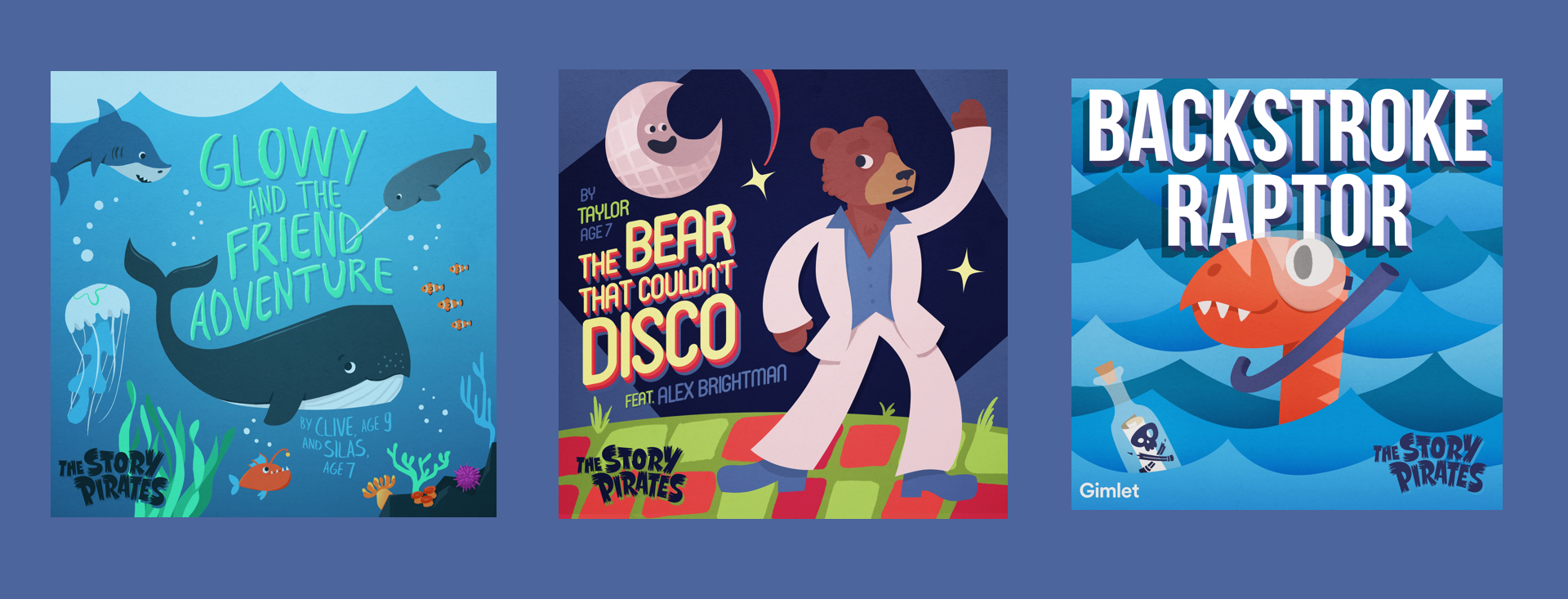
Kids (and parents!) love the original songs sprinkled throughout the show. So, to give fans more of what they love, Story Pirates released two albums—Backstroke Raptor and Nothing Is Impossible—which take the best songs and remix them into standalone versions that are easy to find and play in album format on Spotify.

We sat down with Lee and Jamie to talk about what makes the Story Pirates podcast and albums such a beloved phenomenon.

What do you think it is about podcasts that makes them a great storytelling medium for kids?

Lee: Well, audio amplifies imagination, right? It allows the listener to engage in a way that a visual medium doesn’t. You have to be involved, and for kids who are eager to live in a participatory world, a medium like podcasting is very natural for them.

What’s the most surprising thing you’ve learned since embarking on this podcast and album journey?

Jamie: The thing that surprised me most is just how authentically people are responding to what we’re putting out there. Story Pirates has been a slow, steady build—the live show started in 2004. But the last couple of years have been astronomical in terms of the growth. We hear from people who drove eight hours to see us in person or even flew in from Australia. I think it’s because families are responding to what’s different about what we’re doing. I think it feels more playful, more connected, and more joyful than what they expected.

How do you differentiate between the albums and podcast?

Jamie: One of the things people love so much about our podcast is the music. But the podcast runs anywhere between 22 minutes and a half hour, and the songs are wrapped up in the whole show. So if you get obsessed [with a song], you have to rewind and fast-forward to find your favorite part, whereas with the album, you just get right to it.

Lee: The albums that we put out through Gimlet are the best songs from the podcast remixed and remastered. So most of the songs on the album are ones you’ve heard in a different form on the podcast. For example, Lin-Manuel Miranda wasn’t on the podcast version of “The Wizard Who Could Just Go Poof,” but he was on the album version.

Speaking of Lin-Manuel, who are some of the other guests that you’ve had on the show, and who are your favorites that you’ve worked with so far?

Lee: We’ve been really lucky, and it’s sort of gone from us reaching out to our contacts in the comedy community to people reaching out to ask to be on the show because their kids listen. We’ve had lots of great people, like John Oliver, Claire Danes, Dax Shephard, and David Schwimmer. And we have some more really exciting guests coming soon.

Introducing Spotify Kids, A New Standalone App for the Next Generation of Listeners

Spotify is committed to bringing audio content such as music and stories to more people in more ways–including the next generation of listeners. That’s why we decided to launch a fun standalone app designed with safety in mind specifically for kids and families.*


We sat down with Alex Norström, Spotify’s Chief Premium Business Officer, to learn a little more about the app. 

1. Why create a Spotify Kids app now? What can users look forward to?

We know that families love listening together—whether it’s while driving in the car or cooking dinner together in the kitchen. But we also know that family members love to listen on their own too. That’s why we’re so excited to welcome the next generation of listeners—kids—into the Family Plan experience. 

Kids consuming audio content, such as music and stories, isn’t a new phenomenon—in fact, they love it. But most audio experiences were built with adults in mind—meaning they’re not simple, easy, or fun for young kids to use. 

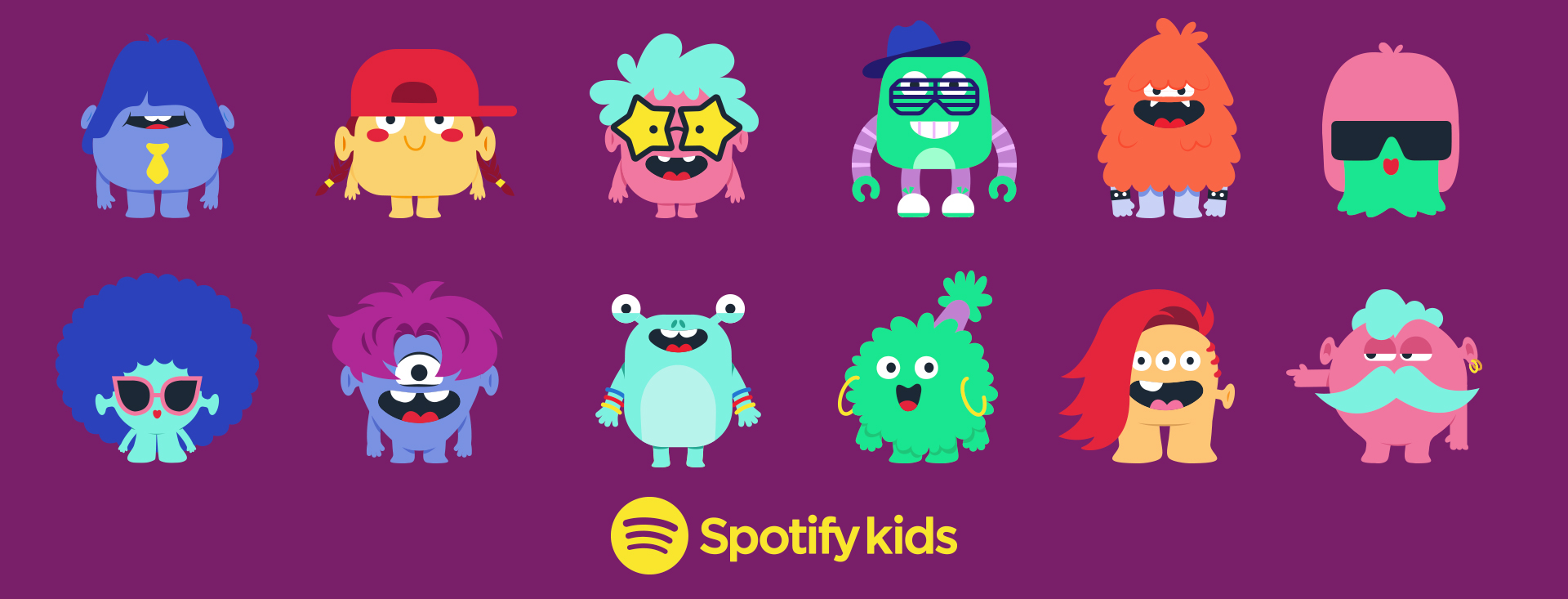
Spotify Kids was born out of the desire to create a playground of sound just for kids—to build a place where younger kids can explore their favorite music and stories in a fun environment. The content is ad-free and hand-picked by a team of editors, and the experience is bursting with color. Our visuals help guide young minds through the app with simple navigation and scaled-back text. Before setting out to explore, each kid can also select a custom avatar and color theme to personalize their experience. 

Spotify Kids is a composite of playlists, which makes it easy for kids to find music and stories from their favorite movies and TV shows or hit plays on a playlist to sing along to during their favorite activity—or their least favorite chore.  

We’re thrilled to beta launch in Ireland and look forward to introducing Spotify Kids in all markets that have Premium Family in the coming months. As we evolve the app experience, we’ll roll out enhanced parental settings and controls for even more customization in an effort to give parents peace of mind. 

2. How is the Spotify Kids app different from the original app? Any unique content?

Spotify Kids is a standalone app available exclusively for Premium Family subscribers and intended for kids ages 3+. The content within Kids is hand-picked by a team of editors, who have nearly 100 years of combined experience curating content for kids. They come from some of the most well-respected brands in this space, including Nickelodeon, Disney, Discovery Kids, and Universal Pictures, as well as Public Service in Sweden and BookBeat, which is a family- and kids-oriented audio streaming service.  

Beyond the content, the entire Spotify Kids user experience looks and feels different from the Spotify app. And that’s intentional. It’s built for kids, with their specific cognitive skills in mind, and exudes a fun, familiar, playful, and bright atmosphere. This look and feel also varies by age group—for example, the artwork for younger kids is softer and character-based, while content for older kids is more realistic and detailed. 

3. Why launch in beta? What are you hoping to learn? 

Having a standalone app specifically for younger kids is a new space for Spotify, and we understand the sensitivities around content for children. We are being very deliberate in our launch approach. We’ve started with a beta launch in Ireland, knowing that this initial roll-out phase will yield many learnings from parents, caregivers and other experts as they begin to interact with the app.

As we evolve the Spotify Kids experience over time, we plan to enhance parental control features to allow for even more customization. We’ll also bring our audio expertise to the table with listening experiences that go beyond music—like more stories and audiobooks and eventually podcasts.

4. As you were building the app, did you tap any external resources? Say, consult with any parent organizations or conduct focus groups?

While launching this kids app is an exciting moment for Spotify, creating it was not a task we took lightly. We knew the importance of understanding parents’ needs and making sure they would have peace of mind about the content their kids are consuming. 

Spotify has spent more than two years learning about this space, and we’ll continue to learn as people begin to interact with the app. We have gathered expert insight from a number of organizations, including the National Children’s Museum in Washington, D.C.,  and conducted our own studies with parents around the world and tapped into our Employee Resource Groups here at Spotify.

Spotify Kids is available starting today in Ireland. Ready to get started? Spotify Premium Family master account holders can simply download Kids from the App Store or Google Play, then sign in to their regular Spotify account. (If you’re new to Spotify, you’ll need to sign up for Premium Family before signing in to Spotify Kids.)

For those outside of Ireland, Kids will be rolling out to all markets that currently have Premium Family. Be sure to check back here for more or check out spotify.com/ie/kids.

*Update March 17, 2020: Spotify Kids has also rolled out in Argentina, Brazil, and Mexico.

Update February 11, 2020: Spotify Kids has also rolled out in the UK and Australia

Update November 27, 2019: Spotify Kids has also rolled out in Denmark, Sweden, and New Zealand.

Update May 12, 2020: Spotify Kids has also rolled out in Germany and Japan.