



How Summer’s Biggest Moments Shaped Listening Trends on Spotify

As Eurovision fans gear up to celebrate the 70th anniversary of the iconic song contest, Spotify is diving into the data to explore how listeners engage with the songs and artists that have come out of the competition.
Year after year, Eurovision remains a beloved cultural moment. In the past 12 months alone, listeners in Europe have created more than 1.2 million playlists inspired by the contest and streamed its song entries more than 1.5 billion times.
This year’s event unfolds throughout May in Vienna—the home city of 2025’s winner, JJ—with the finals set for Saturday, May 16.
Read on for Eurovision’s most-streamed entries and contestants, plus the musical formula that could hold the key to winning it all.
“Arcade” by Dutch artist Duncan Laurence is the most popular Eurovision song entry, with more than 1.5 billion streams globally. Claiming the number two spot is “SNAP” by Armenia’s Rosa Linn—a Billions Club hit that placed 20th in the competition but captured the hearts of fans around the world.
And that’s not the only non-winning song to make waves. “Deslocado” by Portugal’s NAPA placed 21st in 2025, but after sparking a social media trend, it became the most-streamed track from that year’s contest.
Most-streamed entries:
Eurovision has launched the careers of some of music’s biggest names. Representing Sweden in 1974, ABBA has amassed over 12.5 billion streams globally, making them the most-streamed act to come out of the competition.
Most-streamed contestants:
Spotify data also highlights differences in Eurovision favorites across age groups.
Gen Z listeners are hitting play again and again on Alexander Rybak’s “Fairytale,” Napa’s “Descolado, ”and Joker Out’s “Carpe Diem.”
Meanwhile, older listeners lean toward Duncan Laurence’s “Arcade,” Rosa Linn’s “SNAP,” and Loreen’s “Tattoo.”
While there’s no exact formula for a winning Eurovision song, that unpredictability is part of what keeps bringing fans back. However, we looked across every Eurovision winner to date and found a few patterns that might explain their magic.
According to our data, the most common tempo for a Eurovision winning entry is 127 beats per minute (BPM)—striking a sweet spot between high-energy danceability and emotional groove.
Meanwhile, the key to success is most often F major, paired with a classic 4/4 time signature.
By these measures, Ireland’s 1987 winner “Hold Me Now” by Johnny Logan comes the closest to the “perfect” Eurovision song, meeting nearly all the criteria, with a tempo landing one beat shy at 126 BPM.
Check out the Official Eurovision Song Contest 2026 playlist on Spotify.

All data tells a story, and in our case, that story is written by you. To celebrate 20 years of Spotify, we’re sharing bite‑sized moments that capture how the world listens, discovers, and connects.
Check back each day as we build out the full story.

“Blinding Lights” by The Weeknd is the most streamed song of all time on Spotify.
For the first time, we’ve unveiled the most streamed artists, albums, songs, podcasts, and audiobooks to date. Check out the full lists here.

Since the beginning, fans have streamed over 1.2 trillion hours of audio on Spotify. That’s enough time for Artemis II to travel around the Moon and back over 5 billion times.

Do listening habits fall along generational lines? We’ll let your streaming be the judge of that…

One word to describe Spotify listeners over the years? Chill.

Out of every word in the world, one four-letter-word has stood the test of time for Spotify fans: “Love” is the most searched word on Spotify across all languages, with 4.3 billion searches since December 2018.
Note: December 2018 is when Spotify began counting search data.

The greatest Christmas gift of all? 11 billion streams of music.
We’ve had a lot of big music streaming days over the years, but one stands out: December 24, 2025 was the biggest ever day for global music streams, with over 11B streams.

Let’s take it back to 2016. Back to Drake, the Mannequin challenge, and the first year for any song to hit 1 billion streams on Spotify…
How it started:
How it’s going:

Fleetwood Mac’s Rumours (1977) has over 8.3 billion all-time streams on Spotify, 49 years after its original release. It’s also the oldest album in Spotify’s all-time top 100 albums.
Michael Jackson’s Thriller (1982) and Nirvana’s Nevermind (1991) follow in second and third place.

From singing in the shower to surviving the workday, Spotify listeners have built playlists for just about every moment of life.
Here’s which tracks have been added the most to daily routine playlists:

Through the good times and the bad, the break-ups and the make-ups, these tracks on Spotify have been there for the fans throughout it all:

The treasured art form of playlisting on Spotify goes all the way back to 2008—with millions of fans expressing themselves through music for the past two decades.
Since then, Spotify listeners have created over 9.67 billion playlists across all time.

According to a generation of Spotify listeners, July is the happiest month for music and January is the saddest.
Wondering what else changes with the seasons?

Creedence Clearwater Revival’s “Fortunate Son” (1969) peaked on Spotify in 2024, 55 years after release.
Here are some of the other biggest comeback stories in Spotify history—songs that found their second wind on Spotify decades after their initial release:

Renegades: Born in the USA is one of the fastest podcast shows to go global on Spotify, hitting global scale just a single day after release (February 22, 2021).
The Joe Rogan Experience is the most binge-listened podcast on Spotify—2.7 million people have listened to 20 or more episodes in a single calendar month.

Bad Bunny and J Balvin—two of Spotify’s most-streamed artists of all time—have helped make music performed in Spanish grow more than any other language in Spotify history.

If music was a passport, Spotify listeners would have traveled to nearly every country in the world. In 2026, over half of all Spotify streams came from outside an artist’s home country.
Over the past decade, Afrobeats has played a large role in that—becoming one of the fastest growing genres on Spotify outside its home countries. The genre saw a 349x spike between 2014 and 2025.
In 2023, “Calm Down (with Selena Gomez)” by Rema became the first Nigerian artist-led Afrobeats song to reach 1 billion streams on Spotify.

Shout out to the stans who made K-Pop the fastest growing genre in Spotify history—carrying it around the world and back. Fans took K-Pop from the No. 579 genre in 2008 to the top 50 in 2026—one of the most dramatic genre rises in Spotify history.
In 2008, almost no one outside South Korea had heard K-Pop on Spotify. Now, it’s a global phenomenon with over 61 billion streams from listeners outside South Korea in 2025 alone.

Spotify’s viral daylist feature made its way into listeners’ hearts in 2023 with quirky descriptors that update based on time of day. Since then, listeners have streamed the personalized playlist for over 1.17 billion hours. Some of the most popular descriptors of all time include:

From 80s comebacks to string quartet covers, some of the most unforgettable TV moments haven’t just lived on our screens— they’ve become the soundtracks to our lives.

One thing about Spotify listeners? They like to have a good time.
Over the decades, they’ve streamed one type of playlist more than any other: celebration and party playlists.
When it comes to podcasts, it’s all about the laughs. Comedy is the top-streamed podcast category of all time.
As for audiobooks, storytelling is king. Fiction & Literature is the top-streamed audiobook category of all time.
To explore more from the anniversary celebration, visit our Spotify 20 hub.
When Spotify launched in Nigeria in February 2021, the very first song a user streamed was Shiga Lin’s “到此為止,” a Cantopop ballad from Hong Kong. It was a fitting start for what the next five years would look like: borderless, discovery-driven listening.
Today, we’re celebrating this five-year milestone by looking at the data that tells the story of Nigeria’s vibrant soundscape. Since launch, we’ve seen an average listening increase of over 163% year-over-year. Fueling this trend is a young, digitally native audience (the average listener is just 26) that’s shaping culture in real time. And their passion is clear: Nigerian users have created more than 25 million playlists to date, and in 2025 alone, they clocked more than 1.4 billion hours of listening time.

As more listeners tune in, more artists are finding a home on our platform. The number of Nigerian artists on Spotify is up 158% since 2021, reflecting an expanding pipeline of local creators reaching audiences at home and around the world.
At the heart of this growth is Afrobeats, which has scaled by 5,022% since 2021 and helped propel a new generation of stars to the top of the charts. Over the last five years, the most-streamed artists in Nigeria have been:
Asake, in particular, has captured the country’s attention, with four of the top 10 most-streamed songs, including the number one track, “Remember.”
Beyond Afrobeats, Nigerians are embracing a diverse mix of sounds. Here’s a look at some of the fastest-growing genres:
Listeners are also embracing Nigerian indigenous languages more than ever, with streams growing 554% in 2024 alone, showing a deep connection to local-language storytelling.
The listening boom has extended beyond music. Podcast consumption is on the rise, with Nigerians streaming almost 60 million hours since launch and embracing a new wave of audio storytelling.
At Spotify, we’re proud to provide a platform where Nigerian artists, creators, and fans can connect and share their culture with the world. We can’t wait to see where the sound goes next.
Celebrate five years of Spotify in Nigeria by streaming the most-played tracks in the country today.

Every year, Spotify Wrapped offers a personalized look back at the audio that defined your year. It’s a snapshot of your listening habits, designed to tell the story of your year in sound. And sometimes, that story can hold a few surprises.
There are many valid ways to rank listening habits, and at Spotify, our data scientists work hard to land on the methods that best reflect what resonates with our users. We spend the entire year experimenting with methodologies, listening to user feedback, and internally testing the experience ourselves to build conviction that Wrapped feels as personal as possible.
If your top song wasn’t what you expected, or you’re wondering why a certain artist landed at number one, here’s a behind-the-scenes look at how the data is defined and calculated.
Even with the same underlying data, rankings can be created in many different ways. For Wrapped, we choose the method that we believe best reflects what users care most about. Each data story uses the metric that makes the most sense for that specific narrative, which is why some stories highlight total streams while others feature minutes listened.
Your Wrapped is designed to be a reflection of your taste, not a historical record of every second you streamed. To achieve this, we have a few key rules:
If you’re looking to shape what appears in your next Wrapped, using Private Mode for certain listening sessions and using the “exclude from Taste Profile” feature is the best way to do it.
Sometimes, the biggest surprise in our data is our own memory. The year is long, and it’s easy to forget that album you had on repeat back in February. Artists with large catalogs can also rack up a high stream count even if you only listened to each song a few times.
And, of course, there’s always the possibility of a shared device. If you and a family member, partner, or roommate all use a smart speaker or home system, their listening habits might have found their way into your results.
At the end of the day, Wrapped is a celebration of your year in listening, and we hope this look at the data helps you connect with your results in a new way.
Explore your personalized 2025 Wrapped and learn more about this year’s campaign and experience on our 2025 Wrapped hub.

As summer winds down and backpacks come out, Gen Z isn’t just heading back to class, they’re shaping the soundtrack for a whole new season.
For Back to School 2025, Spotify has compiled a snapshot of the daily rituals and shared listening moments that define this reset. Powered by new listening data and anchored in past trends, it reveals how Gen Z students and their families use Spotify as a daily companion to reconnect and refocus—and how brands can be part of the moment in meaningful ways.
As routines shift, mornings become high-attention listening windows. Between 7 a.m. and 9 a.m., Gen Z students on Spotify power up with music and podcasts that turn commutes and pre-class moments into part of their soundtrack. For brands, these ritual-driven spikes offer valuable opportunities to tap in with multiformat campaigns that blend sight and sound.

Back-to-school season isn’t just a retail moment, it’s also a cultural and community reset. Gen Z leans on study playlists and collaborative features like Jam to concentrate and connect with friends.
As excitement builds for the annual Eurovision Song Contest, Spotify data offers a fascinating glimpse into the songs and artists capturing the world’s attention. Sweden—the most successful country in Eurovision history with seven victories—is once again in the spotlight, with the dynamic trio KAJ and their song “Bara Bada Bastu” emerging as the current 2025 frontrunners.
With the semifinals beginning May 13 in Basel, Switzerland, the streaming data* provides an early indication of which entries are resonating with fans. “Bara Bada Bastu” has clearly struck a chord, generating twice as many streams as its closest competitor.
Beyond the top contenders, the data also reveals the diverse range of musical styles and languages captivating Eurovision fans. Entries from Italy, the Netherlands, San Marino, and Estonia round out the top 5, showcasing the pan-European appeal of the competition.
Eurovision is more than a song contest—it’s a powerful platform for European artists to reach a global audience. On average, past winners of the Eurovision Song Contest have seen their Spotify streams grow by more than 1,500% in the year following their winning performance.
Following Nemo’s 2024 triumph with “The Code,” their streams have skyrocketed by more than 1,700% in the past year. Austrian entrant Conchita Wurst, who won Eurovision in 2014 with “Rise Like a Phoenix,” experienced a staggering stream growth of more than 6,000% in the year following their victory.
Will KAJ maintain their Eurovision 2025 lead, or will another entry emerge as the fan favorite? Only time will tell, but one thing is certain: Europe’s biggest music event continues to shape the global music landscape.
Stream Spotify’s Eurovision 2025 playlist to hear all of this year’s entries.
*Global streams between April 1–May 4, 2025.
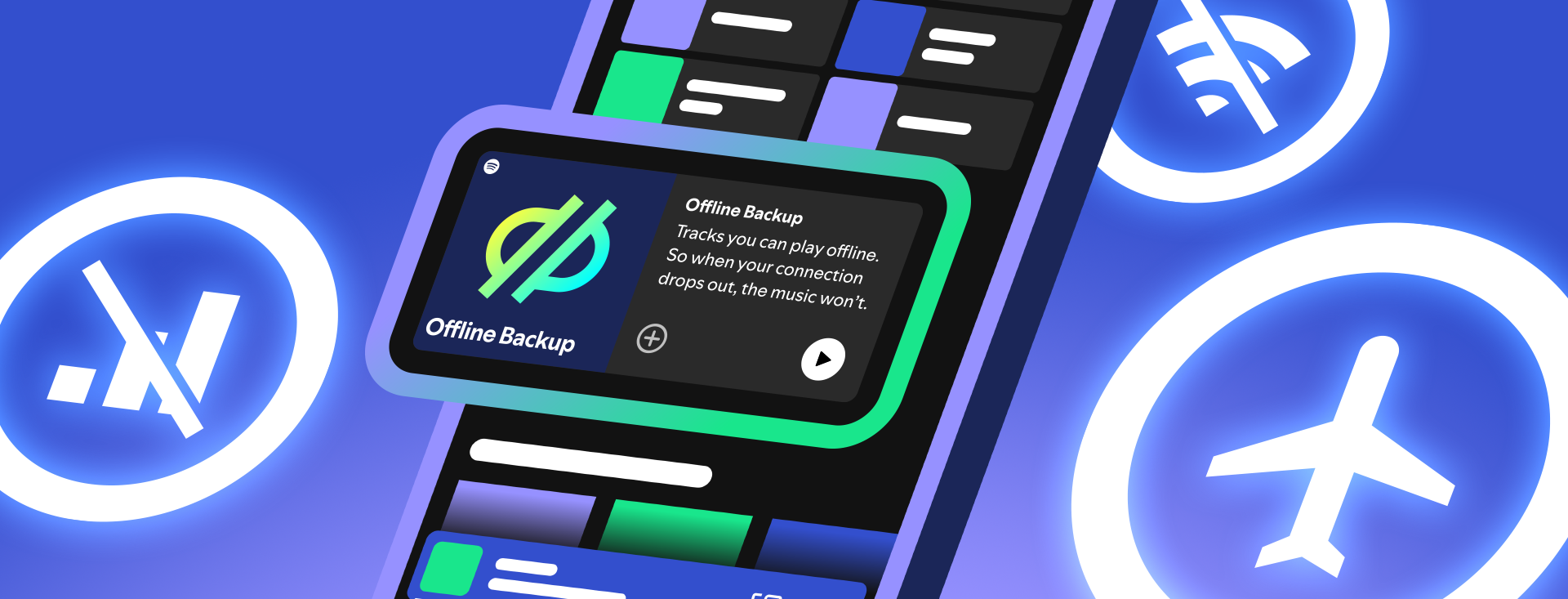
Have you ever hopped on a plane only to realize you forgot to download your favorite playlist? Are you looking for ways to save data with your data plan while still listening to your favorite artists? When the need for music is high and you find yourself offline, Spotify has you covered. Beginning today, we’re launching Offline Backup, bringing Premium users another way to keep listening to music offline, no downloads required.
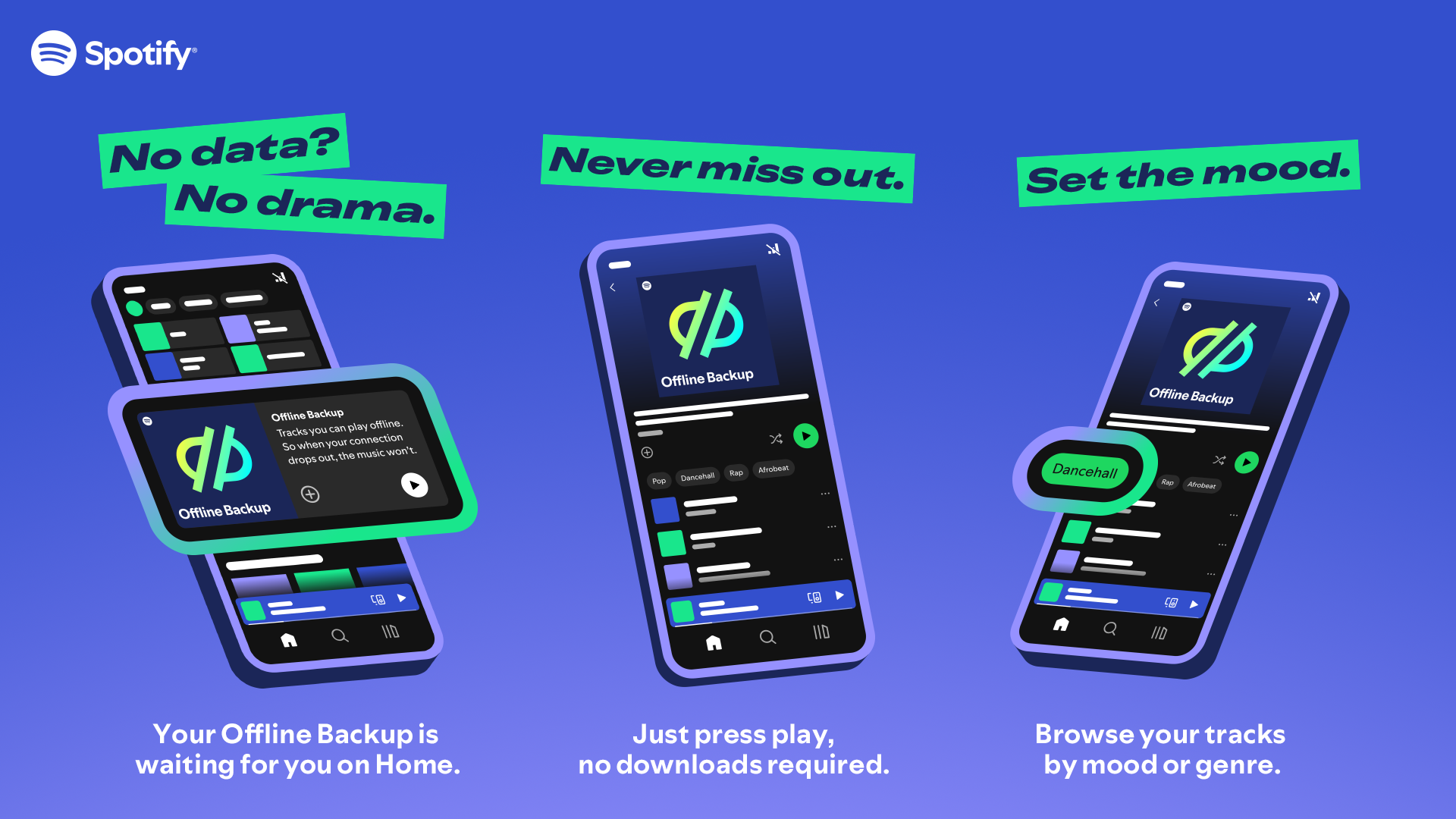
Offline Backup takes your queued and recently streamed tracks and creates one easy-to-access playlist that is unique to you. To do this, we include tracks already stored on your device as part of your regular listening on Spotify (also known as cache). If you’re looking for a certain vibe, you can filter and sort songs within the playlist by artist, mood, and even genre—and Offline Backup evolves as you continue to listen, so you’ll always have something new.
For the times that you forget to download your favorite audio, Offline Backup gives you another way to access music without using any extra data or storage.
After testing Offline Backup with users last year and receiving positive feedback, we’re excited to offer this to Premium users globally. Offline Backup will begin rolling out on Android and iOS this week, including Android Auto and Apple CarPlay.
Our goal is to create a seamless listening experience for users, no matter where they are or how they choose to listen.
Get even more out of your listening experience with 5 Spotify Premium Hacks You Need To Know.
As one of the most powerful forms of human expression today, video is becoming core to the global Spotify experience. We have been steadily investing in the format to connect creators and fans in new, deeper ways on our platform, from the recent launch of music videos in beta to testing video-based learning courses in the U.K. But the medium has seen the most growth in the podcasting space, where video is truly changing the game—in fact, more than 170 million users have watched a video podcast on Spotify.
Spotify introduced video podcasts for a select number of shows in 2020, and we’ve since made the format available for creators in nearly every market. We recently made it possible for non-hosted podcast creators to upload video to Spotify for the first time, opening up yet another avenue for their engagement and success.
All the while, video podcasts have been growing in popularity, with creators around the world leaning into the format to deepen engagement with their fans. More than half of the top 20 podcasts on Spotify have video, including heavy hitters like The Joe Rogan Experience and Call Her Daddy. The format is resonating with audiences, who want to be able to choose how to engage with their favorite content. Globally on Spotify, the average daily streams of video podcasts have increased by more than 39% year-over-year. In the U.S., nearly two-thirds of podcast listeners say they prefer shows with video, according to a recent Cumulus Media survey.
“Spotify is always evolving to better serve our users and drive success for creators,” said Jordan Newman, Head of Content Partnerships at Spotify. “With podcasts, the video format can add an additional layer of authenticity and connection for fans. That’s why we continue to hear that audiences want the ability to not only listen, but also watch their favorite shows. And we see that in the data: Audience retention increases when creators add video—and every creator wants a loyal, highly engaged fan base that keeps coming back.”
“We continue to see demand for video from both creators and their audiences,” Newman continued. “The number of creators publishing video each month keeps growing, and more and more of our users are watching. As demand continues to rise, we will keep enhancing our video capabilities.”
Globally, video consumption hours on Spotify have grown faster than audio-only consumption hours year-over-year, and audiences retain video podcasts at higher rates than audio podcasts. But what exactly does that growth look like? During VidCon 2024 this week, Spotify revealed new stats around the popularity of video as a medium on our platform.
For creators on Spotify, video offers a huge opportunity to deliver content to new global audiences. For the Record spoke with Jon Youshaei, host of the popular weekly podcast Created with Jon Youshaei, about the medium and its impact.
Video has been our edge, especially when it comes to our intros. A lot of viewers comment on how our podcast intros feel like mini movie trailers. We spend a lot of time picking the right sound bites, using sound design, and adding graphics to draw you in. During the actual interview, we create a lot of custom visuals, which often get shared on social media afterwards to help draw even more people back to our Spotify page.
We’re living in the super-long-form era. The pendulum is swinging from short form back to longer viewing sessions as creators start to rival traditional Hollywood shows when it comes to consumption. Video plays a huge role in this, especially as more people start to watch creator content on their TVs.
There are three phases to the creator journey: Upload, upgrade, and upscale. If you’re starting out, just focus on uploading. Get your reps in. Learn the craft. After that, it’s time to start upgrading your gear: Get a better microphone, camera, and think more about your production quality. After that, it’s important to upscale your team, hire, and create processes to sustain your business. Most creators get overwhelmed because they try to upgrade before they upload. Or they think they have to upscale their team on day one. The order of the phases—and what you do during each phase—matters a lot.
Spotify has been essential to building our show—and the community around it. One of my favorite features is the audience polling. We use it to ask whom we should interview next, get insights on episodes, or ask for feedback. Spotify has also been helpful in providing the support and analytics so we can double down on what’s working.
At Spotify, we’re committed to building the best podcast and video tools for creators to make great content, find new audiences, and grow. To that end, our Spotify for Podcasters platform will host a video-related Masterclass on July 25. Led by Jordan, it will feature two masters of the video format: Colin and Samir, cohosts of The Colin and Samir Show. Click here to register.
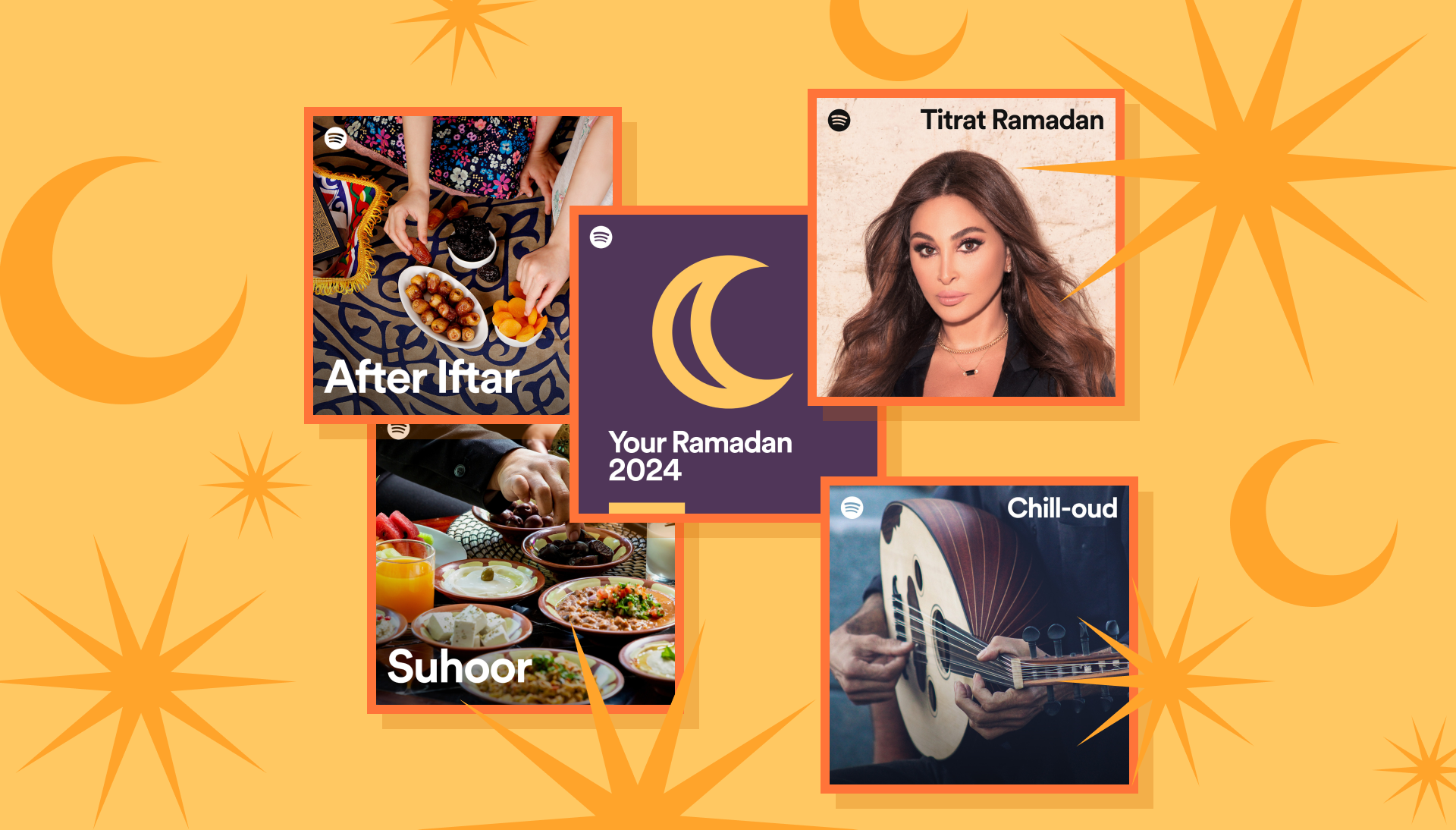
March marks the beginning of Ramadan, a cherished cultural event celebrated by Muslims worldwide. As families and communities come together to observe, contemplate, pray, and celebrate the Holy Month, they can also turn to Spotify for meaningful audio content.
This year, our Ramadan hub is back with a blend of music and podcasts designed to foster self-reflection, wellness, and entertainment. When eligible listeners open the Spotify app, they’ll find carefully curated content for every mood and moment of Ramadan. Listeners will also find personalized content on the Your Ramadan 2024 playlist.
As Ramadan begins, many Muslims experience shifts in their daily routines, from work schedules to social interactions. Similarly, their Spotify listening habits also shift, as evidenced by our streaming data from 2023.
Our top finding? Audio was often used to set the tone as families and communities came together for suhoor, the predawn meal, with streaming spiking around 5 a.m. in most markets. Below, we unveil more 2023 listening trends across various markets to shed light on streaming patterns throughout the sacred month.
Our Ramadan hub contains a wide variety of curated playlists. In Egypt, the top Ramadan playlist of 2023 was Titrat Ramadan, which showcases soundtracks from the most popular Ramadan TV dramas.
In Saudi Arabia, listeners gravitated most toward Chill-oud. This playlist features songs played with the oud, a stringed musical instrument that is one of the oldest and most important instruments in Arabic culture.
Listeners in Indonesia favored the Your Ramadan 2023 playlist. This personalized playlist brings Spotify’s editorial and algorithmic worlds together to provide users with curated audio content that resonates with their respective Ramadan journeys.
Last but not least, the most-streamed Ramadan playlist in Pakistan was Hamd-o-Naat, which features devotional tracks for an immersive experience. “Naat” was also the country’s most-searched word during the Holy Month, reflecting a desire for poetic expressions of devotion and praise. Our Best of: Coke Studio Sufi playlist, which showcases Coke Studio’s top Sufi tracks, also saw 218% growth last year.
This year, Spotify remains dedicated to delivering a culturally resonant Ramadan experience for listeners around the world. For the ultimate audio companion throughout the sacred month, explore the Ramadan hub.
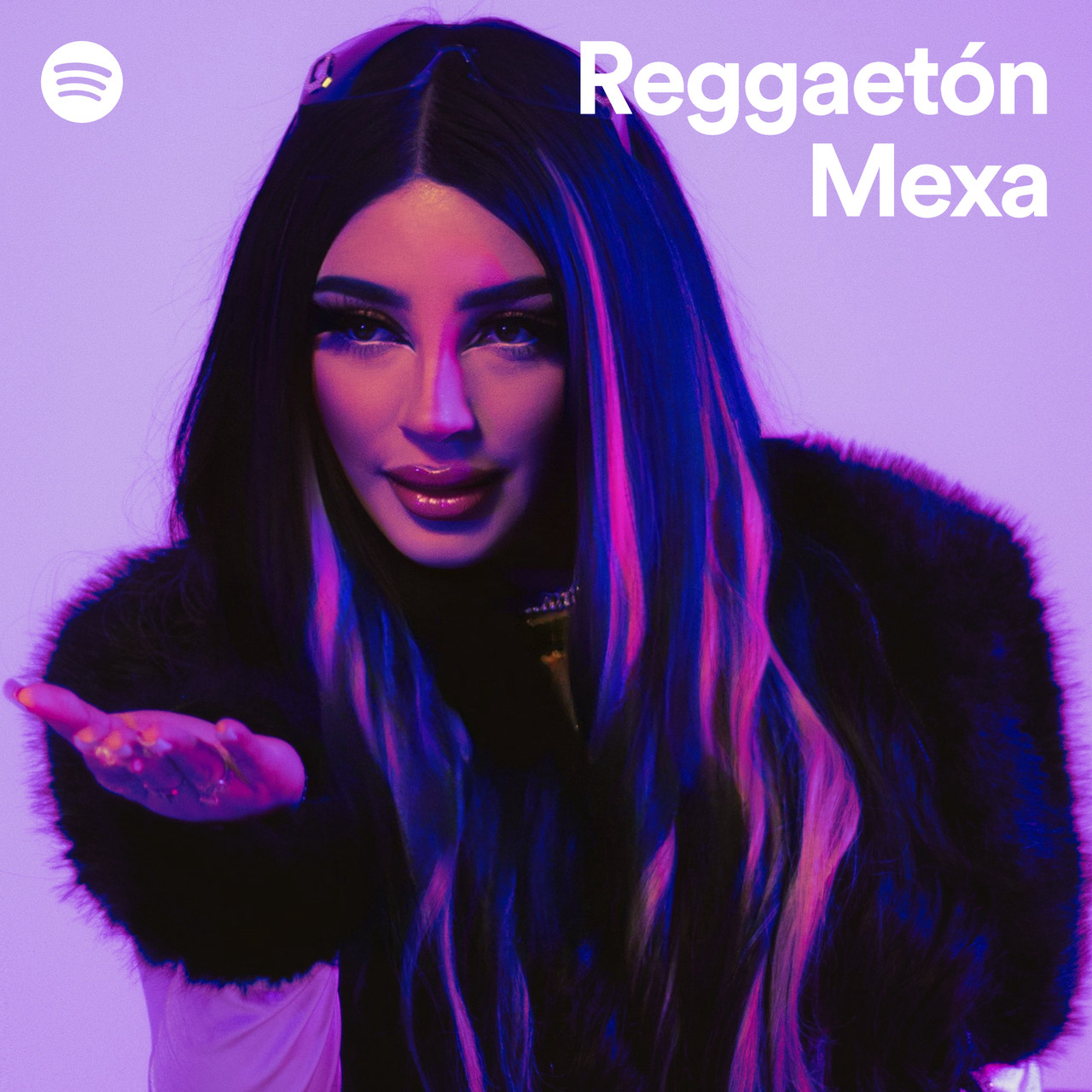
El reggaetón ha conquistado a oyentes de todo el mundo, pero en México el género reina. De hecho, México escucha reggaetón más que cualquier otro país en Spotify, y ha evolucionado hasta tener su propia identidad, a la que hemos llamado “reggaetón Mexa.”
El reggaetón mexa no es nuevo, está presente en el país desde hace más de dos décadas, y cuenta con influencias de otras regiones, como los sonidos originales del reggaetón de Puerto Rico, el dembow de la República Dominicana y la música electrónica urbana de Panamá. También incorpora sonidos de los barrios mexicanos y la cultura sonidera, creando una mezcla de ritmos que refleja el orgullo de la cultura urbana de Ciudad de México.
“La era del streaming ha conectado al reggaetón mexa con audiencias masivas. Los artistas de hoy utilizan la jerga local originaria de los barrios de la Ciudad de México, lo que los acerca y los hace más accesibles,” explica Uriel Waizel, Lead Music Editor de Spotify México. “En una celebración al estilo y lenguaje único de este movimiento, desde Spotify decidimos llamarlo ‘reggaetón Mexa’ para referirnos al género de una manera mucho más local.”
A principios de la década de 2000, artistas como Big Metra y La Dinastía marcaron la primera ola de reggaetón Mexa, que combinaba el dembow con el sonidero mexicano. Esta generación abrió la puerta a una segunda oleada con artistas locales como Pablito Mix, que introdujo elementos de cumbia al género.
El panorama ha cambiado por completo en la década de 2020 gracias a una nueva generación de artistas estrechamente conectados con sus fans. En los últimos cinco años, el consumo de reggaetón Mexa en Spotify ha crecido más de 1,100% en México, con los oyentes de la Generación Z contándose entre los mayores fans del género. Según datos de Spotify, el 53% de los oyentes de reggaetón Mexa en la plataforma son menores de 24 años.
“En los últimos años ha surgido un renovado aprecio por el barrio mexicano, dando lugar a una nueva generación de artistas de entre 20 y 25 años. Estos artistas han nacido en el barrio y los fans los perciben como gente accesible,” dice Uriel. “La sinceridad y autenticidad de los artistas locales conectan de forma natural con los jóvenes que buscan una representación más auténtica de su identidad y cultura en la escena del reggaetón.”
La cantautora mexicana Bellakath es una de las artistas a las que los fans acuden en masa. Pilar de la escena del reggaetón Mexa, forma parte de la tercera ola del género en México. La música de Bellakath, su autenticidad y la relación con sus fans la han coronado como la artista mexicana de reggaetón mexa más escuchada en Spotify. Su sencillo “Gatita” es la canción del género más escuchada de todos los tiempos en nuestra plataforma. Otros artistas populares son Uzielito Mix, Ghetto Kids, y Dani Flow. Entre las nuevas promesas se encuentran Yeri Mua, El Bogueto, El Malilla, Profeta Yao Yao, Alu Mix, DJ Rockwel Mx, y Alnz G.
A continuación, puedes descubrir más datos sobre el género y sus principales artistas.

Echa un vistazo a nuestra playlist de reggaetón Mexa con las mejores canciones de todo el género.
Reggaetón music has already captivated listeners around the world, but in Mexico the genre reigns supreme. In fact, on Spotify, Mexico listens to reggaetón more than any other country and has evolved into its own identity, which we’ve dubbed “reggaetón Mexa,” or Mexican reggaetón.
Reggaetón Mexa isn’t new—it’s been around for more than two decades. But this unique twist boasts influences from other regions, like the original sounds of reggaetón from Puerto Rico, dembow beats from the Dominican Republic, and electronic urban music from Panama. It also incorporates sounds born of the Mexican barrios, and sonidero culture, creating a blend of rhythms that reflect the pride of urban culture in Mexico City.
“The streaming era has connected Mexican reggaetón with mass audiences. Today’s artists use local slang that originated in Mexico City’s barrios, or neighborhoods, which brings them closer and makes them more accessible,” explains Uriel Waizel, Lead Music Editor for Spotify Mexico. “In a celebration of the unique style and language of this movement, from Spotify, we decided to call it ‘reggaetón Mexa’ to refer to the genre in a much more local way.”
In the early 2000s, artists like Big Metra and La Dinastía ushered in the first wave of reggaetón Mexa, combining dembow with Mexican sonidero. This generation opened the door to a second wave with local acts like Pablito Mix, who introduced elements of cumbia to the style.
The landscape has changed completely in the 2020s thanks to a new generation of artists who are closely connected with their fans. In the last five years, the consumption of reggaetón Mexa on Spotify has grown more than 1,100% in Mexico, with Gen Z listeners counting themselves among the genre’s biggest fans. According to Spotify data, 53% of the reggaetón Mexa’s listeners on the platform are younger than 24.
“In recent years there has been a renewed appreciation for the Mexican barrio, giving rise to a new generation of artists between 20 and 25 years old. These artists were born in the barrio and fans perceive them as accessible people,” says Uriel. “The sincerity and authenticity of local artists naturally connect with young people who are looking for a more authentic representation of their identity and culture in the reggaetón scene.”
Mexican singer-songwriter Bellakath is one artist fans are flocking to. A pillar of the reggaetón Mexa scene, she’s part of the third wave of the genre in Mexico. Bellakath’s music, authenticity, and relationship with her fans have crowned her Mexico’s most-listened-to artist of reggaetón Mexa on Spotify. Her single “Gatita” is the genre’s most popular song of all time on our platform. Other popular artists include Uzielito Mix, Ghetto Kids, and Dani Flow. Up-and-comers include Yeri Mua, El Bogueto, El Malilla, Profeta Yao Yao, Alu Mix, DJ Rockwel Mx, and Alnz G.
Below, you can track more data on the genre and its top artists.

Check out our Reggaetón Mexa playlist, which includes the top songs from across the genre.
Recent Comments